

TLDR
On night four of Rush’s first tour in 11 years, “A Farewell to Kings” finally returned to the stage in Los Angeles, with Geddy Lee reaching for the notes many assumed were gone for good.
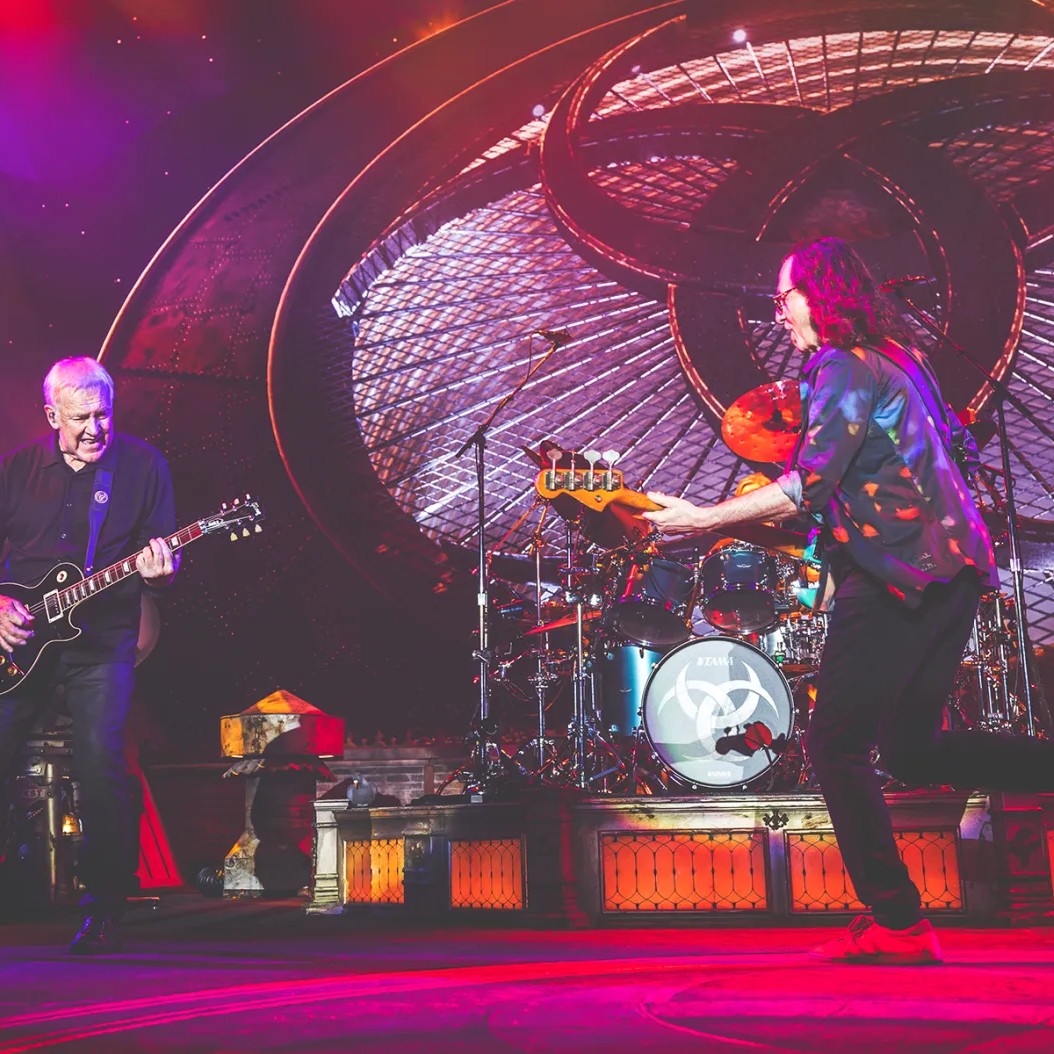
At the Kia Forum, the moment arrived quietly. Geddy Lee looked out at a sea of fans who had grown up with Rush on vinyl, cassette, and classic rock radio, and said simply, “I never thought I’d see this again.” The band had spent four nights in the same arena, rotating deep-cut setlists that now form the blueprint for the rest of the tour. Night four carried the heaviest emotional freight. It held the first performance of “A Farewell to Kings” since 1979.
The song slipped into the second set without fanfare, tucked in after “YYZ.” Alex Lifeson began with a fragile nylon-string guitar figure, then hit the gas into towering electric riffs that felt like pure 1970s arena grandeur. For decades, the band sidestepped the track because its vocal line sits high in Lee’s range. Yet here he was, after vocal coaching and patient rebuilding, reclaiming much of the upper register that defined Rush’s most ambitious years. The performance played less like nostalgia and more like restoration.
The set surrounding it was built for lifers. All seven sections of “2112” roared through the Forum, a reminder of how a once-outsider concept epic became arena singalong material. “The Anarchist” from “Clockwork Angels” linked the band’s later-era storytelling to its 1970s roots. The choices signaled intent. This tour is not a greatest-hits victory lap. It is a survey of a 50-year catalog that still challenges its own makers.
Emotion peaked again when the band reached for “The Pass” from “Presto.” Lee took a beat to talk about the evolution of Neil Peart’s lyrics, then let the song speak. Among casual listeners, Rush has a reputation for cool, cerebral rock. “The Pass” tells a different story. Fans have long shared online that its portrait of a suicidal teenager helped pull them back from the edge. Lifeson answered that weight with a solo that felt almost plain on the surface, then landed like a quiet verdict.
For pure shared joy, nothing topped “The Spirit of Radio.” The closing notes, the familiar kickback into the main riff, and Lee’s shout about “concert halls” folded decades of radio memories into one roaring chorus. In that moment, it was easy to see why this particular band still fills arenas in the streaming era.
All night, Anika Nilles carried the ghost of Neil Peart’s drum chair. The German virtuoso arrived at this project without years of fandom, then spent more than a year in Toronto absorbing not just Peart’s parts, but his sense of architecture. It is an impossible assignment on paper. Yet when she nails a ferocious Peart fill in “Tom Sawyer” or traces the intricate patterns of “Xanadu,” she does it with a visible smile. That warmth, paired with her precision, softens the anxiety of fans who once insisted no one could ever sit behind this kit again.
The encore reached even further back, into the band’s pre-prog past. With songs from Rush’s debut album, originally recorded with drummer John Rutsey, the group briefly became a lean, primal hard rock band again. Lee’s gleeful, life-affirming “yeah, oh yeah” at the start of “Finding My Way” cut through the years as sharply as any of the night’s more philosophical lines.
For the Gen X and Baby Boomer fans in the building, many of whom first heard “A Farewell to Kings” through bedroom speakers in the late 1970s, night four felt like more than a reunion. It was a negotiation between memory and the present, between the loss of Peart and the choice to keep the songs alive. If the rest of the tour follows the Los Angeles blueprint, Rush is not only revisiting its past. It is carefully curating its legacy in real time.
Were you at the Kia Forum run, or did “A Farewell to Kings” soundtrack your younger years from afar? Share your memories, setlist wishes, and how you feel about Rush’s new chapter with Anika Nilles on drums.