

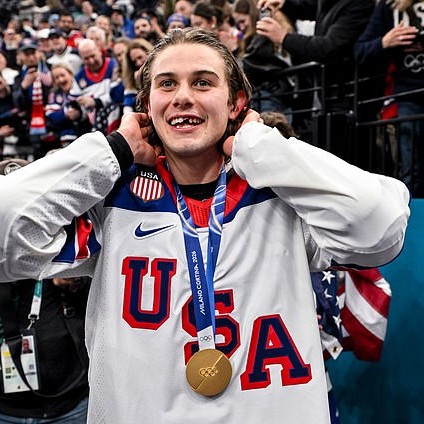
Jack Hughes left Milan with a gold medal, two broken front teeth, and a viral patriotic speech. Now the Team USA hockey star is stepping back into the spotlight for a different reason: defending the American women who chose not to join him at the White House.
TLDR
After scoring Team USA’s overtime winner in Milan and losing two teeth in the process, Jack Hughes is using his new spotlight to publicly support the women’s team as critics attack their decision to skip Trump’s White House visit.
From Bloody Smile to Political Storm
Hughes did not just score an overtime winner against Canada. According to Daily Mail US, he did it while bleeding from a shattered smile, two front teeth gone, his jersey streaked with red. The image of him grinning through the pain as “The Star-Spangled Banner” played turned him into an instant Olympic folk hero.
Moments after clinching gold at the Milan-Cortina Winter Olympics, cameras caught Hughes delivering an emotional message that ricocheted around the world. “This is all about our country right now,” he said on the ice. “This is all about our country. I love the USA. I love my teammates. I’m so proud to be an American today.”
He kept going, wrapping his arms around the USA crest on his chest. “That’s a great Canadian team, but we’re USA, we’re so proud to be Americans, tonight was all for the country. It’s everything, the USA hockey brotherhood means so much, we’re such a team. The USA hockey brotherhood is so strong, and we’re so proud to win for our country.”
According to Daily Mail US, that interview caught the attention of Vice President JD Vance, who later posted on X to praise Hughes for speaking through the pain and for his unabashed sense of national pride.
Backing the Women under a Harsh Spotlight
The glow did not last long before politics crashed the party. After the gold-medal win, Donald Trump phoned the men’s team to congratulate them, then publicly invited them to attend his upcoming State of the Union address and visit the White House. He also extended an invitation to the U.S. women’s hockey team, who had claimed gold of their own. They declined.
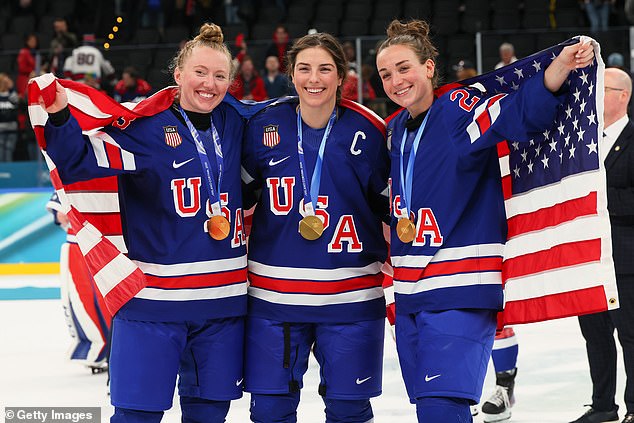
What might once have been a quiet scheduling note turned into a social media storm. The women’s decision triggered days of criticism from Trump supporters and culture-war commentators. That backlash quickly spread to the men as well, who accepted the president’s invitation to Washington.
Speaking in Miami, Hughes chose not to distance himself from the women. Instead, he defended them. According to Daily Mail US, he said, “They’ve got busy schedules, too. Everyone is giving us backlash for all the social media stuff today. People are so negative out there, and they are just trying to find a reason to put people down and make something out of almost nothing.”
Hughes described a tight-knit bond formed in the Athletes’ Village, not a political divide. “Our relationship with them, over the course of being in the Athletes’ Village, I think we are so tight with their group. After we won the gold medal, we were in the cafeteria at 3:30 in the morning with them and we go from there, pack our bags and we’re on the bus,” he recalled.
For Hughes, the story is less about protest and more about loyalty. “People are so negative about things. I think everyone in that locker room knows how much we support them, how proud we are of them, and we know the same way we feel about them, they feel about us.”
Inside a Divided White House Tradition
White House sports visits have become a recurring flashpoint in American life. According to Daily Mail US, Trump even joked on the call with the men that he would “be impeached” if he did not invite the women as well. The moment was meant as a quip, but it landed in a country where even ceremonial rituals now carry partisan baggage.
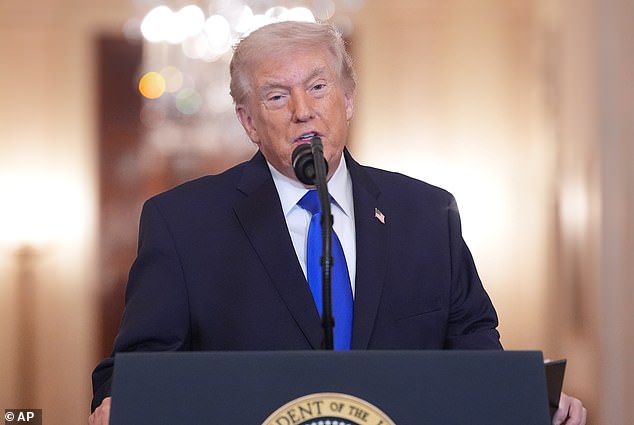
The men’s team accepted the invitation to attend the State of the Union and to take a private tour of 1600 Pennsylvania Avenue. The women’s team, whose schedules can be just as crowded with professional, international, and family commitments, chose not to go. The exact reasons have not been spelled out in public. In the vacuum, critics rushed in.
That is where Hughes’ comments matter. By framing the women’s choice as a practical decision and pushing back on the idea that it signals disrespect for the country, he is trying to protect teammates and preserve a unified Team USA brand, even as outside voices attempt to turn the story into a political litmus test.
For older fans who remember the 1980 “Miracle on Ice,” USA hockey has long been a stand-in for something bigger than the scoreboard. The friction around this White House visit underscores how complicated that symbolism has become.
A Patriotic Brand in Real Time
Hughes arrived in Milan as an NHL star. According to ESPN, he cemented his role as a franchise cornerstone when he signed an eight-year, $64 million extension with the New Jersey Devils. In Italy, he evolved into something else, a face of national pride who plays through blood and speaks in sweeping phrases about country and brotherhood.
That image is now being stress-tested in real time. By defending the women’s team, he is signaling that patriotism, in his view, can coexist with personal choice about when and how to engage with politics. It is a subtle line to walk for any athlete tied to a major brand, let alone one whose national team just delivered a generational moment.
The political world has already noticed. As reported by Daily Mail US, Vice President JD Vance wrote on X, “Heart full of pride for his country and a few front teeth gone missing. That’s American hockey right there. Congratulations to Jack and everyone on Team USA for bringing home the gold.”
In that single message, Hughes is framed as both warrior and symbol, the kind of player advertisers love, and partisans want on their side. His decision to publicly stand with the women’s team adds a new layer to that story, one that stretches beyond a single night in Milan and into how American sports heroes navigate a divided era.
Join the Discussion
Do you think Jack Hughes struck the right balance by accepting the White House invitation while publicly defending the women who chose to stay away?