

One of Hollywood’s most familiar father figures is now at the center of a real-life horror story. TMZ reports that director and actor Rob Reiner and his wife Michele were killed, and that their son Nick’s mental collapse in the weeks before the murders may be tied to a controversial shift in his psychiatric medication.
The case already sounds like a courtroom thriller, but for anyone who grew up on Rob Reiner’s work, it lands like a punch to the chest. The man who gave the world comfort movies and classic sitcom moments is suddenly connected to a tragedy that reads like the darkest true crime script.
From Beloved Sitcom Kid To True Crime Headline
TMZ lays out a chilling sequence. Sources with direct knowledge tell the outlet that Nick Reiner experienced a severe breakdown in the weeks leading up to the alleged murders of his parents, and they say it traces back to doctors changing the medication he was taking for schizoaffective disorder.
According to TMZ, Nick was diagnosed around 2020 with schizoaffective disorder, a condition that combines symptoms of schizophrenia, such as delusions, hallucinations and disorganized thinking, with symptoms of mood disorders that can include intense mania or crushing depression.

The outlet reports that about a month before the killings, Nick had been stable on his medication regimen. Their sources say the drugs he was taking at that time were working and that he was doing relatively well under that treatment plan.
Then comes the decision that now hangs over the entire case. TMZ’s sources claim that, despite that apparent stability, doctors elected to change his medication. They would not disclose the reason for the shift, but told TMZ the explanation would be shocking and, in their view, makes no sense.
The Spiral That Allegedly Followed
Whatever the rationale behind that medical call, the fallout, as described by TMZ’s sources, is harrowing. They say the change in medication sent Nick into a severe downward spiral. He allegedly became agitated, erratic and increasingly dangerous.
Rob and Michele Reiner, according to those same sources, were deeply alarmed by what they were seeing in their son. TMZ reports that the couple recognized something was very wrong, but did not know how to handle the escalating behavior or where to turn fast enough.
By the time of the killings, TMZ’s sources say Nick had suffered a complete break from reality. The outlet reports that doctors did not seek to place him on a psychiatric hold while they were trying to adjust his medication and get him stabilized.
In the world of mental health treatment, changes to medications for serious illnesses like schizoaffective disorder are usually handled with great caution. Shifts in dosage or drug type can affect sleep, judgment, impulse control and perception. TMZ’s reporting highlights what appears to be a catastrophic failure to keep those changes from spilling into real-world danger.
Inside the Legal Strategy and the Insanity Standard
TMZ reports that this medication story may sit at the very center of Nick Reiner’s defense. Sources tell the outlet that his legal team is expected to argue that the doctors’ decision to alter his meds effectively pushed him down a path that left him legally insane at the time of the killings.
Under California law, as TMZ notes, a defendant who raises an insanity defense does not need to prove that he did not know the difference between right and wrong. Instead, he must show that, because of a mental disease or defect, he did not understand the nature and quality of his act.
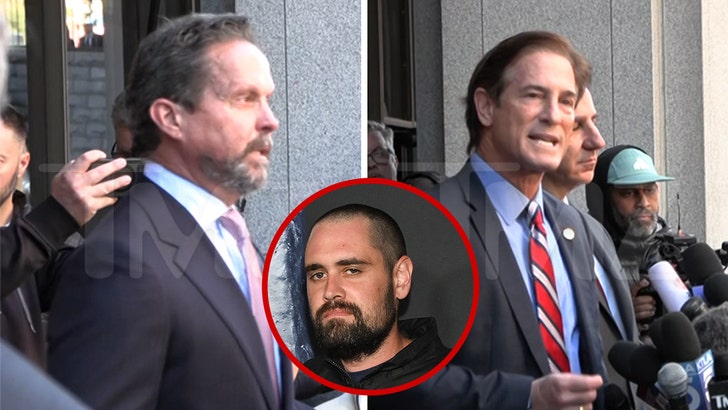
It is a narrow and complex standard, and courts rarely accept it. TMZ’s reporting suggests that Nick’s lawyers could use the medication change, the reported lack of a psychiatric hold, and his diagnosis of schizoaffective disorder to argue that he was disconnected from reality in a way that meets that legal threshold.
None of this erases the grief, or the horror, or the human cost. It does, however, set the stage for a trial that will pull back the curtain on how our system treats severe mental illness, and how many safeguards actually exist when something starts to go very wrong.
‘TMZ Investigates’ Steps Into the Chaos
To piece together what happened inside the Reiner family in those final weeks, TMZ is rolling out a new special, “TMZ Investigates: The Reiner Murders: What Really Happened,” airing on FOX at 8 PM ET. The documentary promises to walk viewers through Nick’s diagnosis, the disputed medication change and the fallout that followed.

The special is positioned as more than a crime recap. It is an attempt to map the fault lines between celebrity, mental illness and a medical system that can make life or death decisions in a single prescription change.
For viewers who grew up on Rob Reiner’s work, tuning in will feel surreal. This is the man who helped define comfort culture. Now his name headlines a true crime investigation about his own death.
Rob Reiner’s Golden Hollywood Legacy
Part of what makes this story so wrenching is who Rob Reiner is to the culture. Long before his name appeared in crime headlines, he was already woven into the fabric of Hollywood history.
He first became a household face as Michael “Meathead” Stivic on the classic sitcom “All in the Family,” playing the passionate, often exasperated son-in-law to Archie Bunker. Then he stepped behind the camera and built a directing resume that feels like a highlight reel of modern American movies.
His films include the rock mockumentary “This Is Spinal Tap,” the fairy tale adventure “The Princess Bride,” the romantic touchstone “When Harry Met Sally…,” the coming of age favorite “Stand by Me” and the courtroom drama “A Few Good Men.” For decades, his work has been shorthand for comfort, wit and emotional punch.
That is why this case is not just another Hollywood tragedy. It fractures something that has felt safe for generations of viewers, turning the man who gave us some of the most rewatchable stories on screen into the heartbreaking center of one unfolding off-screen.
Mental Illness, Meds and the Questions Left Behind
As the legal battle moves forward and “TMZ Investigates: The Reiner Murders: What Really Happened” reaches audiences, the questions will only get louder. Why did doctors reportedly change Nick’s medication while he was stable. Were warning signs missed. Could a psychiatric hold have stopped what came next.
Mental health experts frequently stress that most people living with schizoaffective disorder or other serious mental illnesses are not violent, and are far more likely to be victims than perpetrators. TMZ’s reporting on Nick’s alleged spiral is a story about a specific person in a specific situation, not a template for everyone who shares his diagnosis.
It is also a stark reminder of how fragile treatment can be, especially when medication shifts do not come with close monitoring and strong support systems. For families trying to keep a loved one safe and stable, the Reiner case lands like a warning siren.
For Hollywood fans, it feels like the curtain has been ripped away on a family we thought we knew from a distance. The director who taught audiences about friendship, love and courage through his movies was living with a private terror that even he could not rewrite.
A Hollywood Story No One Wanted
There are no neat endings here, no final fade out that makes everything make sense. Only a shattered family, a community in shock and a legal fight that will dig into the hardest questions about responsibility, illness and care.
What TMZ has revealed so far is a portrait of a son in crisis, parents desperate but unsure, and a medical decision that may be argued as the turning point between stability and catastrophe. It is the kind of story that keeps you watching, not because it is entertaining, but because it feels like a modern myth about how fragile even the most charmed lives can be.
Rob Reiner’s name will always live on through the movies and television moments that shaped entire generations. Now, as the world braces for the courtroom drama and the televised investigations, that legacy sits beside a darker chapter that no one ever imagined would be written.