

TLDR
A new collection of Jim Marshall photographs reopens the door to Candlestick Park in 1966, when the Beatles walked onstage for what many consider their last real concert, and quietly decided they were done.
The images feel like a secret reel that was never supposed to surface. San Francisco, late summer 1966. Jim Marshall has full run of Candlestick Park, drifting from the locker room to the dugout to the stage as the most famous band on earth edges toward a decision that will change its story forever.
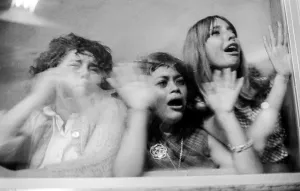
His photos catch the moment when Beatlemania is still roaring, but the Beatles themselves are already pulling away. In one frame, hysterical fans outside the Cow Palace in 1965 are pressed against barricades, proof that even a glimpse could break a teenager open. A year later, inside Candlestick, the crowd still screams just as hard, but the mood inside the band is different.
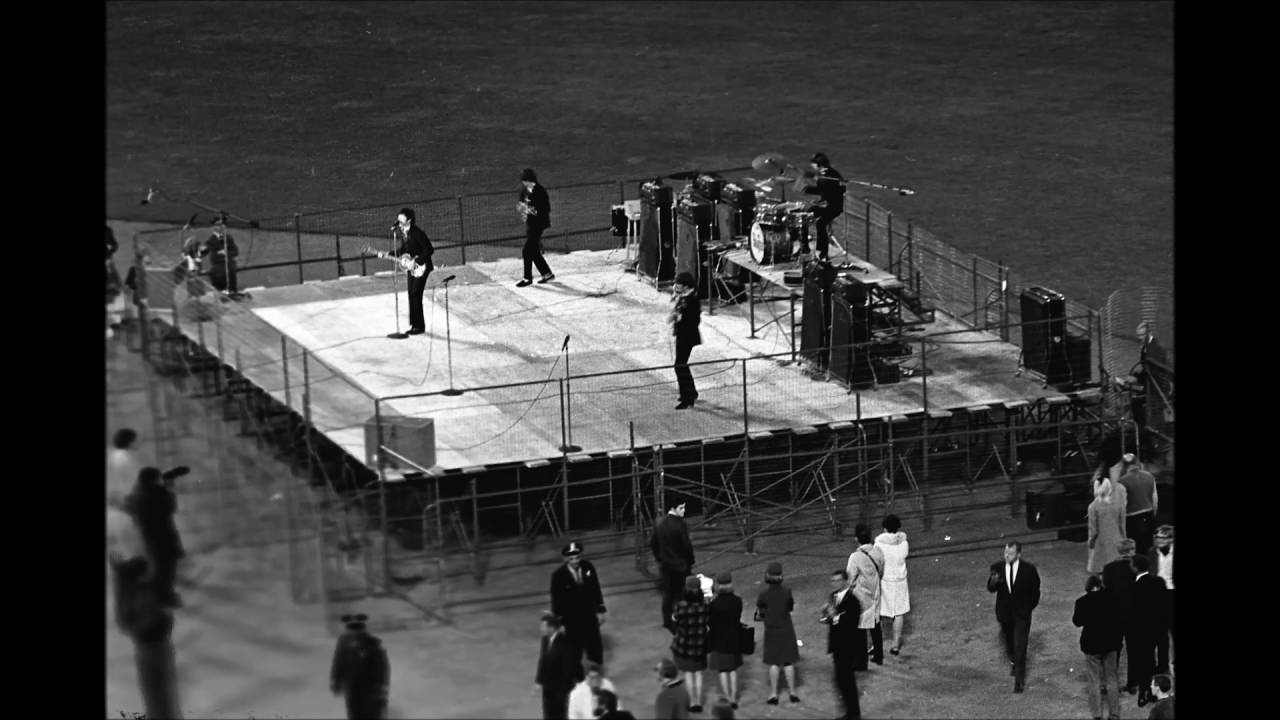
The set begins with a nod to their own roots. They open with a Chuck Berry cover, “Rock and Roll Music,” George Harrison out front, Paul McCartney and John Lennon straining to hear each other over the endless wall of sound. Marshall freezes the push and pull on their faces, boys who conquered the world now fighting simply to hear the next chord.
Lennon is already carrying fresh weight. Not long before the tour, his offhand line to a reporter that the Beatles were “more popular than Jesus now” set off protests and record burnings across the United States. Yet Marshall’s pictures from Candlestick show a different America. Teenagers beam, parents look amused, and handmade signs rise above the fray. The storm outside the gates does not quite reach the seats.
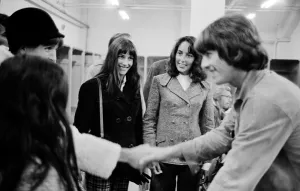
Backstage, Marshall turns his camera on the constellation around them. Folk icon Joan Baez arrives with sisters Mimi Farina and Pauline Baez. In one image, Pauline meets Harrison, a simple handshake that lands like a small mercy for a family still grieving Mimi’s husband, writer and songwriter Richard Farina, who had died in a motorcycle accident earlier that year.
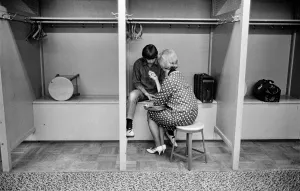
Nearby, Ringo Starr perches in a San Francisco Giants locker, chatting with writer Marilyn Doerfler while the real Giants chase a win on the road. The Ronettes take the stage as openers, with a cousin, Elaine Mayes, stepping in for Veronica Bennett after Phil Spector refuses to let his girlfriend tour. The photos capture the glamour, but also the substitutions and compromises beneath the surface.
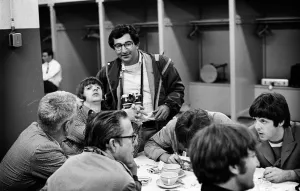
The power players weave through the frames. San Francisco Chronicle critic Ralph Gleason sips tea with the band. Within a year he will help launch Rolling Stone, yet here he is simply another believer angling for a few quiet minutes. Later, Marshall steps in front of his own lens, shoulder to shoulder with Gleason and the band he has been shadowing.
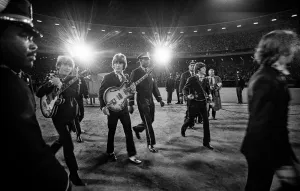
Then there is the image that has endured above all others. The Beatles, tiny against the vast Candlestick night, walking toward a bank of lights in what would become one of the defining photographs of their career. They play just 11 songs, finishing with Little Richard’s “Long Tall Sally.” By most accounts, this is the end of their life as a touring band. The famous rooftop performance at Apple Records during filming for “Let It Be” is something else entirely, a controlled burst for the cameras.
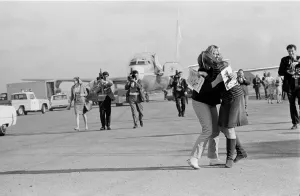
Marshall’s final frames from the day do not belong to the Beatles at all. Two young fans clutch each other on the tarmac at San Francisco International Airport as the band flies back to England. The girls are radiant and wrecked, sensing something is over even if no one has said it aloud.
That is the quiet power of “The Beatles by Jim Marshall: Live at Candlestick Park 1966.” It does not just document a concert. It captures the last night the world could buy a ticket, take a seat, and believe that four men on a baseball diamond could hold back whatever was coming next.
Were you following the Beatles when they stepped off the touring stage after Candlestick Park, or did you discover this era years later on vinyl and VHS? Share how you remember their last concert years, and whether you see this night as an ending, a beginning, or something far more complicated.