

When a Club Night Turns Into a PR Crisis
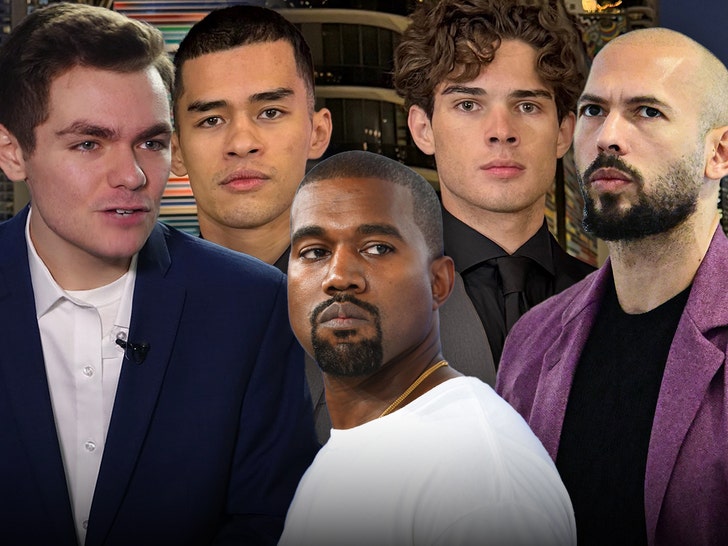
A party bus packed with professional provocateurs, Nazi salutes flying, and an antisemitic Kanye West track blaring on the speakers. That is the surreal scene that exploded across social media after Nick Fuentes, Andrew Tate, Sneako, and others filmed themselves celebrating to West’s banned song “Heil Hitler.”
What started as yet another night out for the controversial crowd quickly turned into a reputational emergency for a high-end Miami nightclub. Within hours of the footage spreading online, the venue rushed out a public apology and promised an internal investigation.
In a celebrity world where shock value is currency, this moment hit a line that many viewers felt should never be crossed.
‘Heil Hitler’ Hits the Party Bus
According to a video shared by the group, Fuentes, Tate, Sneako, and several others were seen on a party bus, blasting Kanye West’s track “Heil Hitler.” TMZ described the clip as “about as gross as you’d imagine,” noting that it was full of proud Nazi salutes and tentative head bobbing as the crew hyped up the night ahead.
The song itself has been widely condemned for its use of antisemitic references. It is not available on major streaming platforms and has become a symbol of West’s most extreme and hateful rhetoric. So when the track comes on in a party setting, the message is impossible to miss.
For Fuentes and company, the offensive display was all part of the performance. They filmed, posed, and posted, feeding an audience that has grown used to their mix of outrage bait and online clout-chasing.
From Party Bus to Miami Nightclub
The night did not stop on the road. TMZ reported that after the party bus pre-game, the group headed to Vendome, a nightclub in Miami, where the so-called “manosphere” crew apparently got the DJ to play “Heil Hitler” inside the venue.
In the club environment, with lights, bottle service, and cameras out, the choice of song landed differently. It was no longer just a small private circle filming themselves. It was a packed room, a public-facing business, and a crowd that did not sign up to suddenly be part of a Nazi-salute spectacle.
Clips from inside Vendome quickly circulated online, drawing outrage and questions. How did this track get cleared for play inside a major club at all, especially during what appeared to be a celebratory bottle parade moment
The Club’s Fast Apology
Vendome did not stay silent. The club released a statement on Instagram, attempting to distance itself from both the song and the imagery captured on video.

“We are aware of a video circulating online from one of our venues that includes content and imagery that are deeply offensive and unacceptable,” the statement read.
The venue continued, trying to make its stance unmistakably clear. “We want to be unequivocally clear: Vendome and our hospitality group do not condone antisemitism, hate speech, or prejudice of any kind. These values are fundamentally opposed to who we are and the environments we strive to create.”
They also pledged to figure out how the track slipped into the night in the first place. “We are currently conducting an internal review to understand the circumstances surrounding how this requested song came to be played during a bottle parade, and we will take immediate action to hold the responsible parties accountable,” they said.
The language was firm, the tone contrite. It was the kind of crisis response that has become standard in an era where one viral clip can mark a brand forever.
Where Shock Content Meets Real World Harm
To understand why this particular moment felt so radioactive, you have to look at the players involved. Nick Fuentes is known as a far-right agitator who has built a following on extremist commentary and open provocation. Andrew Tate is a social media lightning rod whose name alone sparks fierce debates about misogyny, influence, and responsibility.
Both men occupy a space where controversy is not a bug; it is a feature. The more people gasp, the more their fan base leans in. Sneako operates in a similar online ecosystem, courting attention with inflammatory content and divisive takes.
Layer that dynamic over Kanye West’s “Heil Hitler,” a track that has already been condemned for explicit antisemitism, and it becomes something more than just bad taste. It is a calculated choice to dance on a historic wound in front of millions of potential viewers.
What hits hardest for many observers is not just the song itself. It is the casualness, the party bus vibes, the club bottle parade. Antisemitic rhetoric is not being argued in a dark corner of the internet. It is being turned into a party anthem for influencers in designer clothes.
Vendome’s Tightrope: VIPs Versus Values
For Vendome, the fallout shines a brutal spotlight on the tightrope many nightlife venues walk. High-profile guests bring money, attention, and social media shine. They can also bring reputational landmines.
Nightclubs pride themselves on atmosphere, exclusivity, and spectacle. DJs often accept song requests from VIP tables, especially when cameras are out and bottles are popping. In most cases, that is harmless. In this case, it ended with the club scrambling to affirm that it does not support the very message blasting from its own sound system.
By promising an internal review and accountability, Vendome is signaling that it understands the stakes. It is no longer enough for clubs to blame individual staff or shrug an incident off as a one-time mistake. In the age of instant virality, brands are judged by what they allow to happen on their watch.
Kanye’s Shadow Over Celebrity Nightlife
The saga also underscores the lingering shadow Kanye West now casts over pop culture and nightlife. Once a fixture of club playlists and VIP tables, West has seen his music and image recontextualized after a string of antisemitic statements and public meltdowns.
“Heil Hitler” is not a deep cut that slipped out by accident. It is a track that exists entirely in that post-fall era, already flagged as beyond the pale by much of the industry. Choosing it for a bottle parade is not nostalgia for “Gold Digger.” It is a pointed gesture.
That is what makes the clip such a jarring watch. You see the familiar outlines of a luxury night out, the very fantasy that has defined celebrity culture for decades. Party buses, VIP sections, influencers holding up their phones. But the soundtrack is hate, not harmless hype.
Why This Moment Matters
For fans, observers, and casual viewers scrolling past the video on their feeds, the emotional reaction is part shock, part exhaustion. Shock that Nazi salutes and the words “Heil Hitler” are being treated like a party stunt. Exhaustion at the sense that outrage is being mined for clicks instead of confronted.
Clubs, brands, and platforms are being forced to answer a hard question in real time. When people who profit from provocation push for ever more extreme stunts, where does the responsibility fall to simply say no
Vendome’s apology is a line in the sand, at least on paper. The club says it does not condone antisemitism, that it will hold responsible parties accountable, and that its values clash with what appeared on that video. Those words will now be measured against what happens the next time a controversial VIP walks through the door with a camera rolling and a playlist full of landmines.
Because that is the unspoken truth behind the viral clip from Miami. The night may be over, the bottle parade long gone, but the question it raised is still blaring at full volume. In a culture obsessed with attention, who is willing to turn the music off when the song is pure hate