

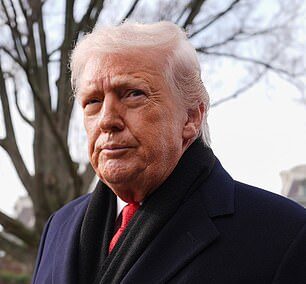
The line reads like something from a political thriller. In a leaked letter to Norway’s prime minister, Donald Trump reportedly warned he “no longer feels an obligation to think purely of peace” after not receiving the Nobel Peace Prize, while demanding “Complete and Total Control of Greenland” for the United States.
The message, shared with European diplomats, pulls global security, personal grievance and Arctic ambition into the same spotlight. It has rattled NATO allies, drawn a sharp public rebuke from Britain and sparked protests in Greenland itself.
From Celebrity President To Arctic Power Play
Trump, a former reality television star turned U.S. president, has long treated global politics like a stage. In this letter, reported by Norwegian media and detailed in the Norwegian press, he again demanded that Greenland be handed to America, arguing that Denmark cannot protect the vast Arctic island from Russia and China.
“I have done more for Nato than any other person since its founding, and now, Nato should do something for the United States”, he reportedly wrote, before declaring, “The World is not secure unless we have Complete and Total Control of Greenland”.
The claim drops a Hollywood level of drama onto a frozen map. One billionaire president, one strategically crucial island, and a cast of uneasy allies watching from the wings.
The Letter That Tied Nobel To Greenland
According to the reporting, Trump’s message was a response to a note from Norwegian Prime Minister Jonas Gahr Stre, who had voiced his opposition to a U.S. proposal to impose export tariffs on countries prepared to help defend Greenland, including Norway and the United Kingdom.
Trump’s reply, as quoted by the Norwegian press, fused status, security and the Nobel Peace Prize into one combustible paragraph.
“Dear Jonas: Considering your Country decided not to give me the Nobel Peace Prize for having stopped 8 Wars PLUS, I no longer feel an obligation to think purely of Peace, although it will always be predominant, but can now think about what is good and proper for the United States of America. Denmark cannot protect that land from Russia or China, and why do they have a “right of ownership” anyway? There are no written documents, it’s only that a boat landed there hundreds of years ago, but we had boats landing there, also. I have done more for NATO than any other person since its founding, and now, NATO should do something for the United States. The World is not secure unless we have Complete and Total Control of Greenland.
Thank you!
President DJT”
Donald Trump linked his claims on Greenland to not being awarded the Nobel Peace Prize in a letter the US president sent to the Norwegian prime minister
https://t.co/wgzaJDkITN
pic.twitter.com/41xLiBdVHb— Business Post (@businessposthq)
January 19, 2026
The bombshell letter, reportedly written by Trump himself, was then forwarded to multiple European ambassadors in Washington by U.S. National Security Council staff. A private complaint over a prize instantly became official reading material for America’s closest partners.
Tariffs, Trade War Fears And A British Rebuff
Behind the theatrics sat a very real policy threat. Trump had floated the idea of imposing export tariffs on allies willing to help defend Greenland, putting Norway, the U.K. and others in a potential trade crossfire over an island they do not control.
In London, British Prime Minister Sir Keir Starmer stepped up to a podium in Downing Street and did not hide his disapproval. He branded Trump’s trade war threats over Greenland “completely wrong”, while making clear that Britain was not racing to retaliate.
“A tariff war isn’t in anybody’s interests and what I want to do is avoid a tariff war. I will speak to Trump again in the coming days. We must find a pragmatic solution to this”, Starmer told reporters.
Asked if he truly believed Trump was considering military action to seize Greenland, he replied simply, “I don’t, actually”.
The exchange captured the unease rippling through allied capitals. They were being forced to respond publicly to a letter that mixed world order with wounded pride.
Greenland Pushes Back
In Greenland, the drama did not play out only in diplomatic cables. Protesters gathered in front of the U.S. consulate in Nuuk, carrying Greenlandic flags and placards that read “Greenland Is Not For Sale”, as they demonstrated against Trump’s plans for the island.
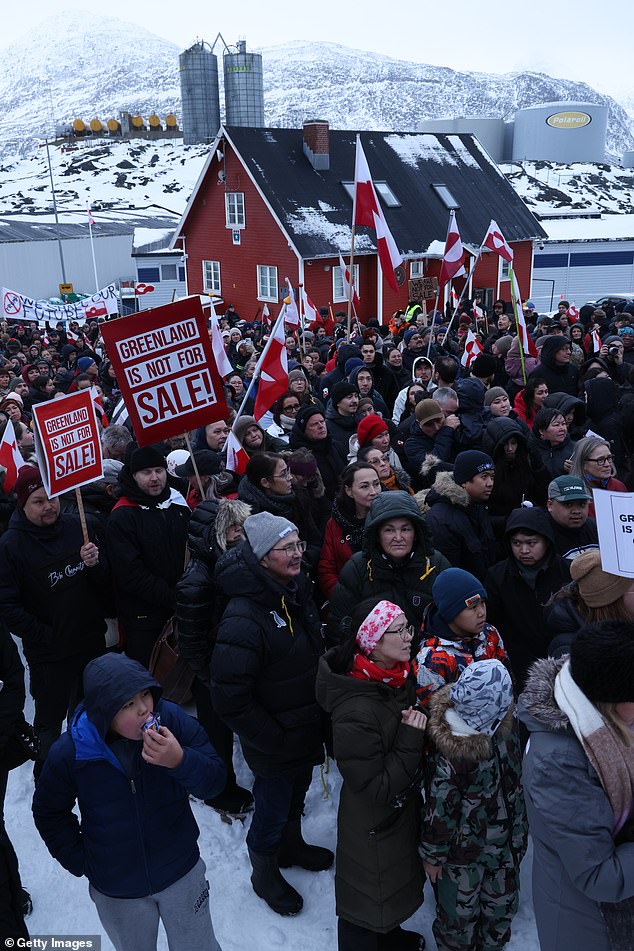
Their message was as blunt as the signs. Greenland might be discussed in Washington, London and Oslo, but the people who live there wanted the world to know they were not a trophy in a geopolitical bidding war.
In his letter, Trump questioned why Denmark, which currently controls Greenland, had any claim to the island at all. He asked, “why do they have a “right of ownership” anyway?” and argued that there were “no written documents” to justify it, adding that “it’s only that a boat landed there hundreds of years ago, but we had boats landing there, also”.
Those lines turned centuries of history into a few sweeping sentences, the kind that play well in a rally speech but land very differently in diplomatic circles.
Nobel Frustration On Full Display
Trump has often said he “deserves” the Nobel Peace Prize. In this letter, that long-running frustration finally collided with high-stakes policy. He wrote that because Norway did not give him the prize “for having stopped 8 Wars PLUS”, he “no longer feel[s] an obligation to think purely of Peace”.
At the same time, he insisted that peace “will always be predominant” for him, while saying he could now focus on “what is good and proper for the United States of America”. The message, laid out in his own words, blurred the line between a personal slight and the foreign policy of the world’s largest military power.
Allies have seen Trump mix public recognition with policy before. This time, the stakes included NATO unity, global trade and the future of a resource-rich Arctic island.
When Ego And Power Collide In Public
The letter’s theatrical flourishes were pure Trump, from the capitalization of “Complete and Total Control of Greenland” to the emphatic sign off, “Thank you!” followed by “President DJT”. It read less like a routine diplomatic note and more like a monologue written for an audience, even as it was addressed to a single prime minister.
By the time National Security Council staff had circulated it to European ambassadors, that audience had become the entire Western alliance. NATO officials, British leaders and Greenlandic protesters were all reacting to words that began as one man’s angry response to not receiving a prize he believes he earned.
The result is a snapshot of power in the age of celebrity. A leaked letter, a bruised ego and an Arctic island caught in the middle tell a story that is as surreal as it is serious. When a president trained in the rhythms of reality television writes about war, peace and ownership of a nation-sized territory, the script does not stay on the page for long.
In this scene, the Nobel Peace Prize is not just a medal. It is the spark behind a demand for control of Greenland, a wave of protests and a test of how far one man’s hunger for recognition can ripple across the map.