


TLDR
Izabel Goulart’s strikingly taut Cannes appearance has fans and surgeons dissecting her face, even as the supermodel frames her evolution as science-driven self-care.
The conversation is less about one woman’s forehead and more about what happens when an entire career has been built on a single, familiar face.
When Izabel Goulart stepped onto the Cannes red carpet, many fans needed a double take. The Brazilian supermodel’s visage looked tighter, her eyes a touch more asymmetrical, and social media quickly reached for the same word: “unrecognizable.”
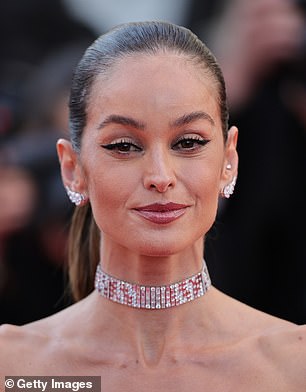
Clips and stills from the festival raced across timelines. Commenters insisted she had “turned into a whole different person,” demanding to know, “What happened to her face?” For a woman whose career was born on Victoria’s Secret runways and glossy fragrance ads, the idea that she no longer looked like “herself” carried a particular sting.
A Supermodel Face, Rebranded
Goulart, 41, has never publicly admitted to major cosmetic surgery. What she has copped to is a close relationship with high-tech maintenance. As a global ambassador for Merz Aesthetics, she represents a company whose portfolio includes injectable neurotoxin Xeomin and collagen-stimulating filler Radiesse.
She has said that she turns to professional skin treatments “once a year” or “once every six months,” presenting it as a form of modern grooming rather than a reinvention. “Medical aesthetics is about feeling good inside and out and doing all the things that empower yourself,” Goulart has explained. “So, choosing the right treatments has always been very important for me. And science is what fascinates me.”
That language fits neatly with her current image, a woman in her 40s who has parlayed a runway past into beauty deals, wellness content, and global campaigns. Her face is not just personal. It is product.
Which is why experts weighed in as soon as the Cannes photos surfaced. Portland-based board-certified plastic surgeon Dr Sean McNally, who has not treated Goulart, told The Daily Mail that her recent images suggest “she’s had a recent browlift” when compared with younger photos. He pointed to a higher brow arch and slightly elevated hairline, and said he also suspects added volume “to the midface, in the cheeks.”
None of that is confirmed. Goulart has not addressed the Cannes discourse directly, and in the absence of a statement, the internet rushes to fill the silence with side-by-side screenshots and speculative diagnoses.
When Unrecognizable Becomes A Career Risk
Goulart is not alone in this scrutiny. The same article that dissected her Cannes look also revisited Adriana Lima, Heidi Klum, and Behati Prinsloo, all women whose faces defined the 2000s and who now live under high-definition, slow-motion aging. When Lima appeared at the “The Hunger Games: The Ballad of Songbirds & Snakes” premiere, her fuller face and different angles triggered the same “unrecognizable” chorus.
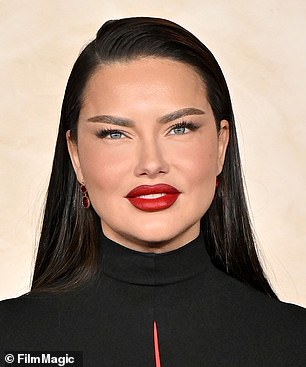
For these women, there is no comfortable lane. Visible lines can be framed as “letting herself go.” A smoother brow becomes “too much work.” The word “unrecognizable” hovers like a warning, suggesting not just a change in appearance but a betrayal of the brand that fans feel they helped build.
Goulart’s partnership with a major aesthetics company adds an extra layer. Her job is to embody confident, ageless beauty for paying clients, even as the public treats her face as a crowdsourced case study. Every red carpet becomes a referendum on how far a supermodel can go in the name of maintenance before the audience declares her someone else entirely.
For now, all anyone truly knows is what Goulart has chosen to share, a belief in targeted treatments and an almost serene trust in science. Whether viewers see her Cannes face as evidence of quiet procedures, impossible pressure, or simply a woman exercising control over her image, the intensity of the reaction says as much about us as it does about her.
Do you see an empowered woman evolving her look, a symptom of beauty-industry pressure, or both? Share where you draw the line between curiosity and criticism when a famous face changes.