

TLDR
Two decades after its debut, “The Comeback” returns with Lisa Kudrow’s Valerie Cherish battling an AI joke machine, a ruthless TV ecosystem, and her own fear of disappearing, in a season that treats Hollywood’s next era as both an opportunity and an extinction event.
The new season of “The Comeback” opens not with a quiet character study, but with Valerie Cherish sweating through wings on “Hot Ones”. She does not understand the format, the spice level, or why any of this matters, and the result is pure, escalating agony. According to Rolling Stone, it plays almost like a throwaway gag tucked behind the credits. It also reminds viewers of a simple truth. When Lisa Kudrow fully commits, few comic performers can touch her.
Across three seasons, “The Comeback” has doubled as Valerie’s survival story and a time capsule of television’s most volatile shifts. The first season of 2005 diagnosed the creep of reality TV. The second season of 2014 skewered prestige streamers. Now Season Three stares straight at Hollywood’s latest obsession: artificial intelligence. The show has always looked a little too right in hindsight. Think of Valerie chasing “The Real Housewives of Beverly Hills” and whispering to Andy Cohen, “I get it now, OK? I took myself too seriously.” That line now feels less like a joke and more like an industry thesis.
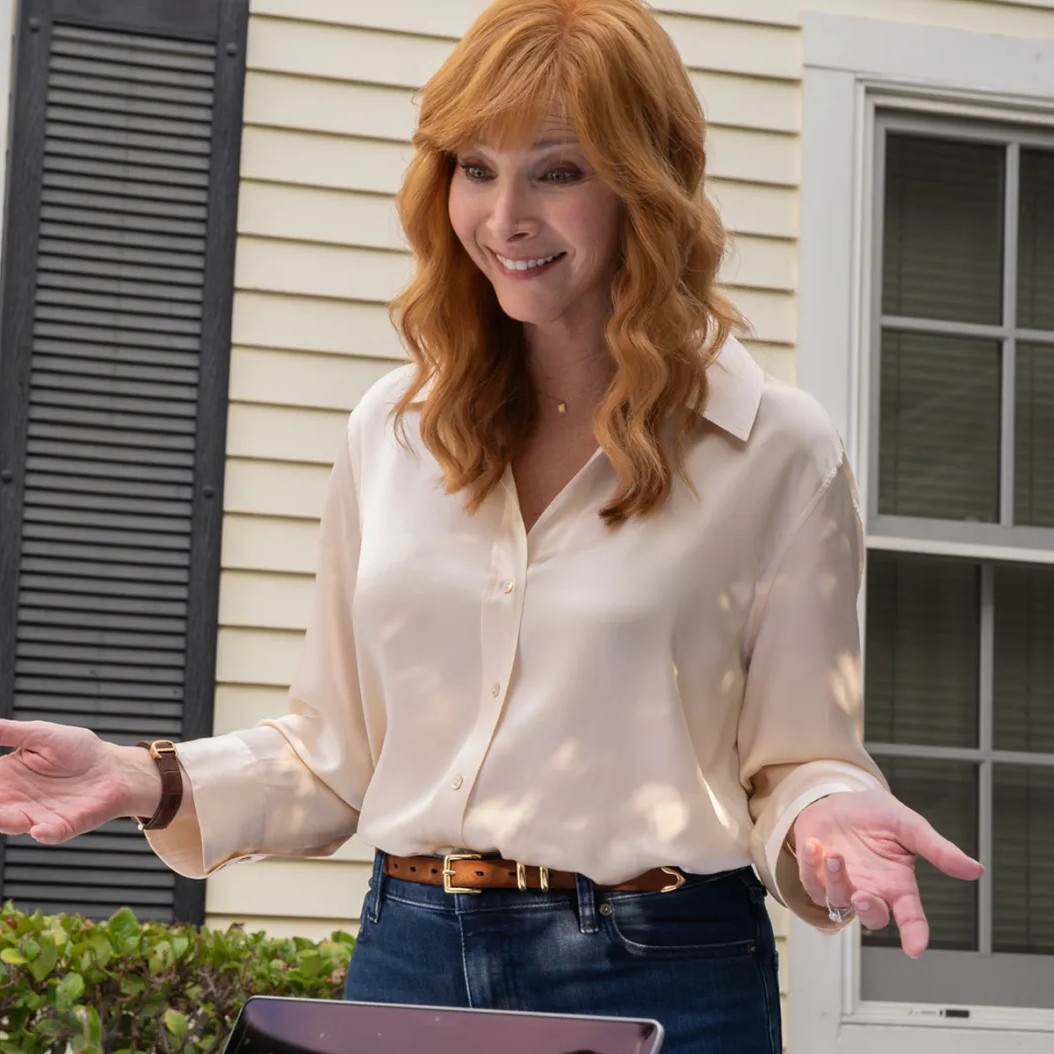
When we meet Valerie again, she is 12 years past her Emmy win and lodged in a slightly higher Hollywood tier. Her marriage to Mark is steady. A stint on “The Traitors” has left her with a viral meme. She has a producer to manage her socials, a meandering celebrity podcast called “Cherish the Time”, and a new multicam sitcom about a “woman of a certain age” for a rebranded NuNet. Corporate mergers have shuffled the logo, but the power imbalance feels familiar. Valerie still needs the job more than the job needs her.
Season Three widens the lens. Mark drifts into a midlife crisis. Manager Billy chases self-actualization. The show gives a tender farewell to Valerie’s beloved hairdresser, Mickey, honoring late actor Robert Michael Morris. Reality producer Jane reenters as the series’ saddest mirror, an idealist who keeps selling out. New faces arrive, including Ella Stiller as social strategist Patience, Jack O’Brien as a gentler replacement hairdresser, and Andrew Scott as a slick NuNet executive determined to charm and control.
Into this fragile ecosystem walks AL, an AI tool that can spit out serviceable sitcom jokes in seconds. The show frames the tech as both a seductive cost-saver and a quiet moral crisis. The creative argument crystallizes in a speech by Burrows, the most respected actor in Valerie’s new cast. Confronting AL’s efficient punchlines, he tells her, “I saw every one of those jokes coming, and so did you. “Surprising” only comes from a group of writers, huddled in a corner, beating themselves up to beat out a better joke. It’s the chubby guy who’s a secret alcoholic. It’s the gay guy who, despite all the work he’s done, still hates himself a little. Or the funny woman who’s been invisible for way too long. They turn all that pain into a joke. And Val, those beautiful, broken souls are what make something great.”
The season is not wall-to-wall belly laughs. Instead, it layers small, precise jokes over a creeping dread. There is a hit series called “She-R”, naturally about female ER doctors. A network Zoom overflows with Gen Z staffers named Lowen, Egypt, Arbor, and Ridley. Valerie keeps being humiliated on “Hot Ones” clips she cannot quite escape. The comedy lands in the tiny humiliations, the missed cues, the way nostalgia for studio audiences collides with a boardroom that treats writers as a budget line item.
There is a deliberate tension here. The show leans into the trope that great comedy comes from deep wounds, even as it condemns an AI system that reduces people to stereotypes. As one character grimly brands the coming shift an “extinction event”, “The Comeback” quietly argues for something messier. It is not just about saving jobs. It is about saving the flawed, specific people whose scars become stories.
When AL predictably destabilizes the production, the staff begins to scatter. Valerie’s executive producer credit, initially a vanity title, slowly turns real. With experience no algorithm can fake, she steps into the power vacuum and actually runs the show within the show, “How’s That?!”, steering it toward something maybe not great, but genuinely good. For a character who has spent decades begging for relevance, it feels like a subtle reclamation of power.
In the end, Season Three lets Valerie embody what the entire series has been saying. The industry may chase trends, platforms, and now AI, but television is still built on human timing, human need, and human ego. Kudrow’s Valerie, cringing and unkillable, becomes a kind of patron saint for every performer and writer fighting not to be automated out of the frame.
Are you ready to see Valerie Cherish take on Hollywood’s AI era, or do you prefer the earlier reality TV and streaming skewers? Share where you think “The Comeback” lands in Lisa Kudrow’s legacy, and whether this new season feels like prophecy, closure, or the start of Valerie’s most powerful chapter yet.