

The moment lasted seconds. Four casual words from one of America’s most familiar morning faces, delivered with a grin he had perfected on live television.
“Weren’t you in Sochi?”
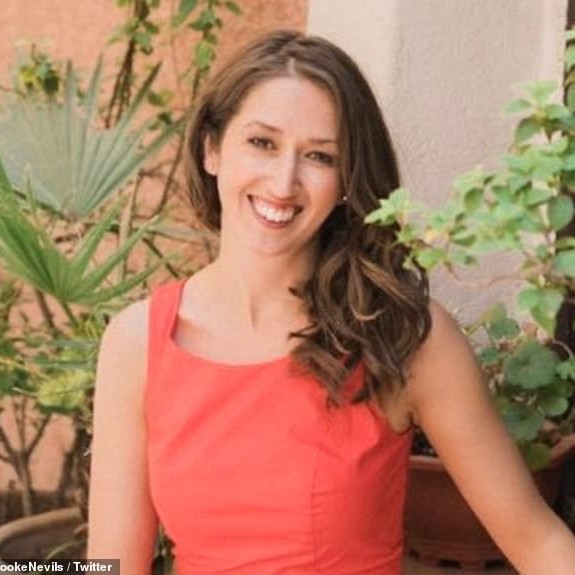
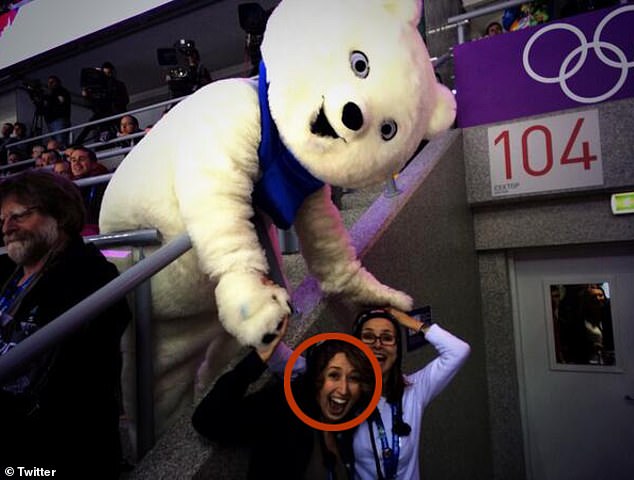
To anyone else at NBC, it was office small talk. To Brooke Nevils, who alleges Matt Lauer raped her during the 2014 Winter Olympics, it was a trapdoor back into a night she had spent years trying to outrun.
In her new memoir, “Unspeakable Things: Silence, Shame, and the Stories We Choose to Believe,” Nevils writes that those four words, and the warm smile that came with them, felt “ghoulish” and calculated. They were also, she says, the last words the one-time king of morning TV ever said to her in person.
The 4 Words That Brought Sochi Back
By the time that brief exchange happened, Nevils was in her early 30s, no longer the 29-year-old talent assistant who had flown to Sochi to help cover the Winter Games. According to reporting by the Daily Mail, she had returned to NBC as a more confident producer, convinced she no longer felt intimidated by Lauer, then one of the highest-paid journalists in television with a reported $25 million salary.
That day, she writes, she was tasked with recording Lauer’s voiceovers for a documentary. He greeted her as he would any producer, kept the session routine, then walked out of the booth toward his office.
At the door, he stopped.
“As he left the tracking booth to return to his office, he paused and asked with the warmest of grins: Was I in Sochi?” she writes. “A ghoulish grin lingered on his face.”
Nevils says she was instantly “cut off at the knees.” Years of work, therapy, and denial collapsed under a single reference to the Russian city where she alleges Lauer sexually assaulted her after a night of drinking with colleagues, including her then boss and Lauer’s co-host, Meredith Vieira.
She had indeed been in Sochi. In her account, the night began in the hotel bar, where Lauer, then 57, bought her vodka shots. She alleges that what followed in his hotel room left her bleeding and struggling to walk. Lauer has always denied that allegation. He maintains that the encounter was consensual and has faced no criminal charges.

“With just a phrase, he could open a bottomless well of shame, humiliation, and self-loathing,” Nevils writes of the “Weren’t you in Sochi?” moment.
For a long time, she says she wrestled with whether Lauer could truly have been that oblivious. “I wondered for a long while whether he could have been so clueless as to genuinely believe I remembered Sochi fondly,” she writes, before recalling his professional reputation. Lauer was once celebrated for his ability to read people in real time.
“He was considered the best live interviewer in the business,” she notes, which only deepened her suspicion that the remark was a pointed reminder of what she alleges happened there. “As with so many things about Matt, the answer is unknowable,” she concludes.
Living With Silence, Shame, and a Famous Face
For three years after Sochi, Nevils stayed quiet. According to the Daily Mail’s reporting on her book, she did not go to the police. She continued to see Lauer for sex over several months, a fact she writes about with raw self-reproach, describing a spiral of shame, depression, and fear that she might lose her job if she spoke out.
“The only thing to do was to find a way to put one foot in front of the other, to find a way to live with myself, to try to forget,” she writes. “I chose drinking. When life is too painful, alcohol is the most cost-effective escape.”
Her life, she explains, became a careful performance. There was the ambitious producer seen around the halls of NBC, and then there was the woman who relied on pills and alcohol to get through the day, trying to carry a secret tethered to one of television’s most recognizable smiles.
When she finally did speak, it was inside the same building where Lauer’s public image had been carefully maintained for two decades.
According to the New York Times, NBC executives announced Lauer’s firing in November 2017 after receiving a detailed complaint of inappropriate sexual behavior in the workplace. In internal communications shared at the time, the network said it had reason to believe the complaint was not an isolated incident.
Nevils’ allegation, which emerged as the #MeToo movement was reshaping the entertainment industry, helped topple Lauer’s career. His image as a genial, trustworthy morning host collided with stories of alleged misconduct that had, until then, been whispered rather than written down.
Lauer responded with a public statement acknowledging what he called deeply inappropriate behavior, while disputing some of the most serious claims. “Some of what is being said about me is untrue or mischaracterized, but there is enough truth in these stories to make me feel embarrassed and ashamed,” he said, adding, “I regret that my shame is now shared by the people I cherish dearly.”
A Mother’s Folder and a Breaking Point
The turning point for Nevils did not happen in a network office. It began, she writes, in grief.
In August 2017, her mother died suddenly from a catastrophic heart attack, just days before what would have been her 68th birthday. In the aftermath, Nevils discovered a folder her mother had prepared for her, titled “For Brooke for comfort in event of my death.” Inside were letters and poems spelling out how much her daughter meant to her.
“When she died, I stopped throwing away my life,” Nevils writes. “She spent the final years trying endlessly to bring her only daughter back to life, but I hadn’t listened. I broke her heart.”
The folder, which she describes as a lifeline from beyond the grave, forced a reordering of priorities. “When I opened that folder in 2017,” she writes, “another shift in values occurred. For three and a half years, I’d hated myself, for causing such pain to the people I loved, for making terrible choices to live with something that never should have happened, for the endless lies I’d told.”
Even then, she believed that coming forward about Lauer would be, in her words, a “suicide mission.”
“The math was not hard,” she writes. “Matt was going to win.”
What changed, Nevils explains, was her sense that staying silent had become its own kind of destruction. Her mother’s death also brought practical shifts. She inherited enough money to pay off her student loans and credit cards. She did not yet have a mortgage or children to support. She and her boyfriend were moving in together, and she believed he would back her no matter what she chose to do.
“Silence and complicity were no longer my only options,” she writes. “Now I would be the kind of person my mother had always believed I was.”
The day after Nevils reported Lauer to NBC, he was out. The network announced his dismissal, and the headlines that followed rewrote his legacy in real time. More women came forward with accusations of sexual misconduct, further complicating the story of a man who had been a morning ritual in millions of homes.
‘Today’ alum Ann Curry stands by Matt Lauer’s ‘brave’ accuser Brooke Nevils ahead of memoir release https://t.co/YDamOyRuN7 pic.twitter.com/FMViS6MsdG
— Page Six (@PageSix) January 30, 2026
The Fallout, the Comeback Talk, and What Remains Unsaid
Lauer has largely vanished from television since his firing, but he has not disappeared from the industry conversation. According to the Daily Mail, sources close to the former anchor have said he believes he was treated unfairly and is interested in a return to the spotlight.

“He believes he was unfairly treated and feels he still has something to say, something to offer, he’s just been waiting for the right moment,” a source told the outlet.
For Nevils, that possibility exists alongside memories that have already cost her years of self-doubt and recovery. In her book, she is blunt about the aftermath. She describes losing faith in herself, in institutions, and in the stories powerful men tell about what happens behind closed doors.
Now 41, she is not just revisiting the alleged assault or the months that followed. She is also trying to map the distance between the man millions watched joke about Halloween costumes and Thanksgiving recipes, and the man who, in her telling, could crack open her shame with a single, sunny question about Sochi.
“As with so many things about Matt, the answer is unknowable,” she writes of his intentions in that final hallway encounter. What is knowable is the impact it had on her, and the way those four words, spoken in a familiar voice, still echo through the story of his fall and her decision to finally put her own version on the record.
References