

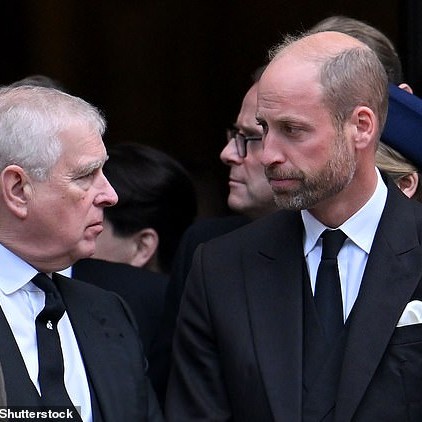
The line at a quiet High Street bank broke into cheers when a customer blurted out, “Prince Andrew has been arrested!” That small, unscripted moment, described by columnist Amanda Platell, captured something raw. A scandal-hit monarchy suddenly looked as if it might finally be confronting one of its most toxic chapters. Yet amid the shock, the statement from King Charles, and the roar of public reaction, one figure remained curiously muted in the public square. Prince William.
TLDR
Following Prince Andrew’s arrest on suspicion of misconduct in public office, a blistering new column questions Prince William’s quiet response, his lighter workload, and whether the heir is ready to be the monarchy’s stabilizing force.
A Bank Queue and a Breaking Point
According to Amanda Platell’s piece in the Daily Mail, the news of Prince Andrew’s arrest on suspicion of misconduct in public office spread like lightning. Ordinary people in that bank queue, from pensioners to shopkeepers, reacted with something close to relief. The sense was that a “festering sore at the heart of the Royal family” was finally being addressed.
King Charles responded with a carefully calibrated statement, publicly distancing himself from his younger brother and insisting that “the law must take its course.” It was a moment that combined constitutional duty with personal anguish, a king forced to put the Crown above his own flesh and blood.
Platell writes that the reaction felt almost cathartic. For many, the arrest was not just about one disgraced royal. It was about accountability, about whether the monarchy could still claim a moral authority in an era of scrutiny and social media outrage.
Yet as the crisis deepened, another question began to form. If King Charles had made his position clear, where was the voice of his heir?
Where William Stands in the Storm
In the column, Platell notes that all the public was told was that Prince William and Princess Catherine had “approved of” the King’s statement. The future king, usually so carefully staged at the heart of major royal narratives, seemed to be watching from the wings.
Behind the scenes, the portrait is very different. Platell describes William as Andrew’s fiercest critic within the family, convinced that both the late Queen and King Charles indulged his uncle for far too long. She recalls reports that in 2022 he issued a stark ultimatum over the Order of the Garter ceremony at Windsor. If Andrew appeared, William would not. The late Queen relented and kept Andrew away from the public elements of that day.
There was also that tense encounter on the steps of Westminster Cathedral, when Andrew is said to have approached William at the Duchess of Kent’s funeral. Cameras caught a moment that columnists have replayed countless times. William’s face appeared tight, his expression a flash of unmistakable anger.
Those episodes suggest a man of considerable private steel. In Platell’s framing, the energy is there in private but missing in public. At precisely the moment when the monarchy faces what she calls “the worst crisis to have hit the Royals in living memory,” the heir has, in her view, left a vacuum.
The Heir, the Workload, and the Weight
The criticism does not stop at silence. Platell leans hard into numbers that royal-watchers have long debated. She points out that in 2025, King Charles, then in his late seventies and undergoing cancer treatment, reportedly carried out more than 500 official engagements. William, in his early forties, logged significantly fewer.
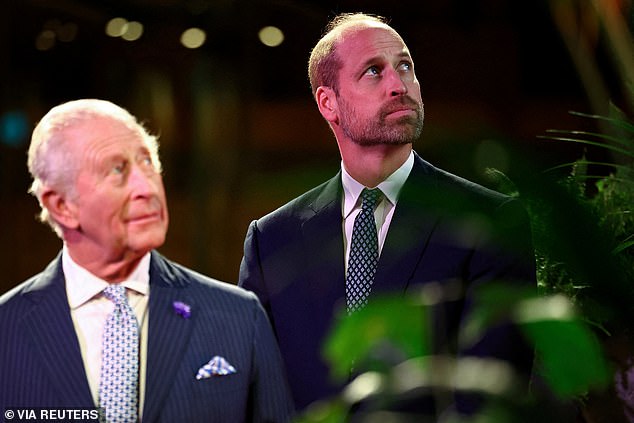
When Charles was Prince of Wales, he spent years as the monarchy’s workhorse, clocking hundreds of engagements annually, often while juggling overseas tours and single fatherhood after Princess Diana’s death. The comparison, Platell argues, does William no favors.
William and Catherine have made clear that they prioritize the “impact” of their engagements over “volume.” To their supporters, this is a modern, focused approach that reflects the demands of young children, a changing media landscape, and a desire not to crowd out the work of charities. To critics, it feels like a convenient shield.
The couple’s decision to move to a more secluded “forever home” inside the vast, protected grounds of Great Windsor Park adds another layer to the narrative. Platell reads the move as symbolically retreating from the messier, more visible demands of royal duty. In her telling, it reinforces an uncomfortable question about the heir to the throne. Does he truly want the “top job,” with everything it entails?
Mental Health and Royal Expectation
As the Andrew story dominated headlines, William stepped in front of cameras for a different reason. He sat down with the BBC for a discussion on men’s mental health alongside rapper and singer-songwriter Professor Green. The feature was headlined “William Gets Candid,” and the prince spoke about his own struggles as a former air ambulance pilot, describing how “carrying everyone else’s emotional baggage” had at times left him drained.
Platell acknowledges that the subject itself is vital. William has spent years trying to break the stigma around mental health, from his work with Heads Together to conversations with first responders and veterans. Yet in the specific heat of this crisis, she reads the timing very differently. For her, the focus on his own emotional strain feels misjudged, even self-indulgent, at a moment when the monarchy’s survival, in her words, is “the matter of the moment.”
This is where the generational fault line shows most clearly. William is a prince who came of age in the 1990s and 2000s, shaped by his mother’s trauma, a relentlessly intrusive press, and an era when public figures are encouraged to be vulnerable. His critics, many of them older and more traditional, still expect a stoic figurehead who swallows private pain and speaks mainly of duty.
The column channels that older expectation. In Platell’s eyes, every appearance, every quote, is part of a broader referendum on whether William is really prepared to put the institution before himself. The implication is stark. If Andrew is a mortal threat to the monarchy from the outside, an overly hesitant, overly private heir could become a quieter threat from within.
Fame, Scandal, and the Wider Cast
Platell’s column does not live only in the rarefied air of Windsor. It roams across the wider world of British fame, which is part of why her argument lands with such tabloid force.
There is Amanda Holden, preparing to return as a judge on “Britain’s Got Talent” in what will be her twentieth year. She jokes that she cannot bear to watch herself on screen, quipping, “I get on my own nerves.” Platell, with a flash of envy and admiration, writes about Holden’s beauty, marriage, radio success, and professionalism as qualities that would unsettle almost anyone.
There is “Wuthering Heights,” reimagined for a new generation and embraced by Gen Z, even as Platell digs into biographical claims about Emily Brontb and her treatment of her dog. There is Brooklyn Beckham, reportedly wiping family tattoos and unfollowing his parents on social media while still stepping out in a luxury watch and vintage wine linked to his father, David Beckham. To Platell, it looks like a calculated reminder that he is still part of the Brand Beckham economy.
Former “Love Island” star Maura Higgins appears, now on “The Traitors US” and modeling for Victoria’s Secret, her lingerie emblazoned with the word “Victoria.” Platell cannot resist recalling “Back To The Future,” when Michael J Fox’s character is mistaken for “Calvin Klein” because of his underwear label.
Even celebrity chef Gordon Ramsay is drawn into the mix. In his Netflix series “Being Gordon Ramsay,” he insists, “I am certainly not a bully.” Platell contrasts that line with accusations from actress Amanda Barrie and politician Edwina Currie about his behavior on past shows, painting a picture of how fragile and contested modern reputations can be.
Together, these vignettes create a noisy backdrop of personalities hustling to control their images, manage criticism, and spin their stories. Against that backdrop, William’s relative quiet during Andrew’s crisis feels, to Platell and those who share her view, like a striking absence.
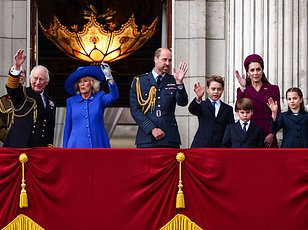
The monarchy has always lived somewhere between statecraft and celebrity culture. In an age when everyone from reality stars to radio hosts knows that visibility is power, the future king is being judged not only on his lineage but on his instincts as a public figure. How often he shows up. When he speaks. What he chooses to reveal or hold back.
Join the Discussion
Do you think Prince William’s quieter, more private style is the right approach for a future king in turbulent times, or should he be more visible when the monarchy is under pressure?