

TLDR
Sean Penn won his third Oscar for best supporting actor but skipped the ceremony, choosing to be in Ukraine instead and sharpening the contrast between his activist priorities and Hollywood’s expectations of its legends.
Another Oscar, Another Empty Seat
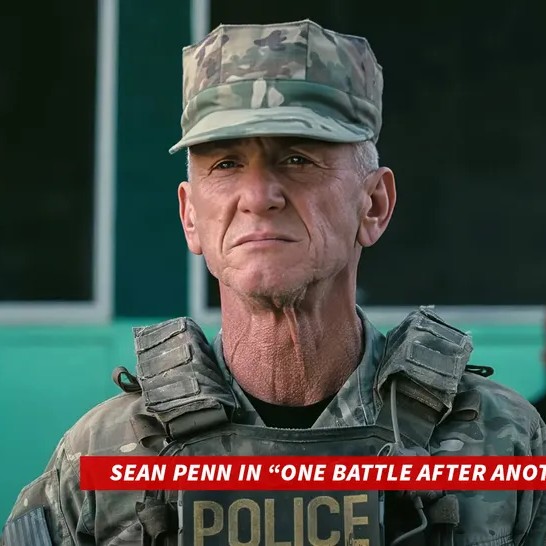
On what should have been a victory lap, Sean Penn’s chair sat empty. The 65-year-old star won Best Supporting Actor for his performance in “One Battle After Another,” his third Academy Award and his first in more than a decade.
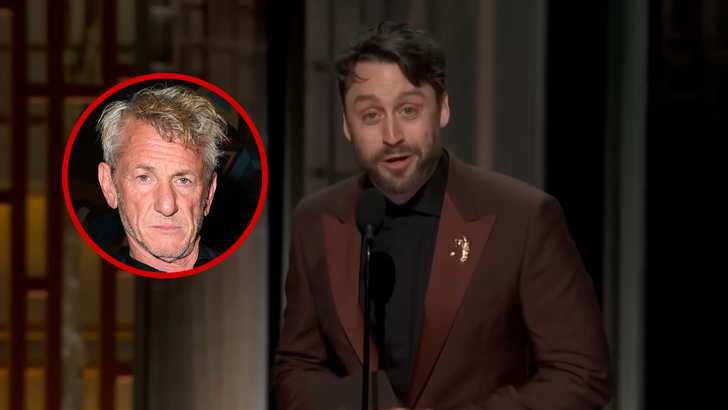
Viewers watched as Kieran Culkin, presenting the category, walked to the microphone and accepted the statue on Penn’s behalf. With a half-smile, he told the room that Penn “couldn’t be here this evening … or didn’t want to.” The line drew a ripple of laughter, but it also underlined a reality that has followed Penn for years. When Hollywood throws its biggest parties, the actor who helped define the 1980s and 1990s on screen is often somewhere else.
This time, that somewhere is not a discreet townhouse or remote set. It is Ukraine.
A War Zone Instead of a Red Carpet
According to The Associated Press, Mykola Serha, founder of Cultural Forces, a collective of Ukrainian service members involved in the arts, confirmed that Penn is currently in Ukraine. He declined to give details about the trip, but the location fits a pattern that has quietly reshaped Penn’s public image.
Sean Penn skipped accepting this third Academy Award at the 2026 Oscars this year to travel to Ukraine.
His absence is likely a mix of his disdain for Hollywood industry parties and public criticism of the Academy for “extraordinary cowardice”.
Sources did not tell the Times… https://t.co/XNSCIWi5go pic.twitter.com/iqRF73dd79
— The Metanarrative (@certaresnovis) March 16, 2026
Penn has spent years tying his celebrity to crisis zones. He traveled to New Orleans after Hurricane Katrina, to Haiti after the earthquake, and to Ukraine early in the Russian invasion, where he began work on a documentary and met with President Volodymyr Zelenskyy. He later loaned one of his Oscars to Zelenskyy’s office as a gesture of solidarity, a symbolic passing of Hollywood gold into the chaos of real-world conflict.
Seen through that history, skipping a triumphant Hollywood homecoming for another Ukrainian visit is not a snub thrown for effect. It plays as a continuation of the persona he has been building, the restless actor who treats awards as props in a larger story about power, politics, and the cost of war.
The Image That Follows Penn Now
Penn’s absence this year is not a one-off. He famously ducked previous Oscar nights when he was nominated for “Dead Man Walking” in 1996, “Sweet and Lowdown” in 2000, and “I Am Sam” in 2002. Over recent weeks, he also skipped the BAFTAs and The Actor Awards, where he reportedly won for the same role.
That track record has turned him into an unusual figure in the awards ecosystem. He wins, then vanishes. Industry insiders whisper about a complicated relationship with Hollywood ceremony, while fans debate whether it reads as principled or dismissive. When an actor beats performers like Delroy Lindo, Benicio Del Toro, Jacob Elordi, and Stellan Skarsgard, the expectation is a speech, a story, a moment frozen in time. Instead, the moment belongs to the empty chair and to the knowledge that its owner chose a war zone over a spotlight.
For Gen X and Boomer viewers who watched Penn grow from “Fast Times at Ridgemont High” rebel to double Oscar winner for “Mystic River” and “Milk,” this latest chapter feels like the culmination of a long arc. The talent that once fought for prestige roles is now more likely to use prestige itself as leverage. Whether audiences see that as noble, frustrating, or both, one thing is clear. Sean Penn’s legend is no longer just about the roles he plays, but about the rooms he refuses to enter.
Do you see Sean Penn’s latest Oscar no-show as a powerful statement about priorities, or do you wish he had shared the moment with Hollywood one more time?