

It started as another carefully staged walk-through at an auto facility. Then a Ford worker broke the script, called Donald Trump a “pedophile protector” on camera, and the clip rocketed onto TMZ and through every corner of the internet.
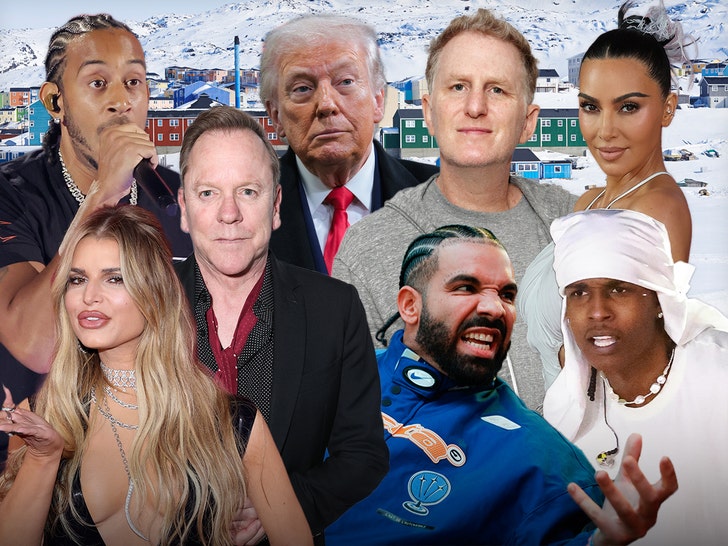
In the same TMZ lineup, Kiefer Sutherland found himself the punchline of a self-driving car joke, with the site cracking that the “24” legend might want to let Waymo take the wheel. Suddenly, two very different men were on the same ballot.
TMZ bundled both moments into its recurring “Stars and Scars” poll, inviting fans to decide who had the better week and who should take the hit. It sounds like a game.
But beneath the polls and punchlines sits a bigger story about how we turn politics, fame, and even safety into a spectator sport, where we sit in judgment over people we will never meet.
‘Stars and Scars’ Puts You In The Jury Box
For years, TMZ has turned celebrity drama into something closer to a game show with its “Stars and Scars. You Be The Judge” feature. Two or three big stories are laid out like evidence, and fans click to decide who came out on top and who should be dragged.
There are no lawyers, no cross-exams, just that familiar rush of casting a vote. In a culture raised on reality competitions and elimination rounds, it feels natural to score the rich and famous with the same casual flick we use to rate a ride share.
The Trump clip and the Kiefer joke fit neatly into that formula. One moment is furious and political, the other wry and personal, and together they ask the same question. Whose behavior are you willing to forgive, and whose missteps feel unforgivable?
The Ford Worker Who Spoke Up To Trump
TMZ’s video shows a Ford worker referring to Donald Trump as a “pedophile protector” while the former president moves through the facility. TMZ reported that Trump’s reaction “made big news,” turning what might have been a tidy photo opportunity into a viral confrontation.
In a single phrase, the worker flipped the script. Instead of silently standing in the background while power walked past, he voiced a harsh accusation that echoed online long after Trump left the building.
That moment did not appear out of nowhere. Trump has long been one of the most polarizing figures in modern American life, a man who built his fame as a tabloid fixture and reality host on “The Apprentice” before entering the White House. Hecklers and critics have followed him from campaign rallies to public ceremonies, turning even routine appearances into potential flashpoints.
What feels different now is how quickly those flashpoints are framed as content. A worker speaks, a camera catches it, and within hours strangers worldwide are not just watching the clip. They are literally voting on whether the powerful man at the center deserves sympathy or scorn.
From ‘The Apprentice’ To Real-Time Reckonings
No one understands ratings like Donald Trump. On “The Apprentice,” his boardroom verdicts were designed for maximum humiliation and drama, complete with the catchphrase “You’re fired” that made him a prime-time villain and folk hero at the same time.
That television muscle never really went away. As a politician, Trump monitored crowd sizes, cable coverage, and poll numbers with the same intensity a producer checks overnight Nielsen data. Supporters became “the base,” detractors became “the haters,” and every headline felt like a scorecard.
So when a worker looks him in the eye and brands him a “pedophile protector,” then millions of viewers are prompted to weigh in through an online poll, it lands like a twisted extension of the reality show he helped create. The roles are reversed. The audience is now the one delivering the verdict.
For viewers at home, there is a strange thrill in that reversal. You cannot rewrite policy or relive history, but you can click a box that says exactly how you feel about a man whose face has occupied screens for decades.
Kiefer Sutherland, Waymo And The Joke About Control
If Trump represents raw political power, Kiefer Sutherland is pure Hollywood mythology. For nine heart-pounding seasons of “24,” he was Jack Bauer, the federal agent who could outdrive bad guys, outrun explosions, and outsmart terrorists with a phone pressed to his ear and a gun in his hand.
Offscreen, Sutherland’s relationship with cars has been less heroic. He has faced multiple drunk driving cases, including a high-profile arrest in Los Angeles in 2007 that ended with a jail sentence. He served his time, expressed regret, and eventually slid back into steady work, from “Designated Survivor” to touring as a musician.
So when TMZ quips that Sutherland might want to try Waymo, the self-driving car company owned by Alphabet, it is not coming out of nowhere. It is a knowing wink at a history fans remember, a way of saying that maybe, just maybe, it would be safer if the action star let the technology take the wheel.
The joke lands because it hits that blend of nostalgia and concern. We still picture him cornering villains in a black SUV at impossible speeds, even as we know that real-life driving mistakes can shatter lives in seconds. The fantasy and the fallout are always intertwined.
Why We Love To Judge The Famous
On the surface, a “Stars and Scars” poll is harmless fun. Two headlines enter, one wins, and we move on. Yet the choices we make in those tiny digital boxes reveal something about what we value and what we are willing to excuse.
Do you side with a powerful politician who has heard every insult imaginable, or with the worker who risks becoming the face of backlash for speaking out? Do you laugh off a driving joke about an actor whose voice helped define a golden age of prestige television, or does it remind you that behind the stunt work are real roads, real cars, and real people who get hurt?
There is also the seduction of access. We are invited into the same conversation as insiders, casting judgment on the behavior of billionaires and Emmy winners the way a small-town jury might discuss neighbors. In a world where so many decisions feel out of reach, clicking a vote feels like taking a tiny piece of control back.
At the same time, it blurs the line between accountability and entertainment. Serious accusations and hard-lived consequences sit beside snarky captions and reaction GIFs. The higher the stakes, the juicier the poll.
The Quiet Power Behind Your Click
There is no real courtroom at the end of a TMZ poll. Donald Trump will not lose office or gain it because of an online tally, and Kiefer Sutherland is not about to be banned from driving based on how viewers feel about a punchline.
Yet the way we vote, share, and talk about these moments shapes reputations in ways that last far beyond the news cycle. A worker who challenges a former president on camera becomes part of his lore. An actor who once faced a mugshot can never fully outrun that image, no matter how many acclaimed roles or heartfelt apologies follow.
So when you see “You be the judge” splashed across a poll, it is worth taking a breath before you cast your verdict. Behind every glossy headline is a real story about power, ego, risk, and regret, playing out in front of an audience that is larger and louder than ever.
The stars will keep collecting their scars. The real question is what we choose to remember them for when it is our turn to click.