

TLDR
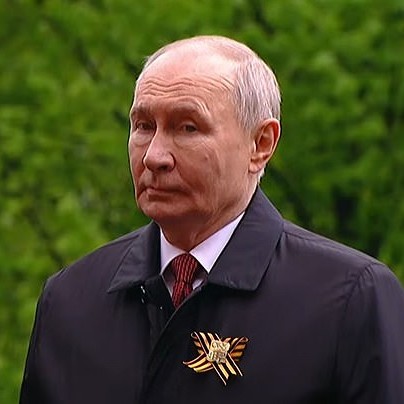
A swollen-faced Vladimir Putin presiding over a stripped-back Victory Day parade has revived fierce debate about his health, his image, and how tightly he still holds Russia.
On Red Square, the stage was familiar, but the mood felt altered. Russia marked the 81st anniversary of Nazi Germany’s defeat with a Victory Day parade that featured no tanks, no ballistic missiles, and far fewer troops than the spectacles that once defined Putin’s rule. Instead, attention narrowed to the 73-year-old president himself, framed by cameras in close-up.
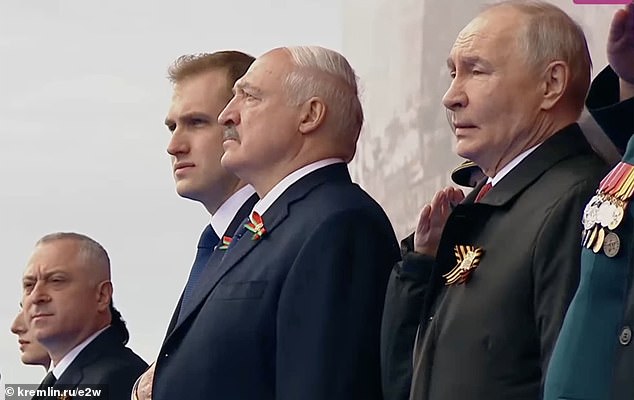
Social media feeds filled with stills of Putin’s face, which appeared puffy, heavily lined, and, to many viewers, changed. Ukrainian commentator Anton Gerashchenko highlighted one image and mocked the Kremlin strongman as a leader who no longer looks like the hero he sells to his own citizens. He later joked that “sanctions have even reached Putin’s Botox,” turning a global sanctions regime into a punchline about vanity and age.
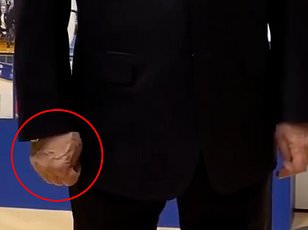
The fixation did not come out of nowhere. Putin has spent decades cultivating a hyper-masculine persona, from shirtless Siberian photo ops to martial arts displays. That myth has lately collided with less flattering footage. In late 2025, cameras captured him meeting 22-year-old public health activist Yekaterina Leshchinskaya. As he extended his right hand, observers noticed bulging veins, paper-thin skin, and an odd, tense clench that he kept flexing under his jacket sleeve. Clips spread across X and Polish media, with Ukrainian commentators speculating, without evidence, about possible pain or hidden illness.
For exiled critics, the new Victory Day images were political ammunition. Longtime Putin foe Leonid Nevzlin described the ceremony as a “shrinking” ritual centered on a single aging figure, stripped of the military hardware that once projected Russian might. He argued that the modern Russian state has become a kind of court, in which the leader’s body, his gait, even the appearance of his hands are read for signs of change.
Monitoring group Crimean Wind pushed that idea further, noting that “history shows that many dictators visibly aged before the fall of their regime or their death.” The group cited chronic stress, fear of losing power, and deep isolation as forces that can speed physical decline. Ukrainian analyst Ivan Yakovina was blunt, suggesting that “one can assume this parade will be his last,” a line that spread rapidly among those convinced Putin is nearing the end of his rule.
From the Russian opposition, billionaire Mikhail Khodorkovsky accused Putin of hijacking the Soviet Union’s World War II victory for his own survival narrative. On what he called an almost empty square, beneath an electronic warfare shield, Khodorkovsky argued that Putin was trying to privatize a collective triumph to justify what he described as a “shameful, criminal war.” He painted the day as “a personal special operation of one deeply frightened, aging dictator” rather than a shared national remembrance.
Ukrainian commentator Alexey Kopytko added that Putin appears to be losing some of his most fanatical pro-war supporters, as battlefield realities intrude on the old mythology. Many analysts now frame the Kremlin as dangerously dependent on one man’s health, mood, and physical stamina. Every new image of swelling, stiffness, or fatigue becomes, in that telling, a data point about regime stability.
The Kremlin has repeatedly dismissed speculation about Putin’s health, and there is still no confirmed diagnosis or public medical disclosure. Yet in a system built so completely around a single figure, the conversation is no longer just about wrinkles or Botox. It is about what happens to Russia when the man at the center of the ritual finally falters, and who controls the narrative when the cameras zoom in again next year.
Do you see these images as a genuine sign of declining power, or as political theater on all sides? Share your take on X, Facebook, and with friends who have followed Putin’s rise since the 2000s.