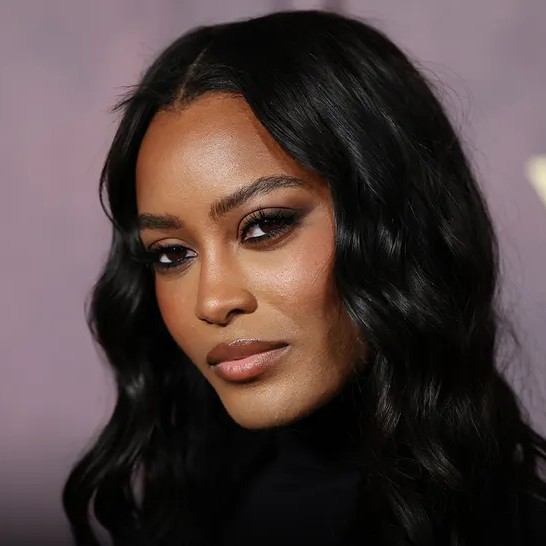


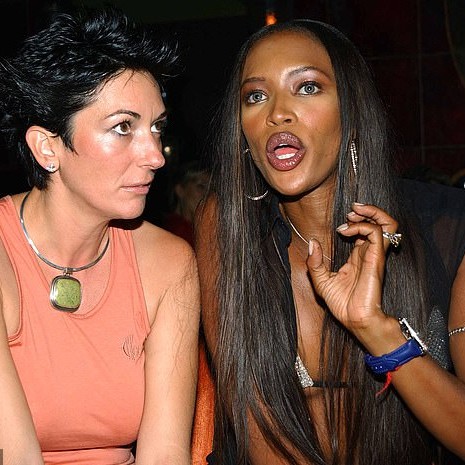
For decades, Naomi Campbell has moved through rooms where power hums louder than the music. Designers, billionaires, presidents, revolutionaries. Some became protectors, some became icons, and one connection in particular has become a lasting shadow.
TLDR
Newly resurfaced files and photos have revived questions about Naomi Campbell’s past proximity to Jeffrey Epstein and Ghislaine Maxwell, while the supermodel insists she never knew of his crimes and fights to protect her legacy.
A Supermodel in the Crosscurrents
Campbell has often spoken about growing up without a father and leaving London for Paris as a teenager to model. It was a fairy tale that started early and fast. On the runway, she projected invincibility. Off it, she gravitated toward older, powerful figures who felt like anchors.
She famously referred to Tunisian French designer Azzedine Alaia as “Papa” and described how he guided and protected her as she navigated an industry run mostly by men. In South Africa, she bonded deeply with Nelson Mandela, whom she affectionately called “Madiba Tata” and described as a grandfather figure. Those relationships burnish her image as a woman embraced by history.
Alongside those figures, however, there were other names. Jeffrey Epstein and Ghislaine Maxwell were part of the same rarefied social circuit. They flew private, funded galas, and collected proximity to beauty and influence. For a young model turned global star, they were simply there, on yachts and at charity balls, often introduced by friends who seemed unimpeachable.
The Fire and Ice Guest List
According to documents and flight logs reported by outlets including the Daily Mail, Campbell invited Epstein to multiple events in the 2000s. He was on the guest list for her Fire & Ice party in St Tropez in 2004, and later appeared at a “Fashion for Relief” fundraiser and a Dolce & Gabbana tribute celebration in Paris in 2010.
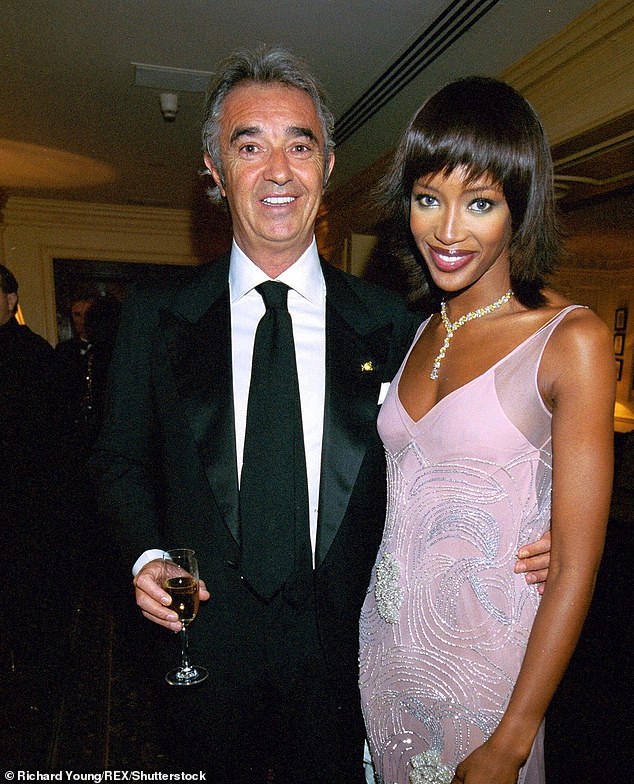
The timeline is what unsettles many observers. Epstein had already pleaded guilty in Florida to sex offences involving a minor and served about 13 months in custody, in an arrangement widely criticized as unusually lenient for a man accused of such serious conduct. Reuters has detailed how that 2008 deal allowed him extensive work release even while technically incarcerated.
Campbell has also been photographed with Virginia Giuffre, then Virginia Roberts, at her 31st birthday party held on a yacht off the South of France in 2001. Giuffre has alleged in court filings and interviews that Epstein and Maxwell trafficked her as a teenager and that Epstein liked to show off his friendship with the supermodel.
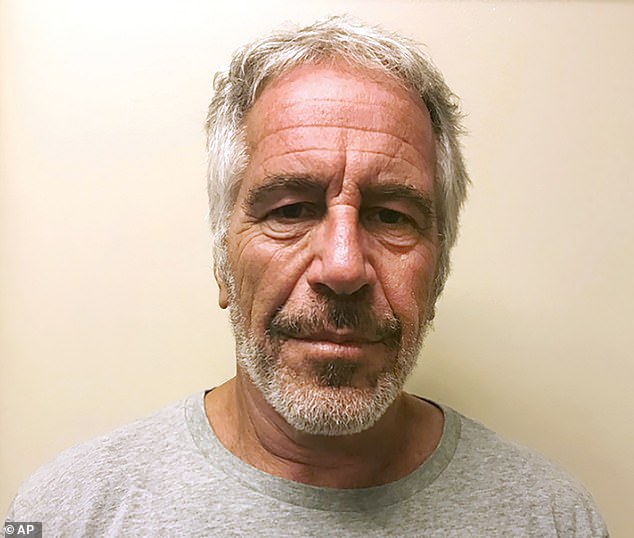
In later testimony and public statements, Giuffre described being flown around the world to please Epstein and his associates. She has never accused Campbell of abuse. Instead, the image that endures is of a young woman, a powerful model, and a dangerous financier colliding in the same glittering frame.
Recently unsealed legal documents have added one more unsettling detail to that mental picture. In them, Maxwell is described as offering Campbell “two playmates” as companions, language that has been widely quoted in coverage. The identities of those young women have not been made public. There is no suggestion that Campbell knew of any abuse or that she understood what such an offer might signify inside Epstein’s world.
Naomi Speaks on Epstein and Power
As Epstein’s crimes were exposed in greater detail, the social fallout was immediate. Former associates scrambled to explain old photographs and shared itineraries. For Campbell, the reckoning arrived in 2019, when images of her with Epstein and Giuffre resurfaced across social media and in traditional press coverage.
In response, she took the unusual step of addressing the controversy directly on her own YouTube channel. As reported by The Guardian, she told viewers that she was “sickened” by what she had learned about Epstein and insisted that she did not know of his crimes at the time. She described meeting him because of other influential people in her circle, and rejected the idea that they were close.
“I knew him like everybody knew him,” she said of Epstein, emphasizing that she did not consider him a friend. She framed her presence at events as part of the life she led as an international model and charity host, where guests were often curated by sponsors, organizers, and mutual acquaintances rather than by her alone.
Campbell also pushed back on the suggestion that photographs tell the full story. As she pointed out, being in the same room, or even the same picture, with someone later exposed as a criminal does not automatically mean complicity. According to The Guardian’s report, she stressed that she has never been charged with any offence related to Epstein and that any attempt to imply otherwise was unfair.
To date, there is no public allegation from prosecutors that Campbell participated in Epstein’s trafficking scheme. Her name does not appear among the defendants or co-conspirators in the criminal cases that ultimately sent Maxwell to prison and, in Epstein’s case, ended with his death in custody while awaiting trial on new federal charges.
Legacy, Motherhood, and Image Control
For women of Campbell’s generation, especially Black women in overwhelmingly white power structures, mentors could be both lifelines and liabilities. The same charisma that drew Alaia and Mandela to her also drew figures like Epstein, who used social glamour as camouflage.
Campbell now sits in a different chapter of her life. She is a mother, a producer, and a curator of retrospectives on the supermodel era. She champions emerging designers from Africa and the diaspora and still heads “Fashion for Relief,” the charity platform she founded in the mid 2000s. Her public narrative leans into resilience, philanthropy, and the soft power of long survival in a ruthless industry.
Yet in the digital age, legacy is not a straight line. Court filings can be uploaded, party photos re-circulated, and past guest lists combed for meaning that was not visible at the time. A single screenshot of Campbell, Epstein, and Giuffre on a yacht can outweigh a thousand photographs of runway triumphs in the minds of some viewers.
The tension now sits between two versions of Naomi Campbell. One is the woman who found family in designers and statesmen, who used her fame to support Nelson Mandela’s causes and spotlight global crises. The other is the woman whose name appears in legal documents and tabloid headlines whenever Epstein’s network is discussed, even though she was never charged.
Campbell appears determined to control which version defines her. By speaking on her own channels, aligning herself publicly with survivors, and foregrounding her philanthropic work, she is betting that readers and viewers will see the difference between proximity and participation. The documents may live forever online. So will her answer to them.
Join the Discussion
How do you balance a celebrity’s past associations with what they say and do now, especially when old photos and new disclosures keep colliding in public view?
References