

Two of television’s most polarizing graduates of primetime news are colliding again, this time over the disappearance of an 84-year-old grandmother and how far on-air personalities should go when families are under siege.
TLDR
Megyn Kelly and Chris Cuomo are trading public attacks over Kelly’s coverage of missing Arizona grandmother Nancy Guthrie, exposing a deeper fight about clickbait, ratings, and what ethical crime reporting looks like when a famous family is involved.
From Colleagues to Combatants
Megyn Kelly and Chris Cuomo once orbited the same elite media universe. She anchored at Fox News before a high-profile but rocky run at NBC. He fronted a flagship primetime show at CNN. Both now work outside legacy broadcast power, building second acts on cable and digital platforms.
According to Daily Mail US, their latest clash erupted after Kelly questioned whether every member of Savannah Guthrie’s extended family had been fully ruled out in the disappearance of Savannah’s 84-year-old mother, Nancy. The missing woman, last seen entering her Tucson home, has become the emotional center of a case that is still unresolved.
Police in Pima County publicly stated that the Guthrie family, including in-laws, were not being treated as suspects. Daily Mail US reported that a sheriff’s statement originally described the relatives as cleared, language that was later softened to say they had not been identified as suspects, a nuance Kelly highlighted on her program.
These distinctions, which might sound like mere legal phrasing, became fuel for a media feud. Kelly framed her questions as part of aggressive crime reporting. Cuomo saw something very different.
The Missing Matriarch at the Center
At the heart of the dispute is not the hosts themselves, but Nancy Guthrie, a private citizen who happens to be the mother of one of morning television’s most recognizable faces. Savannah Guthrie rose to national prominence on NBC’s “Today” show and has maintained a careful, largely drama-free public image.
Nancy’s disappearance shattered that protective bubble. The Daily Mail US describes how investigators have released very limited information as they search for a possible captor. There are no named suspects, and law enforcement has urged the public to avoid unfounded speculation about family members.
That plea for restraint is where the friction begins. Kelly has emphasized her own history as a hard news anchor and as a woman who has dealt with a stalker. On her program, she suggested that her personal experiences, along with reporting from NewsNation’s Ashleigh Banfield, justified sustained scrutiny of timelines, video evidence, and family dynamics, even as police stressed that relatives were not suspects.
In Kelly’s telling, she is treating the Guthrie case the way she would any high-profile missing person story, insisting that law enforcement language and press releases be read carefully. In Cuomo’s telling, that approach is precisely the problem.
Clickbait, Ratings, and Reputation
Chris Cuomo, now hosting on NewsNation after his CNN exit, took his objections public. According to Daily Mail US, he wrote on X that it was wrong to treat the Guthrie story as digital bait, and he accused Kelly of hinting that surveillance videos might be unreliable and that the family was under new scrutiny.
One of his posts, as quoted by Daily Mail US, declared that it was “shameful” to play the case for online attention. He also suggested that Kelly’s tough stance on the Guthrie coverage might be tied to lingering resentment over her NBC departure. The barb referenced the widely reported multimillion-dollar payout she received when she left the network after backlash to her on-air comments about blackface.
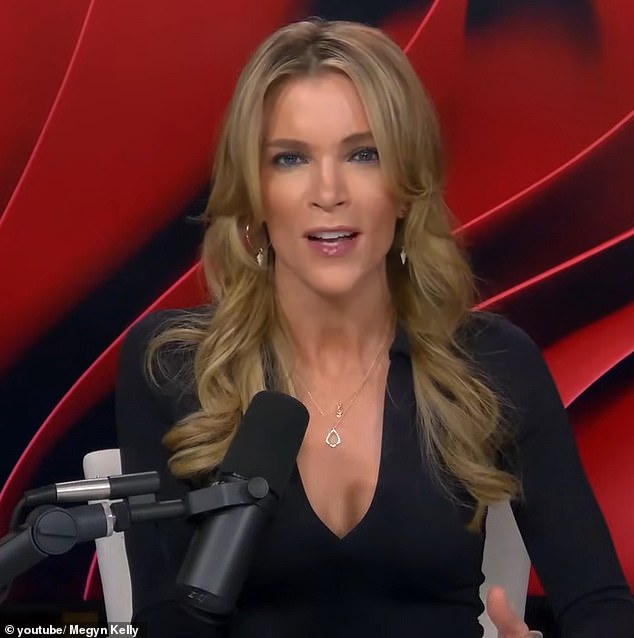
Kelly, never one to back away from an on-air challenge, answered on her own show. She pushed back on the idea that she was exploiting the case and instead turned the spotlight back on Cuomo’s career. She contrasted his cable ratings struggles with the reach of “The Megyn Kelly Show,” which has built a sizable conservative podcast and YouTube audience since her NBC chapter ended.
Her response, as recounted by Daily Mail US, was not limited to arguing journalism standards. Kelly also repeated an unflattering nickname for Cuomo, tying it to what she portrayed as his weak ratings performance and a podcast that she claimed draws far fewer eyes than her own digital empire.
For Kelly, the exchange became evidence that she is still a force in right-leaning media. For Cuomo, it was a chance to position himself as the defender of a besieged family and a critic of what he described as sensational crime coverage.
Old Scandals, New Battleground
Their history gives the current feud extra charge. Both hosts carry scars from earlier scandals, and both have spent recent years trying to reshape their reputations.
Cuomo was fired from CNN after documents revealed that he had privately advised his brother, former New York governor Andrew Cuomo, during the governor’s sexual harassment crisis. The New York Times reported in its piece “CNN Fires Chris Cuomo After New Details Emerge About His Efforts to Help His Brother” that network leadership concluded he crossed a line between journalist and family advocate.
Kelly, meanwhile, left NBC after fierce criticism of on-air remarks about blackface in Halloween costumes. According to the New York Times article “Megyn Kelly and NBC News Reach Exit Deal,” she and the network agreed to a settlement that ended her morning show and closed a high-profile chapter of her career at the network.
Both have since recast themselves as outsiders. Kelly leans into her independence from corporate newsrooms, highlighting her freedom to talk about crime, politics, and media without network constraints. Cuomo presents his NewsNation platform and digital presence as an alternative that is less partisan than his old CNN slot, even as he remains a highly opinionated host.
Those parallel reinventions make the Guthrie case more than a single argument. It is a stage on which both are re-auditioning for the public, trying to prove what kind of journalist or commentator they have become.
What It Means for Viewers
The stakes in this back-and-forth stretch beyond two familiar names. For Savannah Guthrie, the disappearance of her mother is a private nightmare unfolding in an excruciatingly public arena. For viewers, it raises difficult questions about how much scrutiny is too much when the loved one of a public figure vanishes.
Kelly’s camp argues that hard questions, including about relatives, are part of serious crime reporting, especially when new information or shifting official language appears. Cuomo’s camp warns that foregrounding those possibilities, when police say the family is not being treated as suspects, risks smearing people who are already grieving.
On one level, this is a very modern media story. A missing-person investigation intersects with star power, social media platforms amplify every sting, and podcast and cable ratings loom over editorial choices. The audience is left to decide which version of integrity, if either, feels convincing.
On another level, it is an old story about ego, competition, and the high-voltage world of television personalities who know that every segment shapes their legacy. Kelly and Cuomo both understand how quickly reputations can shift. Their confrontation over Nancy Guthrie’s case is less a side skirmish and more the latest chapter in their respective fights to stay relevant, powerful, and trusted in a fragmented media age.
Join the Discussion
When a crime case involves the family of a famous TV anchor, how should journalists balance tough questions with protecting people who may already be living through the worst moment of their lives?