

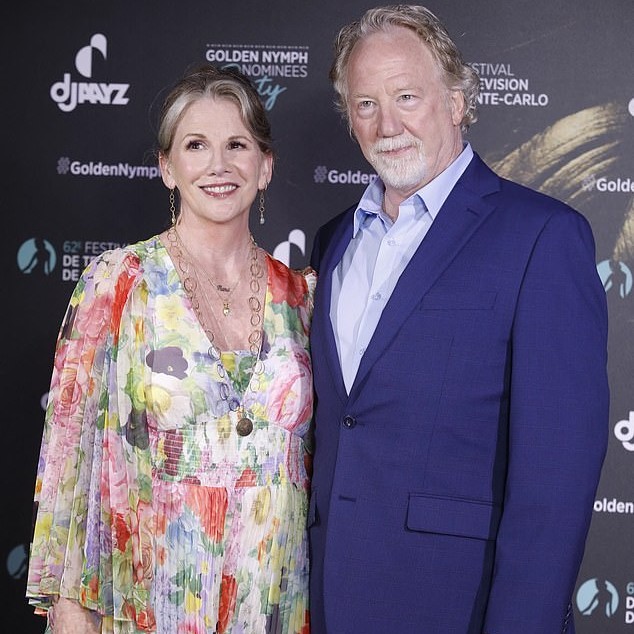
The Hollywood family behind Julia Roberts and Emma Roberts tried to sound an alarm about a beloved TV star long before anyone was ready to listen. At the center of it all was actress Eliza Roberts and a blunt, graphic deposition that painted a very different picture of Timothy Busfield than the one fans knew from prime time.
Her sworn words, given in the mid 1990s, described a man she called a “creep” who, she said, had sexually “harassed and humiliated” her. Those claims were submitted to support a teenage girl’s allegation that the “Little Big League” actor crossed serious lines on set, even as he publicly denied any wrongdoing.
‘Animal House’ Actress Steps Into the Line of Fire
Before she was part of one of Hollywood’s most famous dynasties, Eliza Roberts already had her own cult following. She appeared in “National Lampoon’s Animal House” and later carved out a steady career as an actor, casting director, and producer.
She would eventually marry Eric Roberts, the Oscar-nominated star and older brother of Julia Roberts, becoming stepmother to future “American Horror Story” and “Scream Queens” actress Emma Roberts. It was a classic Hollywood power circle, the kind of family that seems born for red carpets and awards-season dinners.
Which is why her decision in 1994 to step forward in a sexual harassment case involving Timothy Busfield landed with such quiet force.
Deposed at age 41, Roberts explained under oath why she was coming forward at all. “I read an article in a newspaper several weeks ago about a teenage girl who had worked on a set with Tim Busfield, and she had accused him of lewd and harassing behavior,” she told attorneys. “I was stunned to hear it because the same thing happened to me with him.”
Inside the Case Tied to ‘Little Big League’
The article Roberts was referring to involved a 17-year-old extra on the baseball film “Little Big League,” shot in Minneapolis in the early 1990s. The teenager alleged that Busfield invited her to his trailer, supplied her with alcohol, and propositioned her.
Busfield denied the allegations. The accusations, however, pushed the story into the headlines and opened the door for other women to speak to attorneys about their own experiences.
Court records obtained by the Daily Mail show that six other women ultimately came forward to provide sworn statements. Three of them had worked on the “Little Big League” production. Two were Minneapolis women who said in depositions that Busfield had aggressively hit on them in bars in a way they described as persistent, unsettling, and overtly sexual.
Among those six was Eliza Roberts, who had not been involved with the film at all but said she recognized a disturbing pattern in what the teenager described.
The Night Eliza Says Everything Changed
In her deposition, Roberts recounted an encounter with Busfield that she said had taken place roughly five years earlier. She made clear that they barely knew each other.
According to her sworn statement, the interaction quickly turned explicit. Roberts said Busfield described his desire to perform oral sex on her, told her he would be “so great in bed” for her, and complained that his wife was, in his words, a “lousy f***.” At the time, Busfield was married to his first wife. He later married “Little House on the Prairie” star Melissa Gilbert in 2013.
Roberts said the exchange left her shaken and degraded. In the deposition, she described Busfield as a “creep” who had sexually “harassed and humiliated” her. She went further, likening his behavior to that of a rapist who “compulsively” and “indiscriminately” targets women.
Those are extraordinary words in any era, but particularly striking considering the time. The testimony came long before the hashtag era, when very few working actresses were willing to attach their names and reputations to detailed allegations about a man who was, at that point, a rising television fixture.
A Hollywood Family Breaks the Silence
Roberts did not need to insert herself into the case. By the mid 1990s, she and Eric Roberts were already a familiar pair on red carpets and at glitzy openings, including a Planet Hollywood premiere in Las Vegas. She was not only his wife but also his manager and a producer, running a production company and working steadily as a casting director.
Her husband, Eric, carried his own Hollywood weight as an Oscar-nominated actor. His sister Julia Roberts was already one of the biggest movie stars in the world, and Emma Roberts was on her way to building a career of her own. This was the definition of a golden Hollywood family with every incentive to avoid messy public battles.
Yet when a teenage extra accused Busfield of harassment on the “Little Big League” set, Eliza Roberts chose to align herself with the young woman. Her testimony was not a vague character reference from afar. It was a specific, graphic account of her own experience that she believed supported the pattern the girl described.
The Daily Mail reported that it obtained copies of all six sworn depositions, including Roberts’s statement, from the court. Each was given under penalty of perjury, a legal reality that underscored the seriousness of what these women were willing to put in writing.
The Split Screen of Timothy Busfield
For television audiences, Timothy Busfield was, and is, deeply associated with prestige network drama. He starred in “Thirtysomething,” winning an Emmy for his work, and later appeared on “The West Wing” as journalist Danny Concannon opposite Allison Janney.
On screen, he played sensitive husbands, dogged reporters, and characters who projected warmth and intelligence. Off-screen, according to court documents and sworn testimony, he was facing a very different public narrative.
The legal filings tied to the “Little Big League” accusations, including Roberts’s deposition, did not erase his career. He continued to work steadily in television as both an actor and director. Fans who loved “The West Wing” or recognized him from “Field of Dreams” might never have heard of what was written in those Minnesota court records.
That split screen is part of what makes Roberts’s decision to speak out feel so piercing now. One side shows the familiar Emmy winner. The other shows the version described in her deposition, a man she said used crude and unwanted sexual language with a woman he barely knew and who, in her view, “compulsively” targeted women.
Why the 1994 Deposition Still Hits a Nerve
In the era of #MeToo, it is easy to forget how rare this kind of on-the-record testimony once was. Long before social media, a casting director and actress choosing to back a teenage accuser in sworn legal papers and to attach her own story to it was not an expected move. It was a risk.
Roberts testified that she came forward because she recognized herself in the account she read in the newspaper. “I was stunned to hear it because the same thing happened to me with him,” she told attorneys. That simple sentence reveals how accusations can unlock buried experiences, and how powerful it is when one woman decides not to stay quiet.
Busfield denied the teenager’s allegations, and the legal system played out far from most viewers’ living rooms. What remains on the record are those depositions. They show a cluster of women, including a member of a Hollywood power family, stating under oath that what they read about on the “Little Big League” set did not surprise them.
For fans of “The West Wing,” “Thirtysomething,” or “Field of Dreams,” that knowledge sits uncomfortably beside years of admired work. For the women who signed their names to those court papers, including Eliza Roberts, the story is less about fame and more about a moment when they decided to document what they say really happened.
Hollywood loves a glossy narrative, the kind where everyone stays likable, and the past politely fades. Roberts’s 1994 deposition is the opposite of that. It is blunt, graphic, and impossible to unhear, a reminder that behind the charismatic glow of a familiar face, another version of the story may already be locked away in a court file, waiting to be read.