

In a political meeting that sounded more like the opening scene of a spy thriller, Poland’s prime minister, Donald Tusk, suggested that Jeffrey Epstein was not only a convicted sex offender tied to global elites, but also likely a Russian asset.
With millions of newly released U.S. files on Epstein now under scrutiny, Tusk’s allegation drops another layer of intrigue onto a story that already touches presidents, princes, billionaires, and global intelligence services. The question hanging over capitals, boardrooms, and royal residences is simple. If Epstein was part of an espionage game, who might still be vulnerable to whatever he left behind?
From Sex Crimes Case to Global Spy Puzzle
Jeffrey Epstein’s name first went mainstream when he pleaded guilty in Florida to sex-related charges involving a minor in 2008. A decade later, his arrest on federal sex trafficking charges and his death in a New York jail turned his case into a permanent fixture in modern scandal history.
According to the New York Times, Epstein was found dead in his Manhattan jail cell in August 2019, and his death was ruled a suicide by New York officials. That ruling did little to quiet speculation about what, and who, he knew.
For years, whispers followed Epstein that his lavish lifestyle and access to powerful men could not be explained by hedge fund math alone. There were rumors that he had ties to intelligence services, from Russia to Israel, and that his private island and properties functioned as pressure points for potential blackmail.
Those theories mostly lived on the fringes. Then, a massive cache of U.S. Justice Department material on Epstein became public, sending reporters, lawyers, and intelligence watchers back into the files, this time with new names, numbers, and emails to process.
Tusk’s Stark Warning About Russian Intelligence
It was against that backdrop that Donald Tusk, who returned to power in Poland after years as a major figure in European politics, raised his voice about what the Epstein files might mean for his own country’s security.
In a government meeting, Tusk told colleagues that Polish authorities would investigate whether Russian intelligence played a role in what he called an unprecedented abuse operation. According to the Daily Mail, Tusk said there were ‘more and more leads, more and more information, and more and more commentary in the global press’ that pointed to suspicion that Epstein’s scandal ‘was co-organised by Russian intelligence services.’
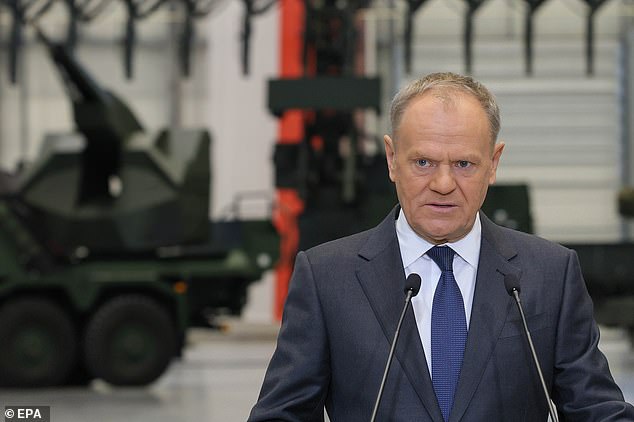
He did not present public evidence to prove that claim. Instead, he framed it as an increasingly serious possibility for Poland and its allies. As quoted by the outlet, Tusk warned that if Russian services helped run Epstein’s operation, it would mean they ‘also possess compromising materials against many leaders still active today.’
In other words, the fear inside Warsaw is not only about what happened to Epstein. It is about who might still be exposed, and how that exposure could be used to influence decisions in Europe and beyond.
The New Files, the Emails, and the Russian Trail
The newly released documents do not read like a spy novel. They read like a messy, sprawling archive of interviews, emails, notes, and reports. Inside that paper trail, however, are details that explain why Russia is suddenly back at the center of the Epstein conversation.

According to the Daily Mail, the files include more than a thousand documents that mention Russian President Vladimir Putin by name, and thousands more that reference Moscow. One confidential source told the FBI that Epstein had acted as a wealth manager for Putin and for former Zimbabwean leader Robert Mugabe, and that Epstein made money by helping powerful clients hide funds offshore.
The same source allegedly claimed Epstein ran what they described as ‘the world’s largest honeytrap operation’ on behalf of Soviet or Russian interests, procuring women for his powerful network. Intelligence contacts cited in the reporting say that this might explain how Epstein appeared to sustain a lifestyle of private jets and luxury real estate that seemed out of proportion with his public investment work, although there is no publicly available document that directly proves a formal arrangement between Putin’s services and Epstein’s crimes.
What the files do appear to show are messages that brush close to the Kremlin. One email, described by the Daily Mail, shows Japanese entrepreneur Joi Ito writing to Epstein in 2014 about a planned trip to meet Putin. Ito told him that another U.S. billionaire, LinkedIn co-founder Reid Hoffman, would not be able to join. A follow-up email suggested the meeting was called off after a Malaysia Airlines jet was shot down over Ukraine, with Ito telling Epstein that it was a ‘bad idea now after the plane crash.’
Another message reportedly has Epstein asking if he should tap ‘a friend of Putin’s’ to help arrange a Russian visa. U.S. security officials also suspect, according to the same outlet, that Epstein had long-standing ties to Russian organized crime, which could have been blackmailing him and might have helped him move women into his circle from Russia.
None of this has yet translated into formal public charges against Russian officials for coordinating Epstein’s abuse network. Russian authorities have declined to engage in detail, with Maria Zakharova at Russia’s foreign ministry previously using the files to attack what she called the hypocrisy of Western elites, rather than to answer specific intelligence allegations.
Royals, Billionaires, and the Kompromat Question
Even before anyone in Warsaw mentioned spies, Epstein’s orbit read like an A-list from politics, royalty, and tech. That is precisely what made his case so combustible, and why Tusk’s remarks ripple far beyond Poland’s borders.
According to the Daily Mail’s breakdown of the documents, one FBI source described a setup in which figures such as Prince Andrew, Bill Gates, Donald Trump, and Bill Clinton could be ‘placed in compromising positions on an island bristling with technology.’ The source called it ‘the world’s largest honey trap operation.’ All of the well-known figures who have been linked publicly to Epstein have denied criminal wrongdoing.
The newly surfaced files reportedly include an email in which a contact claims Gates asked one of Epstein’s advisers to help secure medicine for a sexually transmitted infection after ‘sex with Russian girls.’ A spokesperson for Gates has dismissed that allegation as ‘completely false.’ Gates has previously said he regrets his association with Epstein and has called it a mistake.
For Britain’s Prince Andrew, the stakes have already been painfully public. He settled a civil lawsuit with Virginia Giuffre, one of Epstein’s accusers, without admitting wrongdoing, and stepped back from royal duties after a widely criticized television interview. The Daily Mail reports that security services in the United Kingdom were seen as more cautious than their U.S. counterparts in probing Epstein’s Russian connections, in part because of his connection to Andrew. British authorities have not confirmed that characterization.
Former Israeli prime minister Ehud Barak’s name also appears in this shadowy mix. According to the Daily Mail’s review of FBI material, one report recounted a source claiming Epstein was believed to be a Mossad spy and that he was close to Barak. An email from Epstein to Barak in 2013, described in the same reporting, discussed Putin reshuffling his inner circle, with Epstein promising ‘more info on phone or face to face.’ Barak has previously acknowledged ties to Epstein, while denying any involvement in or knowledge of Epstein’s abuse crimes.
The names are familiar, and so are the denials. What is new is the way these personalities now sit inside a narrative that also features alleged Russian money channels, possible kompromat, and a European head of government openly treating those threads as a national security concern.
Where Facts End, and Allegations Begin
There are hard, documented facts in the Epstein story. He pleaded guilty in 2008 to sex-related charges involving a minor. He was arrested again on federal sex trafficking charges, then died in a New York jail in 2019. Powerful men from politics, business, academia, and media spent time with him, took his calls, and in some cases accepted his money. Those facts are not in dispute.
There are also layers of allegation, rumor, and intelligence chatter that do not carry the same weight. Claims that Epstein was formally recruited by Russian services, that he worked simultaneously with the KGB, Mossad, and Western agencies, or that he acted as a deliberate blackmail broker for multiple governments, remain unproven in public.
Tusk’s comments move those questions into a new arena. When a sitting prime minister talks about Epstein as a likely Russian spy, and orders an investigation into potential fallout for his country, it signals that Epstein has shifted from disgraced financier to ongoing geopolitical risk.
For the celebrities, royals, and power players whose names appear again in the latest document dump, reputational rehab becomes harder every time a new batch of emails or memos hits daylight. Some have rebuilt their public images through charity work, new business deals, or quiet withdrawal from the spotlight. Others remain in high office or at the top of major companies.
As analysts sift through the U.S. files and Poland begins its own inquiry, one thing is clear. Epstein is long dead, but the story of who knew him, who used him, and who may still be vulnerable because of him is not finished. Somewhere inside boxes of evidence and encrypted drives are clues that could stay buried, or could spark the next round of scandal for people who once thought their connection to Epstein was only a footnote.
References