


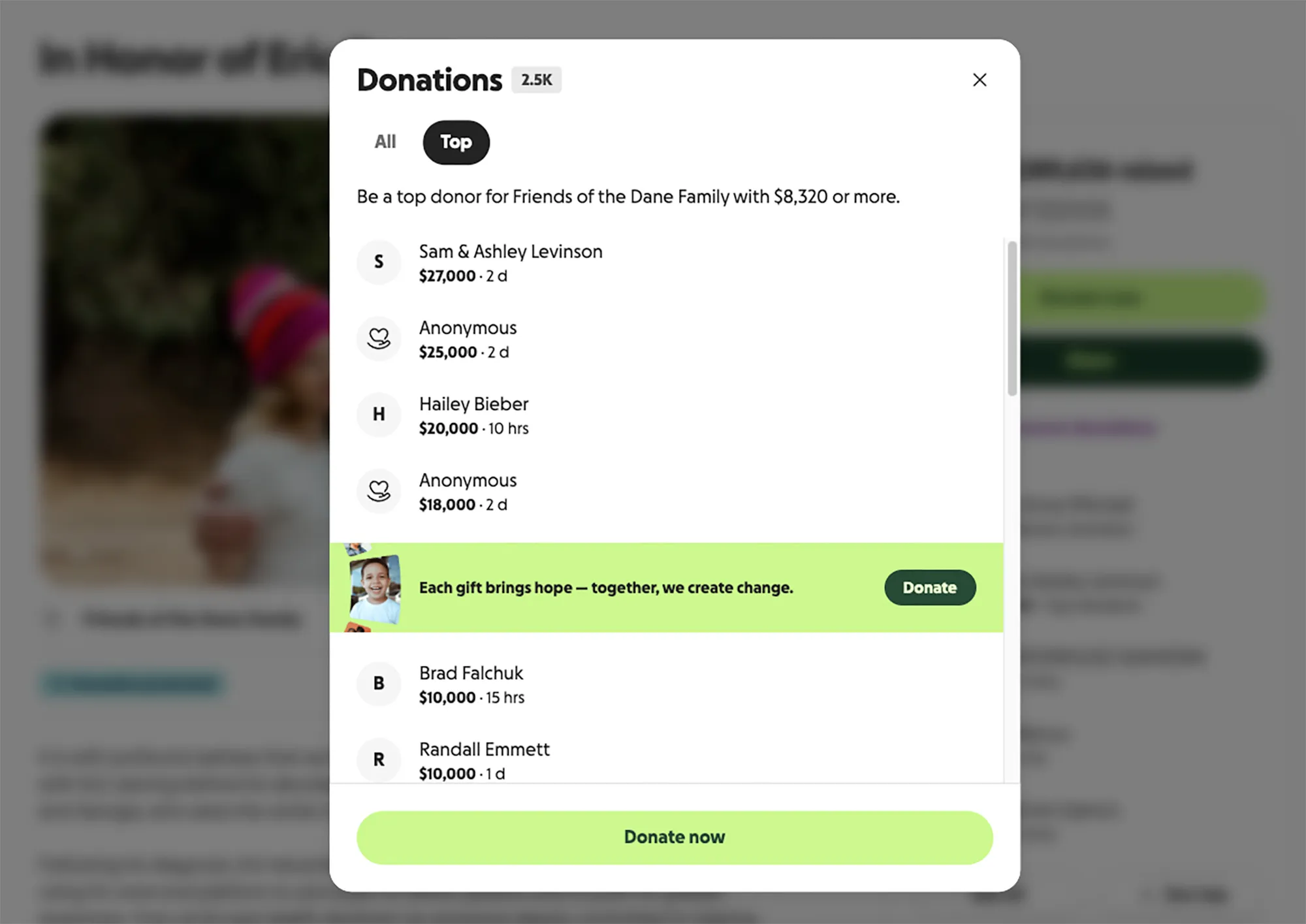
It began with a name that did not need an explanation. Hailey Bieber appeared among the top donors on a GoFundMe set up for Eric Dane’s family, a $20,000 contribution that arrived without a note, without fanfare, and without any public statement to frame it.
TLDR
Hailey Bieber quietly donated $20,000 to a GoFundMe supporting late actor Eric Dane’s widow, Rebecca Gayheart, and their teenage daughters after his ALS battle, underscoring how private celebrity gestures can shape public grief and legacy.
A Private Gift in Public
According to Page Six, Bieber was listed as the third top donor on the fundraiser created to support Dane’s family. The campaign set an initial goal of $250,000, with organizers explaining that the money would help care for the couple’s teenage daughters, Billie, 15, and Georgia, 14.
The Rhode founder did not leave a message with her donation. Her team also did not immediately respond to Page Six for comment. The silence around the gift added to its emotional weight. This was not a branded partnership or a charity gala moment. It was a quiet transfer of support, recorded only in a scrolling list of names and numbers.
In the era of social media fundraising, GoFundMe pages have become a kind of public ledger for private heartbreak. For fans who watched Dane across years and series, and for friends and colleagues who knew him off-screen, the campaign offered something tangible to do in the face of an illness that had given them so little control.
Eric Dane’s Final Act of Grace
Dane’s death from complications of ALS marked a wrenching turn in a career that had seemed built for longevity. He rose to fame as Dr. Mark Sloan on “Grey’s Anatomy” and later reinvented himself as the troubled, magnetic Cal Jacobs on “Euphoria”. Audiences watched him play characters defined by swagger and complexity. Off-screen, the story that emerged was one of vulnerability and resolve.
His family revealed his ALS diagnosis publicly in April 2025. A few months later, Dane appeared on “Good Morning America” and spoke openly about the first signs that something was wrong. He recalled, “I started experiencing some weakness in my right hand, and I did not really think anything of it at the time.” He added that he initially assumed it was from everyday strain. “I thought maybe I had been texting too much or my hand was fatigued. But a few weeks later, I noticed it had gotten a little worse.”
By that autumn, cameras captured him in a wheelchair at a Washington, DC, airport. The image echoed for fans who were used to seeing him stride through hospital corridors or stalk dimly lit hallways on premium cable. Yet even as the disease progressed, he insisted on holding on to the parts of himself that felt untouched.
At an ALS panel in December, Dane told attendees, “I still have my brain, and I still have my speech.” It was a simple line, but it carried the defiant tenderness of a man choosing to define himself by what remained rather than what was slipping away.
Facing ALS in the Spotlight
ALS is both medically specific and emotionally devastating. According to Mayo Clinic, ALS is described as “a nervous system disease that affects nerve cells in the brain and spinal cord”, which leads to “loss of muscle control.” It is progressive, it is incurable, and it often unfolds in a way that is visible to the world long before it is fully understood.
For public figures, that visibility can cut two ways. Fans rally, organize, and donate. At the same time, the loss of physical strength happens in front of cameras and strangers. For Dane, whose screen presence had so often been rooted in physicality, sharing his diagnosis became another kind of performance, one that asked audiences to meet him with empathy rather than escape.
His decision to keep working, to appear on panels, and to speak candidly about his symptoms also broadened the conversation around ALS. For viewers who might have only known the disease through headlines about other famous patients, Dane’s voice gave the condition a familiar face and a steady, unvarnished tone.
Rebecca Gayheart and the Girls
At the center of the GoFundMe, however, are not red carpets or ratings but three people who knew Dane as a husband and father. He shared daughters Billie and Georgia with his wife, actress Rebecca Gayheart, whose own career and life have intersected with Hollywood for decades, from early modeling work to film and television roles.
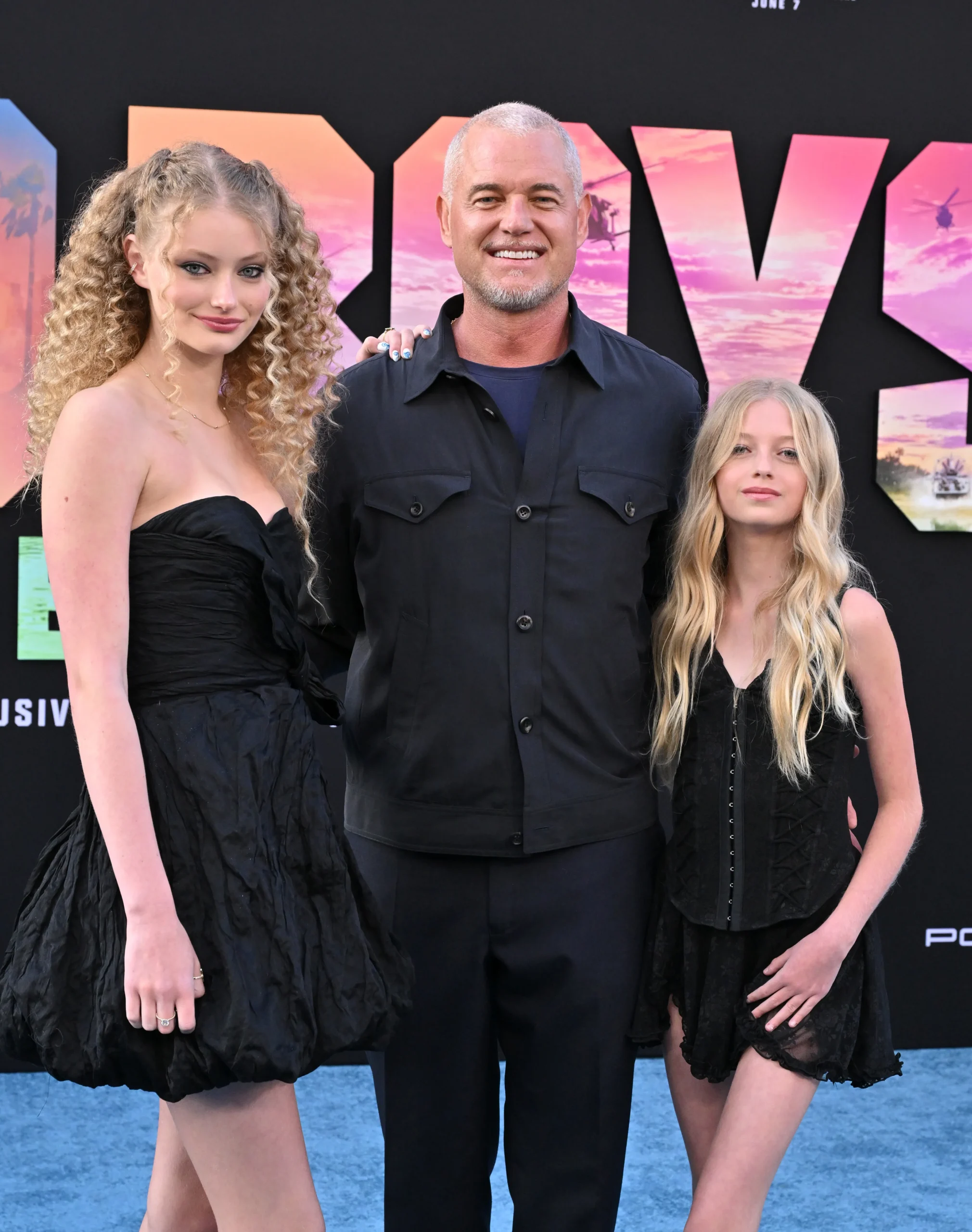
The fundraiser explains that the money raised will help secure a future for the girls as they navigate adolescence without their father. That framing shifts the focus from celebrity tragedy to everyday needs, even when those needs belong to a family whose faces may be familiar from premieres and photo calls.
Dane’s final days, according to the family statement cited by People, were spent surrounded by Gayheart, close friends, and their daughters. The portrait is intimate and small-scale. A once enormous public life suddenly narrows to a hospital room, a living room, a circle of people holding on to each other.
Gayheart has expressed gratitude for the flood of support that followed his death, acknowledging the fans and colleagues who reached out, donated, or simply shared memories of his work. For a family in grief, each gesture, whether it comes from a household name or a stranger with a screen name, folds into a larger feeling of being held.
Legacy, Community, and Quiet Gestures
Bieber’s donation fits into a long, largely undocumented tradition of Hollywood figures quietly supporting one another when the cameras are gone. Sometimes those gestures are financial. Sometimes they involve arranging childcare, cooking meals, or making difficult phone calls that never show up in any press release.
What stands out here is the collision of that private instinct with the public nature of crowdfunding. A GoFundMe page can capture both the intimacy and the spectacle of giving. The number beside Bieber’s name travels quickly, screenshotted and shared. The absence of any comment from her side keeps the moment anchored in the family it was meant to help.
For Dane’s legacy, the fundraiser is another chapter in a story that now stretches across genres, networks, and generations of viewers. There is the charismatic surgeon who made “Grey’s Anatomy” appointment television, the morally complicated father on “Euphoria”, the candid patient on “Good Morning America”, and finally, the man whose life is now being honored in the most practical of ways, through direct help to the people he loved most.
For Bieber, it is a reminder that image and intention do not always move in lockstep. A beauty founder, a fixture of modern celebrity culture, quietly wiring support to a family marked by a different era of television, suggests a kind of cross-generational solidarity. It hints at how intertwined the entertainment community can become when illness and loss cut across fame, age, and genre.
In the end, the GoFundMe total will be a number on a screen. The real impact will play out in the quieter spaces of the Gayheart and Dane household, in tuition payments, in stability, in the knowledge that a wide circle of people, including some they may never have met, chose to stand with them.
References
- Page Six: Hailey Bieber donates $20K to GoFundMe supporting Eric Dane’s family after his death
- Mayo Clinic: Amyotrophic lateral sclerosis (ALS) – Symptoms and causes
Join the Discussion
How do you feel about public crowdfunding and private celebrity donations intersecting in moments of illness and loss like the one surrounding Eric Dane’s family?