

Nathan MacKinnon has worn heartbreak on the ice before, but rarely with a tiny white stoat in his hand. The Canadian superstar had just watched Olympic gold slip away to USA when a stuffed mascot turned his pain into a viral moment.
TLDR
After USA beat Canada in overtime for Olympic hockey gold, cameras caught Nathan MacKinnon looking furious as he accepted a stuffed mascot with his silver medal, sparking debate about sportsmanship, pride, and what losing really looks like.
Gold Lost in Overtime
The context could not have been more brutal. According to Daily Mail US, Jack Hughes scored the golden goal just 1 minute and 41 seconds into overtime of the men’s hockey final in Milan, lifting USA over their fiercest rivals and unleashing American celebrations.
Canada, led by MacKinnon, had controlled long stretches of the game. The report notes that US goalie Connor Hellebuyck turned away chance after chance, frustrating a Canadian offense that is used to being the one dictating the script on international ice.
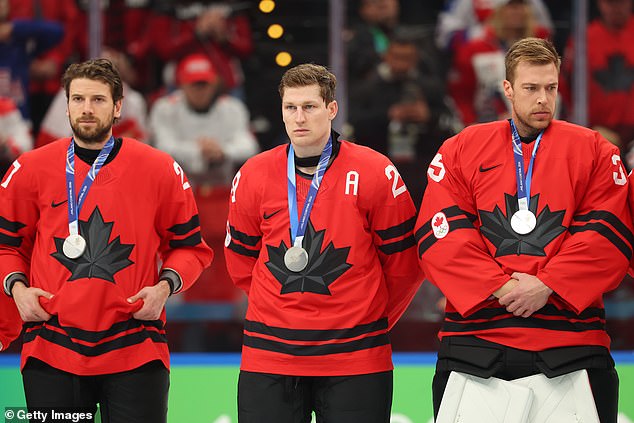
For Canadian hockey fans, silver in this rivalry has always felt like something closer to an open wound than a consolation prize. For a hypercompetitive star like MacKinnon, who has built his NHL legacy on relentless drive and precision, the loss carried the weight of a moment that will follow him long after Milan.
A Mascot in the Spotlight
Then came the ceremony, and with it the image that set social media ablaze. As the Canadian players lined up for their silver medals, volunteers handed them a mini version of the Milan Games mascot, a white stoat named Tina.
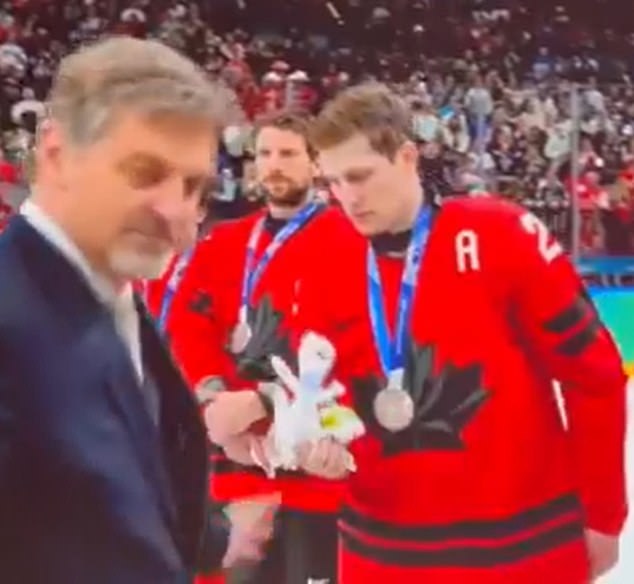
MacKinnon accepted the plush figure, but his face told a completely different story. Cameras caught him looking down at the toy with a hard stare, his expression somewhere between disbelief and disgust. He appeared to shake his head for a brief moment before fixing his gaze into the distance, jaw tight, shoulders stiff.
A clip of the exchange, posted by the sports show “Bussin’ With The Boys” and reshared across platforms, turned a soft toy into a symbol of everything he had just lost. One fan wrote, “Nathan MacKinnon not impressed with the silver and the plushie,” summing up the mood in a single line.
Another viewer joked that “Nothing on earth is more in immediate danger than the stuffed animal they handed Nathan MacKinnon.” A third went even further, posting, “Nathan MacKinnon might murder this stuffed animal.” The comments were tongue-in-cheek, but they captured how sharp and raw his frustration appeared through the screen.
The tradition itself is not new. Medalists often receive a miniaturized version of that year’s Olympic mascot along with their hardware. It is meant to be a keepsake, a whimsical counterpoint to the seriousness of the medals. On this night, in MacKinnon’s hands, it became something closer to a prop in a very public moment of heartbreak.
Daily Mail US noted that Team USA players also received their own plush Tina. The difference was simple and brutal. For the Americans, it looked like another piece of a golden memory. For MacKinnon, it looked like something he wanted to be anywhere but there.
A Star Who Hates Second Place
MacKinnon has never hidden how much he despises losing. Around the NHL, the Colorado Avalanche center is known for a training intensity that borders on obsessive and a competitive streak that has fueled a Stanley Cup, multiple deep playoff runs, and a reputation as one of the game’s fiercest modern talents.
That edge was all over his postgame comments. According to Canadian reporter Joshua Clipperton, MacKinnon told the media, “You be the judge of who was the better team today.” It was a line that sounded calm on paper, but the subtext landed loudly in a night where Canada had directed so much of the play and still walked away without gold.
In a rivalry this deep, that kind of comment lives in its own echo chamber. For Canadian fans, it read as pride in his team and a refusal to accept that the better team always wins on the scoreboard. For American fans, it could be heard as a dig, a refusal to simply tip his helmet and move on.
The stuffed mascot, held stiffly at his side or dangling from his fingers, only sharpened the contrast. The Olympic organizers had offered a symbol of joy and participation. What the cameras captured instead was an athlete who could not pretend this was anything but the hardest moment of his international career.
In that sense, the clip tapped into something familiar in MacKinnon’s public image. He is not the smiling, shrug-it-off star. His brand has long been built on intensity, not ease. The viral reaction fit the narrative of a man for whom second place never sits comfortably, whether it is in a trophy case or on a medal stand.
USA’s Joy on the Ice
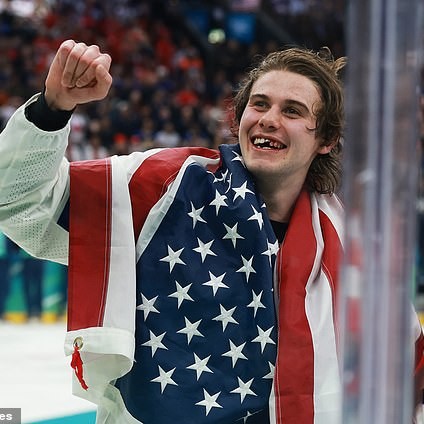
Across the ice, USA had its own emotional arc in real time. Hughes, the overtime hero, spoke to reporters with tears and adrenaline still fresh. As quoted in the original reporting, he said, “This is all about our country right now. I’m so proud to be American. I love my country, I love my teammates.”
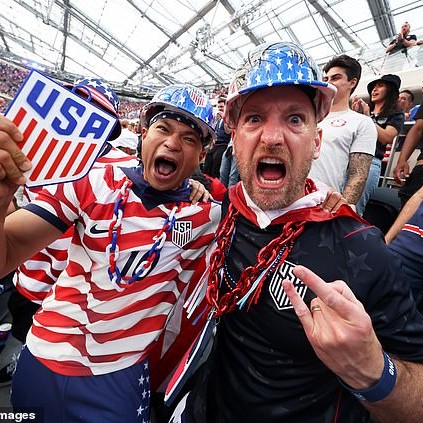
That kind of language plays directly into Olympic mythology. Red, white, and blue jerseys scattered across the ice, players clutching each other, flags, and yes, those same plush mascots that had landed so awkwardly in Canadian hands minutes earlier.
The contrast was stark. On one side, a young American star reveling in a dream fulfilled, his legacy instantly altered by a single shot. On the other, a veteran Canadian icon staring down a stuffed stoat and everything it suddenly represented about a night gone wrong.
For USA Hockey, the moment will live in highlight reels and patriotic montages. For MacKinnon, it became something more complicated. Not just the memory of Hughes’s shot, but the slow, public walk to silver, the camera beneath his chin, and the mascot he could not quite bring himself to embrace.
Viral Moment, Lasting Image
Olympic history is full of tiny details that outlive the box score. A tear on a podium. A handshake that never happens. A flag draped over tired shoulders. In Milan, it may be a small white stuffed animal in Nathan MacKinnon’s hand.
Within hours, the clip had been clipped, meme-ready captions were circulating, and commenters were debating what his reaction really meant. Was it disrespectful to the organizers, or simply honest emotion from a player whose standard is gold or nothing?
What makes the moment compelling for so many viewers is that it refuses to be neat. The same intensity that makes MacKinnon a beloved figure in Colorado and across Canada is the same intensity that can make him bristle in defeat. Fans who cherish his fire on the ice saw that same fire turned inward while he held a children’s toy under the brightest lights in sports.
There is also the question of legacy. For a generation of Gen X and Baby Boomer fans who watched Canada dominate international hockey for decades, seeing a superstar like MacKinnon hold silver is jarring enough. Seeing him look like he would trade that stoat, the medal, and the whole night for one more shot at Hellebuyck is a reminder of how thin the line is between legend and almost.
At the same time, the moment humanizes him. Stripped of PR polish, he is simply an athlete who has just lost the game he wanted most, handed a plush reminder of the occasion he would rather forget. It is raw, it is unscripted, and it is the kind of scene that lives long after the final horn.
Somewhere in a display case one day, that mascot may sit next to a silver medal and a jersey. For American fans, it will always call back a golden goal. For Canadian fans, and for Nathan MacKinnon himself, it may forever be the softest object to ever carry so much weight.
Join the Discussion
Do you see Nathan MacKinnon’s reaction as unsportsmanlike, refreshingly honest, or simply the natural response of a star who expects gold every time he steps on the ice?