

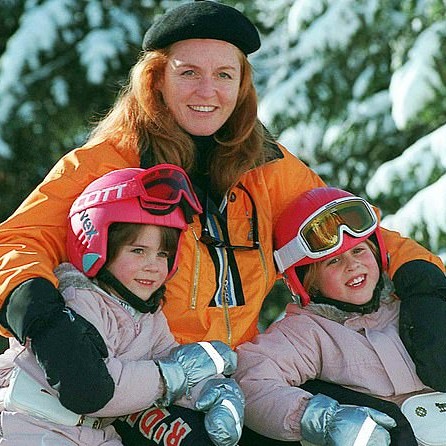
For years, Sarah Ferguson seemed to occupy a familiar place in the royal imagination. The fun duchess. The divorced but devoted ex-wife. The mother who somehow held Princesses Beatrice and Eugenie steady as their parents’ marriage collapsed in public.
Then the latest cache of Jeffrey Epstein files arrived, and that carefully managed image collided with something far darker.
The newly unsealed documents, released as part of long-running US litigation, have once again pulled Epstein’s famous friends into view. Among the names and photographs, one storyline is cutting through the noise for royal watchers. The Duchess of York did not just know Epstein. She reportedly brought her young daughters into his orbit and later joked to him by email about Princess Eugenie’s sex life.
The revelations do not accuse Beatrice or Eugenie of any wrongdoing. Instead, they raise a painful question that refuses to go away. What was their mother thinking?
How Epstein’s Files Dragged the Yorks Back In
Epstein’s story has been told and retold so many times that it can feel impossible that anything new is left to learn. Yet each trove of court records, emails, and images has managed to deepen the sense of unease around the late financier’s world.
According to Reuters, recent US court filings tied to Epstein’s network have again detailed how powerful men and women moved through his homes, flights, and social calendar during and after his legal troubles related to underage girls. The documents are heavily redacted, but the outlines are clear enough. Epstein was convicted in Florida of sex offenses involving a minor and still maintained extraordinary access to wealth, status, and institutions for years afterward.
Against that backdrop, one timeline stands out. As reported by the Daily Mail, Sarah Ferguson visited Epstein at his Palm Beach mansion in July 2009, just days after he was released from jail following his Florida conviction. She did not go alone. Beatrice and Eugenie, then in their late teens, were reportedly with her.
For many mothers, the idea of placing daughters anywhere near a man who had served time for offenses involving a minor would be unthinkable. The fact that this visit appears to have happened after his conviction, not before, has amplified the public scrutiny.
The 2009 Visit That Will Not Fade
In royal circles, context is everything. At that point, Ferguson was long separated from Prince Andrew but still sharing a home with him at Royal Lodge in Windsor. Epstein had already been a presence in Andrew’s world for years, with the two men photographed together in New York and at parties, something that later became central to the prince’s own reputation crisis.
According to the Daily Mail’s reporting on the newly surfaced materials, the Palm Beach visit took place only five days after Epstein’s release. That timing is not disputed. Epstein had pleaded guilty in Florida to procuring a person under 18 for prostitution and was a registered sex offender when the duchess and her daughters allegedly appeared at his door.
It was not a casual drop-in before the storm. The storm had already arrived. Which is why that trip, more than a decade later, now feels less like a footnote and more like a pivotal choice.
There is no suggestion that Beatrice or Eugenie were harmed during that visit, and there is no allegation that they were involved in any illegal activity. Yet for people looking at the story from the outside, the optics are stark. A mother, a disgraced financier with a conviction involving a minor, and two royal teenagers who did not choose any of it.
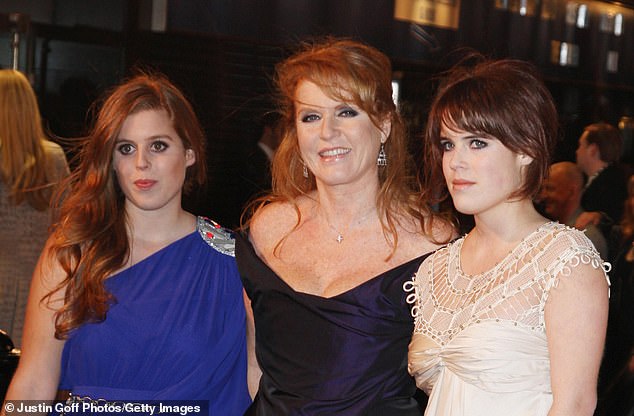
The Email About Eugenie That Stunned Royal Watchers
If the 2009 trip raised eyebrows, the email that followed a year later has left even longtime Ferguson sympathizers struggling for answers.
As detailed by the Daily Mail’s examination of the Epstein files, Ferguson wrote to Epstein in 2010 and seemingly discussed her younger daughter in startlingly casual, sexual terms. In the message, she reportedly said she was, in her words, “Just waiting for Eugenie to come back from a sha ing weekend!!”
🔴 Former Duchess of York also pointed out that her goddaughter was 22 years old in email exchange
Read the full story below 🖇️https://t.co/OgCS44UqCE pic.twitter.com/i59vIwVEk8
— The Telegraph (@Telegraph) February 3, 2026
Read in isolation, the line might be dismissed as clumsy, crude humor. Read in the context of a man already convicted of offenses involving a minor, it feels like something else entirely. Not only does it blur the boundaries between a mother and a young woman’s private life, it does so with a recipient whose criminal history centered on exploiting girls.
That email is not an allegation from an unnamed source. It sits in black and white in the records, its punctuation, spelling, and tone intact. It is the kind of detail that reshapes how a public figure is perceived, not because it proves intent, but because it reveals judgment.
For Ferguson, a woman who has often styled herself as a fiercely protective, slightly chaotic but loving mother, the message jars with the persona. It suggests a willingness to treat her teenage daughter’s sex life as a punchline for a man whose own behavior had destroyed so many young women.
Prince Andrew, Fatherhood, and a Shared Fallout
Sarah Ferguson is not the only York parent living with the long tail of Epstein’s world. Prince Andrew’s own relationship with the financier has already cost him military titles, public duties, and immeasurable standing in the eyes of many.
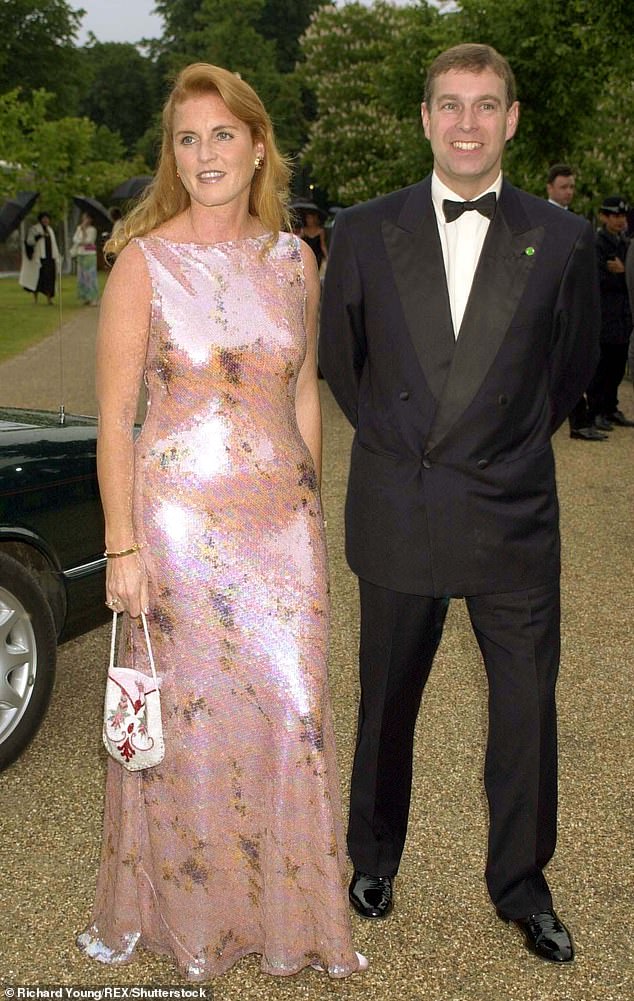
Reuters has previously reported on Andrew’s settlement of a civil lawsuit brought by Virginia Giuffre, who alleged she was trafficked to the prince by Epstein when she was 17, claims Andrew has consistently denied. He has said he regrets his association with Epstein, particularly after the financier’s 2019 death in a New York jail cell.
For Beatrice and Eugenie, that would have been enough to shape a lifetime. A father pulled from public life because of his ties to a convicted sex offender is a heavy legacy for any family, let alone a royal one.
Now, the latest documents pull their mother into the frame in a different way. Not as an alleged participant in crimes, but as a decision-maker whose choices placed her daughters near a man the world already knew they should avoid.
Whatever explanations sit behind closed doors, the public record looks stark. A father who maintained a friendship with Epstein long after it should have ended. A mother who visited Epstein’s home with her daughters after his release and later fired off an email that casually referenced Eugenie’s sex life to that same man.
Beatrice and Eugenie at the Center of a Story They Did Not Write
There is a particular cruelty in the way these revelations land on the next generation. Beatrice and Eugenie have tried to build lives that feel adjacent to the monarchy rather than defined by it. They work, they raise their children, and they appear at family events with the polished warmth of women who learned early how to navigate flashbulbs.
Yet their names keep circling back to the same scandal, even when they are not accused of anything. They appear in flight logs and guest lists by virtue of their parents’ relationships. They appear in news coverage because their mother mentioned one of them in an email she never imagined the world would read.
For royal watchers of a certain age, this is not the story that once surrounded Sarah Ferguson. The girl who married a prince in the 1980s, who tumbled out of favor over toe-sucking photographs and money problems, was often cast as chaotic but ultimately kind. Tarnished, yes, but somehow relatable.
The Epstein files make that story feel painfully incomplete. They show a woman who, at minimum, displayed a level of naivety around a convicted sex offender that is hard for many parents to comprehend. At worst, they suggest a disregard for the implications of her social circle on her daughters’ lives.
A Legacy Question for the Duchess of York
Ferguson has spoken in the past about regret regarding her ties to Epstein, although she has not, so far, publicly addressed the specific 2009 visit with her daughters or the 2010 email about Eugenie. In the court of public opinion, silence often creates its own narrative.
There are questions no document dump can fully answer. What conversations took place in private between the duchess and the disgraced financier? What she believed about him at each moment in time. How much weight she gave to warnings, to headlines, to the disquiet that many already felt around his name.
But some details need no interpretation. The dates are fixed. The conviction was public. The ages of her daughters are a matter of record. The words she typed in that email sit unchanged in the files.
For Gen X and Baby Boomer women who once watched Sarah Ferguson step onto the Buckingham Palace balcony in an ivory gown, the dissonance is hard to ignore. The carefree, red-haired duchess of tabloid memory now sits inside a much more complicated legacy, one in which motherhood, judgment, privilege, and power are all on the line.
History will decide how harshly to judge Sarah Ferguson. For now, the image that lingers is unavoidably intimate and undeniably public. A mother, two daughters, and a choice to stay close to a man the world already knew too well.
References