

The morning was supposed to belong to the sequins and spotlight of Olympic ice. Instead, for a tense stretch in Milan, it belonged to a line of dark SUVs carrying U.S. Vice President JD Vance, a teenage figure skating star sprinting for her costume, and a crowd already on edge about what America brought to these Games besides its athletes.
TLDR
JD Vance’s sprawling Winter Olympics motorcade in Milan delayed athletes and staff, leaving U.S. figure skater Alysa Liu rushing to the rink as protests, rail sabotage, and anger over ICE security turned his trip into a political flashpoint.
Motorcade Meets Olympic Timetable
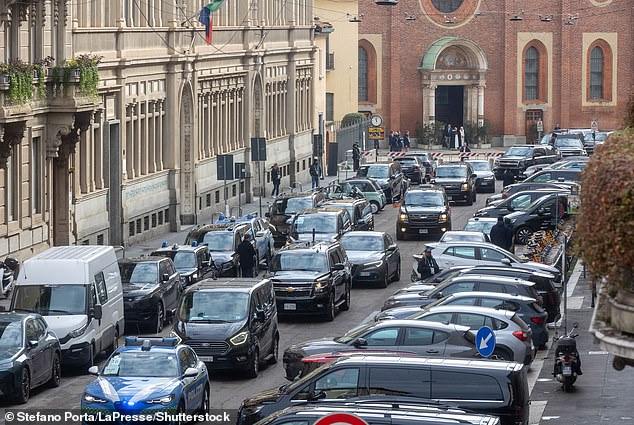
According to Daily Mail reporting, JD Vance’s motorcade in Milan clogged access roads around the skating venue and held up multiple athletes, officials, and staff members on their way to events. The convoy was described as very large, a rolling symbol of American power trying to squeeze through narrow Italian streets on one of the most tightly timed mornings of the Winter Olympics.
Among those trapped in the traffic ripple was Team USA figure skater Alysa Liu, the kind of athlete the Olympics loves to frame as pure storybook. For a few unnerving minutes, her fairytale brushed up against the vice president’s security needs. The report describes how Vance and the U.S. delegation flew in on multiple aircraft, with staff, security personnel, food supplies, and an armada of Chevy Suburbans that struggled with Milan’s historic layout.
An Italian outlet, Local News, captured video of one of the Suburbans nearly colliding with a small car bearing local plates. It played out like a metaphor for the week. The official American presence seemed larger, louder, and heavier than the city was prepared to absorb, both on the streets and in the public mood.
The timing could hardly have been worse. A separate, coordinated sabotage attack had already snarled key rail lines near Bologna, igniting fires, severing cables, and triggering delays that stretched up to two and a half hours on the first full day of Olympic competition. A track-switch cabin near Pesaro was torched before dawn, electrical cables were cut in Bologna, and a rudimentary explosive device was discovered nearby. Service on the state-owned Ferrovie dello Stato line between Bologna and Venice was temporarily shut down.
Italy’s Transport Ministry called the rail attacks “unprecedented” but insisted they would not damage the country’s image, stressing that trains were moving again by afternoon and that no group had claimed responsibility. But for athletes and their teams, it meant one more layer of uncertainty on a day when minutes mattered.
Alysa Liu’s Last Minute Rush
Inside that gridlock, Alysa Liu was living the nightmare every Olympic broadcast dramatizes, only this time the stakes were painfully real. According to an account her coach, Phillip DiGuglielmo, gave The Washington Post, Liu arrived at the venue with only minutes to spare, racing through the doors, throwing on her costume, and reaching the ice just in time for her short program.
It was not entirely the motorcade’s fault. The Post noted that Liu had been running behind even before the convoy became an obstacle, after struggling to pull together all of her gear. The profile described the young skater as someone who appears “to live in a perpetual state of controlled chaos,” a line that suddenly felt less like a personality quirk and more like a survival skill in Milan’s Olympic traffic.
Once she finally stepped into the lights, Liu did what Olympic stars have to do. She silenced the morning and delivered. She finished second in the short program, behind Japan’s reigning champion Kaori Sakamoto, handing the United States an early two-point cushion over Japan in the three-day team event. For viewers who did not know how close she had come to missing her start time, it was just another polished performance. For those inside the arena, it was proof that the teenager had managed to steady herself after being squeezed between geopolitics and gridlock.
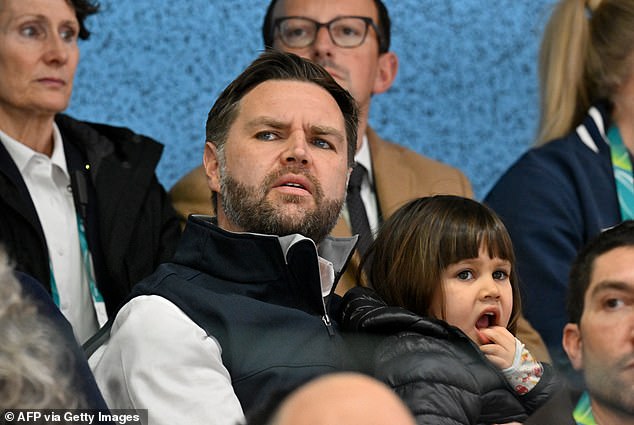
Vance, meanwhile, attended the figure skating session that nearly became Liu’s heartbreak, as well as the women’s hockey matchup between the United States and Czechia. It placed him directly inside the arena where the fallout from his presence was both practical and symbolic.
Security, Protests, and Optics
The traffic delays unfolded in a city already pulsing with unease about the American footprint. As thousands marched through Milan, demonstrators targeted not only the environmental cost of the Games and the frenzy of Olympic construction but also the announcement that U.S. Immigration and Customs Enforcement agents would be embedded in the wider security apparatus.
The larger march, according to reports, was peaceful and family-heavy. Students, parents, and activists walked together, holding signs against fossil-fuel sponsors and against what they saw as the militarization of a celebration that was supposed to unite the world. A smaller, more confrontational group peeled off and tried to push toward a highway near the Santagiulia ice hockey venue. Police responded with tear gas and a water cannon, crackling the calm that Olympic organizers work relentlessly to project.
That public tension found a focal point in ICE. Officials repeatedly stressed that agents in Italy would not be carrying out the aggressive enforcement tactics associated with the agency inside the United States. They framed the deployment as a technical security partnership for a massive global event. Protesters and some local leaders were not persuaded.
Milan’s mayor, Giuseppe Sala, was blunt. He reportedly called ICE “a militia that kills” and said its agents were not welcome in his city. For a host nation that spends years courting the Olympic spotlight, it was a rare public rebuke of a key partner’s security apparatus, and it landed squarely at the feet of the U.S. delegation’s most visible figure.
Vance has been one of ICE’s most unflinching political defenders. In past comments, he argued that an ICE agent implicated in the killing of Renee Good had “absolute immunity,” a remark he later walked back amid outrage. He also labeled Good and Alex Pretti, another protester killed during the Minnesota ICE protests, as “domestic terrorists.” Those lines lingered in the background as Italian crowds processed the sight of his armored convoy gliding past their tram stops.
On the rail lines and on the streets, Italian authorities emphasized that the sabotage attacks and the anti-ICE protests were separate phenomena, united only by the sense that Olympic security had become a contested stage rather than a quiet backdrop. For Vance, the result was a trip where every movement, including his motorcade, read less like routine protocol and more like a statement.
What It Means for Vance
Olympic appearances are usually the soft-focus side of political life. Leaders wave from the stands, offer a few supportive lines about athletes, and pose for photos that campaign teams can recycle when the next election cycle needs a lighter beat. The Milan visit has been far more complicated for JD Vance.
According to Daily Mail coverage, spectators inside the arena booed when Vance and his wife, Usha, appeared on the big screens during the Parade of Nations segment. The reaction came despite the International Olympic Committee’s public appeal for respect in the stands. It also followed confirmation that ICE agents were part of the Games’ security plan, a detail that resonated very differently in Europe than it might with parts of his base at home.
In pure image terms, the visuals have been unforgiving. On one side of the screen, a 19-year-old American skater runs late, scrambles into costume, and still delivers a near-flawless program for her country. On the other, a column of black SUVs edges past Fiat hatchbacks, nearly clips a local car, and makes an already stressed Olympic city feel even more like a locked zone.
Vance’s allies will argue that any vice president in his position would have traveled with a similar level of security and that the motorcade was not solely responsible for Liu’s brink-of-disaster arrival. His critics will point to the sheer scale of the operation, the timing, and the decision to lean into a security posture that was almost guaranteed to inflame existing concerns about ICE and American muscle abroad.
For Alysa Liu, the day may become part of her legend. Fans will remember the scoreboard, not the time stamp on her arrival. For JD Vance, the Milan motorcade is now woven into a larger narrative about how his brand of politics lands once it leaves U.S. borders. At a Games built on grace under pressure, the contrast between a teenager’s poise and a superpower’s footprint could be hard to forget.
Join the Discussion
Do you see Alysa Liu’s near-miss and the reaction to JD Vance’s motorcade as just Olympic chaos, or as a revealing moment about how political power shows up at global events?