

TLDR
Naomi “Nomz” Bistline went from an FLDS offshoot, a criminal conviction, and life as a cult leader’s spiritual wife to a Netflix docuseries and a first single aimed at reclaiming her voice.
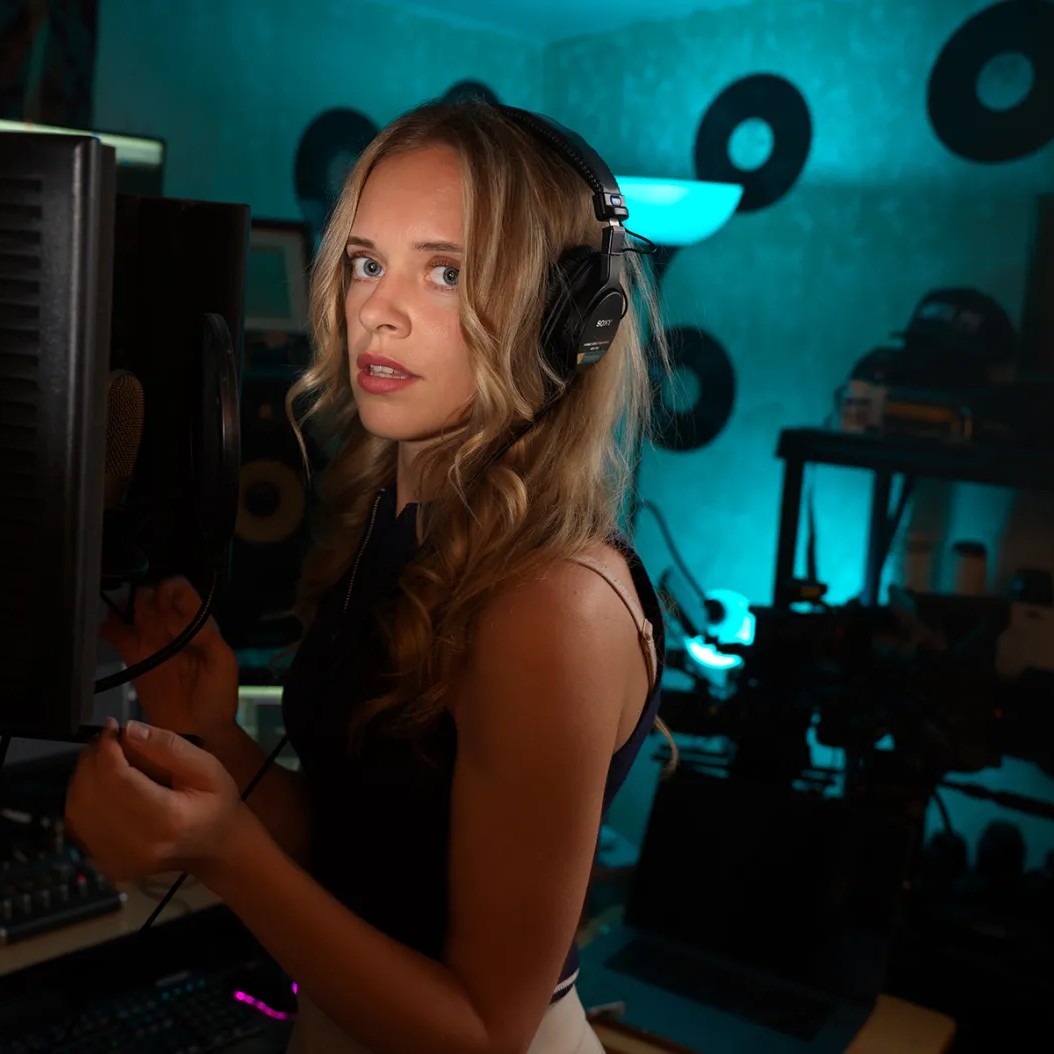
When Naomi Bistline walked into a Texas prison music room audition, she asked to play guitar. Instead, she ended up standing in front of a microphone, singing Miley Cyrus’s “Flowers” a cappella. The band chose her as lead vocalist. It was an unexpected spotlight at the lowest point of her life, and a quiet beginning to the public voice she has now.
Bistline, now 27, was serving a 21-month sentence for unlawfully removing minors from state custody. She has said she acted under the direction of Sam Bateman, the self-proclaimed prophet who led a splinter group tied to the Fundamentalist Church of Jesus Christ of Latter-Day Saints, or FLDS. He positioned himself as the spiritual heir to Warren Jeffs, the imprisoned FLDS president whose name became synonymous with abuse inside the sect.
Within Bateman’s isolated world, Bistline was listed as the 13th of his 23 spiritual wives. Nine of those were girls as young as nine. Court records and reporting state that Bateman sexually abused all of them, folding criminal acts into a language of revelation and obedience that blurred consent and choice for the adults around him.
Netflix’s “Trust Me: The False Prophet” pulls back the curtain on that system. The docuseries centers in part on Christine Marie, PhD, a cult-psychology expert who infiltrated Bateman’s circle while posing as a filmmaker. Her footage became evidence for law enforcement and a lifeline for women like Bistline, who were starting to question the man they had been told spoke for God.
In September 2022, the FBI raided Bateman’s compound in Colorado City, Arizona, and placed the group’s minors in state custody. Prosecutors say that two months later, Bateman instructed Bistline and two other followers to retrieve the girls and take them out of state. The women were arrested in Washington and then returned to Arizona. That decision now sits at the center of Bistline’s public image: both a crime and a symbol of the powerful grip of coercive control.
For audiences who remember the headlines about Warren Jeffs, Bistline’s story feels like a new chapter in a long, painful saga out of Short Creek, the community on the Arizona-Utah border that once embodied the FLDS’s power. The difference is that this time, one of the women who grew up inside is narrating her own transformation on camera, in real time.
Secular music is still a relatively new terrain for her. Growing up under Jeffs, everything was hymns and religious choruses. Today her playlists include Olivia Rodrigo, Faouzia, Benson Boone, Bruno Mars, and Lady Gaga. She recently listened to Hole for the first time after Courtney Love commented on one of her Instagram posts, a surreal brush with 1990s rock royalty for someone who spent her girlhood cut off from pop culture entirely.
In prison, songwriting became a form of trauma recovery. Bistline started scribbling lyrics that tried to untangle love, fear, loyalty, and betrayal. Eighteen months after her release, she is still in Short Creek but is actively planning an exit, preparing to film a first music video and release a debut single that will introduce her not as a former spiritual wife, but as an artist.
She is also studying psychology, hoping to understand the machinery of coercion that once dictated every corner of her life. She has begun speaking publicly about cult dynamics and abusive relationships, extending the work she does on “Trust Me: The False Prophet” into advocacy beyond the Netflix screen.
The reputational stakes for Bistline are complicated. She will always carry the record of her conviction and the shadow of Bateman’s crimes. Yet by attaching her name and face to a docuseries, and by leaning into music that foregrounds autonomy, she is wagering that transparency will matter more than secrecy. For now, the girl who once sang only hymns within a closed community is singing her way out, one song and one testimony at a time.
How should history remember Naomi “Nomz” Bistline, as an accomplice, a survivor, an emerging artist, or some combination of all three?