

TLDR
Phil Garner, the hard-nosed infielder known as “Scrap Iron” and later a steady hand in the dugout for three MLB teams, has died at 76 after a battle with pancreatic cancer.
A Career Built on Grit
He was the wiry spark plug at second base on Pittsburgh’s “We Are Family” championship team, then the calm presence who guided the Houston Astros to their first World Series appearance. Now, only days before what would have been his 77th birthday, Phil Garner’s story has turned its last page.
Garner’s family confirmed that he died after living with pancreatic cancer. In a statement, they said he passed peacefully, surrounded by those who loved him, and added that he never surrendered the restless energy that defined both his career and his life. “Phil never lost his signature spark of life, which he was so well known for, or his love for baseball, which was with him until the end,” the family shared, adding thanks to doctors and nurses at Houston Medical Center, MD Anderson, and Baylor St. Luke’s.
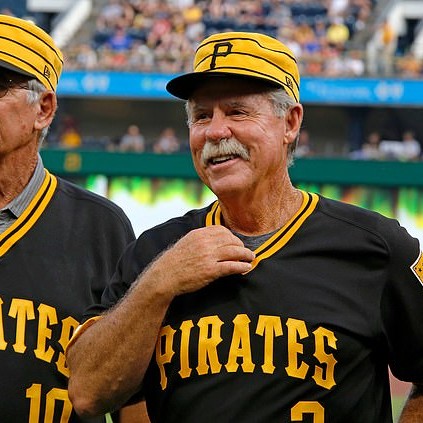
For fans of the 1970s and 1980s, Garner is frozen in time in black and gold. Drafted by the Oakland Athletics and traded to Pittsburgh in 1977, he became the gritty heartbeat of the Pirates’ infield. He helped deliver the 1979 World Series, batting over .400 in the National League Championship Series and an astonishing .500 in the seven-game classic against the Baltimore Orioles.
In a tribute, the Pirates called “Scrap Iron” a beloved member of their family, noting the five seasons he spent in Pittsburgh and the title that still echoes through the city. They remembered a player who did not coast on talent. He ground out every at-bat, turned every double play as if it were October, and played the game with a blue-collar edge that fit the city around him.
Garner’s next chapter unfolded in Houston. He spent six seasons with the Astros as a player, then returned to the franchise as manager and led the club to its first World Series appearance in 2005. In a sport defined by ego and volatility, he was known as a clubhouse stabilizer, a manager who listened, who could challenge a star one moment and share a quiet joke the next.
His managerial journey began in 1992 with the Milwaukee Brewers, where he spent seven years and built a reputation as a teacher as much as a tactician. The Brewers remembered him as “a very highly respected and beloved individual who was known for his caring nature, wisdom, and sense of humor.” Later stops with the Detroit Tigers and the Astros completed a dugout career that stretched across three franchises and several eras of the game.
Even as cancer advanced, Garner stayed close to the sport that had shaped his life. On his 76th birthday, he walked onto the field in Houston to deliver a ceremonial first pitch, a small moment that now feels like a farewell. The motion was familiar, the posture still defiant. Fans saw not a diagnosis, but the same “Scrap Iron” who refused to back away from the plate.
The Legacy of “Scrap Iron”
In Pittsburgh, Milwaukee, Detroit, Los Angeles, San Francisco, and Houston, his legacy is written in more than box scores. It lives in the way former teammates describe his toughness, in how younger players talk about his patience, and in the quiet respect that followed him from clubhouse to clubhouse.
Phil Garner’s story was never about polish. It was about persistence, impact, and the rare ability to connect generations of fans who watched him dive into the dirt, then later lean on the dugout rail with a lineup card in his hand. The game moves on, but in the cities where he wore the uniform, “Scrap Iron” does not fade.
Where do you first remember seeing Phil Garner, as the scrappy Pirate in the 1970s or the steady Astros skipper in the 2000s, and how will you remember “Scrap Iron” now that his final inning is complete?