

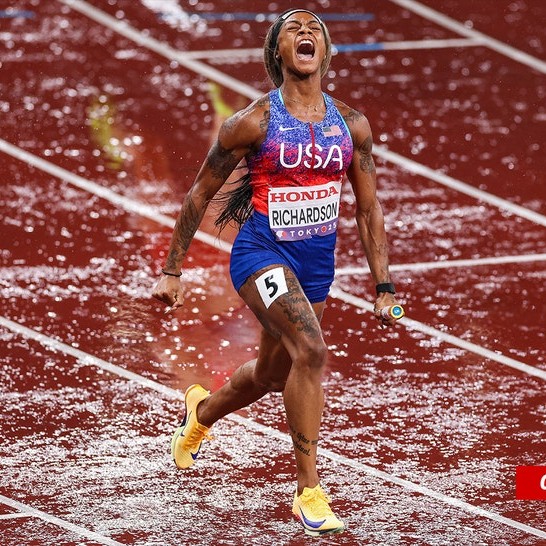
The woman whose speed once made her a global sensation is back in handcuffs instead of on a podium. Sha’Carri Richardson, one of the fastest women alive, is now facing a new set of headlines that have nothing to do with gold medals or world titles.
This time, the track phenomenon is accused of taking her love of velocity to a dangerous new place. A Florida arrest, a speeding charge that suggests triple-digit territory, and a fresh mugshot have collided to create another jarring chapter in one of sports’ most dramatic modern careers.
From Olympic Promise to Police Lights
According to TMZ Sports, Richardson was arrested in the Orlando area in Florida on a charge of dangerous excessive speeding. The arresting agency, the Orange County Sheriff’s Office, took the 25-year-old into custody after deputies said she was driving recklessly.
TMZ reports that the charge indicates she was allegedly traveling at least 100 miles per hour. A spokesperson for the Orange County Sheriff’s Office said Richardson was “dangerously tailgating and travelling across lanes of travel to pass other motorists.” What might sound like a race description on the track is, on a public highway, the kind of language that lands you in the back of a patrol car.
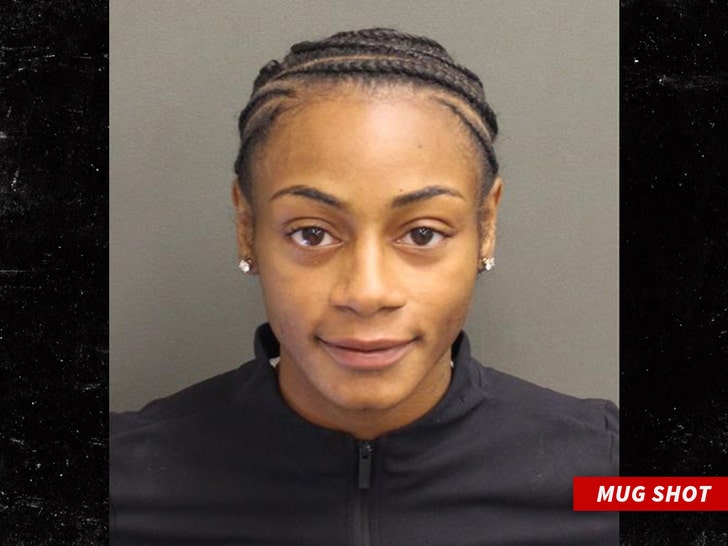
At the time of the initial report, authorities said Richardson was being held on 500 dollar bond. TMZ Sports also published her latest mugshot, a stark contrast to the glossy, triumphant images that once defined her rise from collegiate star to world champion.
Sha’Carri Richardson was booked in Florida jail for going 104 MPH. More info: https://t.co/ajWNVYs47t pic.twitter.com/KLacIfH6xI
— Complex (@Complex) January 30, 2026
Another Case on Her Record
This is not the first time Richardson’s name has appeared in a police report instead of a race result sheet. TMZ notes that she was arrested back in July after an altercation with her boyfriend, fellow track star Christian Coleman, at an airport in Seattle.
Video from that incident showed Richardson shoving Coleman during a confrontation, and she was arrested on an assault charge. The outlet reports that the case has since been handled, but the arrest remains part of her public record and her ever-growing narrative of brilliance shadowed by controversy.
Now, with a new speeding charge on her hands, the image of Richardson as a rule breaker is hard for fans to ignore. Every fresh headline feels like part of a pattern, another moment where her off-track choices collide with the mythic expectations placed on her sprint spikes.
The Rule Breaker the World Could Not Ignore
Before the mugshots and police statements, Richardson was the sport’s wild, electric hope. At the United States Olympic Trials in Eugene, she exploded into the mainstream, tearing down the 100-meter straightaway, nails, lashes, and bright hair blazing as fast as her times. She won the trials, punched what looked like a sure ticket to the Olympic Games, and instantly became a viral star.
Then the crash came. A positive test for THC, the psychoactive compound in marijuana, led to a suspension that disqualified her results and kept her out of the Olympic 100-meter event. In a now-famous television interview with NBC’s “Today” show, Richardson said, “I want to take responsibility for my actions,” after explaining she had used marijuana to cope with the death of her biological mother.
On social media, she summed herself up in three words that have followed her ever since. “I am human.” It was a reminder that behind the sharp eyeliner and supernatural start speed was a young woman trying, and sometimes failing, to manage a tidal wave of grief, fame, and pressure.
Her story did not end there. In August 2023, Richardson roared back on the track, winning the 100-meter title at the World Championships in Budapest and solidifying herself as the fastest woman in the world on that stage. It felt like a redemption arc. A comeback for the ages. The kind of narrative that makes you believe talent and tenacity can outrun anything.
Fame, Pressure, and Life in the Fast Lane
Yet the latest arrest shows that the tension between her public triumphs and private turmoil has not disappeared. You do not need to be a legal expert to grasp how serious driving at or above 100 miles per hour can be. For an athlete whose entire livelihood depends on precision control of her body, the imagery is painfully ironic.
Track and field is a sport of fractions. One blink too long in the blocks or one misstep in a lane can erase years of work. Off the track, Richardson’s choices can feel eerily similar. One argument caught on camera. One failed drug test. One night of alleged reckless driving. Each moment becomes a new lens through which her talent is judged.
For fans, it can look like a pattern of decisions that keeps yanking her back into controversy right when she seems ready to settle fully into greatness. For critics, it becomes fuel for old arguments about discipline, professionalism, and what athletes owe to their sponsors, teams, and the public.
What is undeniable is that Richardson lives at an intersection of youth, trauma, expectation, and celebrity that few people fully understand. She is a star in a sport that does not often produce household names anymore, which makes every misstep feel louder, and every police report feel like a referendum on her entire character.
The Mugshot Versus the Medal
The image of a mugshot has a brutal power that a finish line photo rarely matches. It freezes a person at their lowest and invites the world to judge. Richardson has spent years building a visual identity based on confidence, color, and defiance. A mugshot strips all of that away and replaces it with harsh lighting and a processing number.
For someone whose career depends on sponsorships and public appeal, that kind of image can be as damaging as a torn hamstring. Brands sign up for the world champion, the fighter who came back from heartbreak, not the repeat defendant whose name sits beside words like assault and dangerous, excessive speeding.
Yet, for better or worse, Richardson has always been more than a conventional role model. She has been open about her pain, stubborn in her individuality, and vocal about her refusal to conform to neat, sponsor-friendly narratives. That honesty is part of why so many people still root for her, even as the headlines get darker.
Can Sha’Carri Rewrite This Chapter
Legally, Richardson’s latest case is still unfolding. An arrest is an accusation, not a conviction, and she is entitled to the same presumption of innocence as anyone else. The charge, the alleged speed, and the police description will all play out in a courtroom or be resolved through the legal system, not in comment sections.
What happens to her career, though, will also be decided in a very different court: public opinion. Track history is filled with stars who lost everything after one too many blows to their credibility, and with others who managed, slowly and painfully, to rebuild trust and rewrite their legacies.
Richardson has already shown she can come back on the track. She turned an Olympic ban into a world title and transformed ridicule into roar after roar from stadium crowds. The question now is whether she can apply that same discipline and focus to every part of her life, not just the 100 meters between two white lines.
For now, one of the most gifted sprinters of her generation finds herself stopped completely, caught between the blue lights of a patrol car and the relentless spotlight that never really leaves her. The stopwatch is silent. The lanes are empty. What comes next will not be measured in seconds, but in choices.