


Courtney Love chose a book about coming back to life, then showed the world she was reading it. Her Instagram post with the volume “The Guide To Becoming Alive” landed just as a new forensic paper reignited the most painful chapter of her past: Kurt Cobain’s death.
TLDR
As Courtney Love shares a quiet Instagram shot with “The Guide To Becoming Alive”, an unofficial forensic paper challenges the suicide ruling in Kurt Cobain’s 1994 death, asking police to reconsider long-closed evidence.
Courtney’s Quiet Image, Loud Timing
In the photo, the 61-year-old musician sits with “The Guide To Becoming Alive” open in her hands. It is an intimate, almost domestic image, far from the chaos that once followed her onstage and off. On its own, it could have passed as a quiet reading selfie from a woman who has survived nearly every storm fame can deliver.
But the timing did not arrive in a vacuum. The same week, an unofficial team of forensic scientists surfaced a new paper reviewing autopsy and crime scene materials from Cobain’s 1994 death in Seattle. The study uses the word “homicide” where official records still say “suicide”, and that single substitution has sent a familiar chill through the culture that grew up with Nirvana.
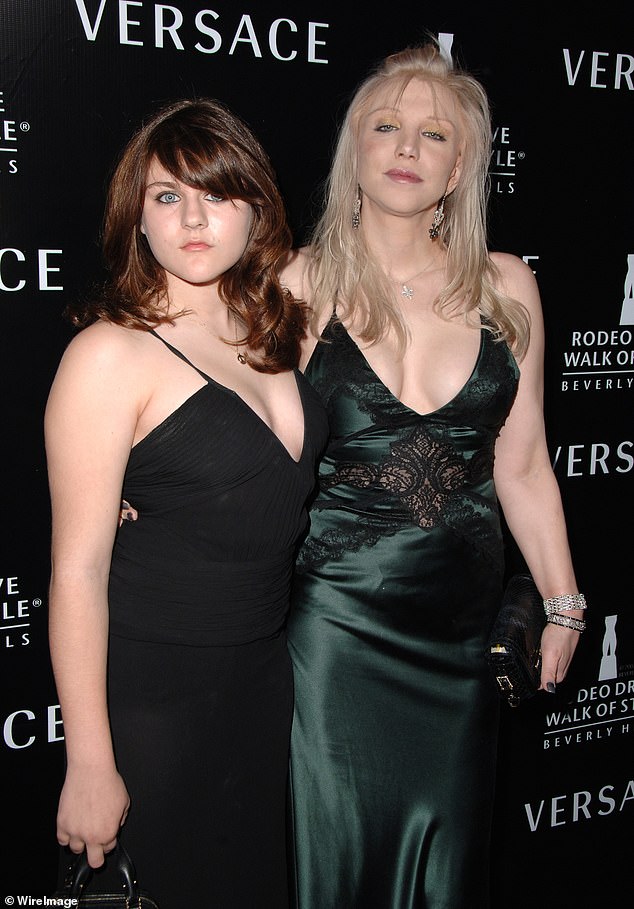
Love, who uses the name Courtney Love Cobain on Instagram, shares one child with the late frontman, Frances Bean Cobain. Frances is now in her 30s, old enough to remember not her father’s voice, but the echo of his legend. For that generation, every new theory about what happened in that greenhouse is not just another true-crime twist. It is a fresh disturbance in a family history they never chose.
Publicly, Courtney did not frame her book post as a response to the new report. There was no manifesto, no direct comment on the paper. Yet for longtime followers, the sight of her holding a book about becoming alive while the world once again debates how Cobain died felt impossibly pointed.
Forensic Team Questions Suicide Narrative
According to Biography.com, Cobain died in his Seattle home in 1994 at age 27. Authorities found him with a shotgun, and the King County Medical Examiner ruled his death a suicide by a Remington Model 11 20-gauge. That ruling has stood in official files for decades.
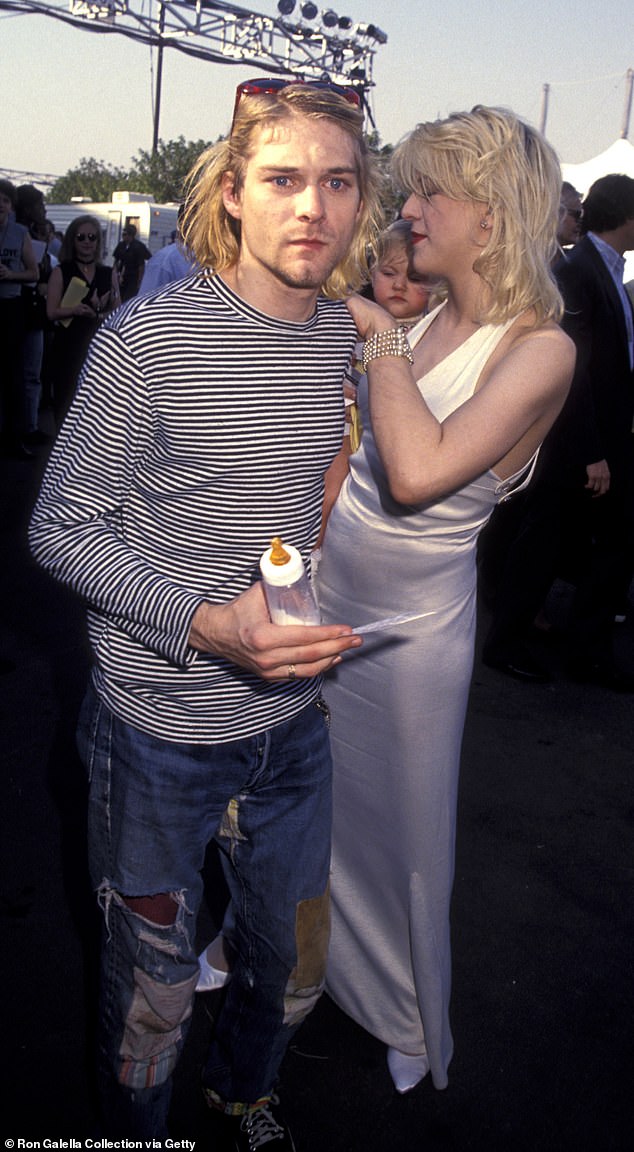
The new paper, reported on in detail by the Daily Mail, does not come from law enforcement. It is the work of a private sector forensic team that says it reexamined autopsy findings and scene documentation, bringing in specialist Brian Burnett, who has worked on cases involving overdoses followed by gunshot trauma.
In their analysis, they focus on details that, in their view, sit awkwardly beside the accepted suicide narrative. Cobain’s autopsy documented fluid in his lungs, bleeding in his eyes, and damage to the brain and liver. The team argues that these signs are less typical of a quick, catastrophic gunshot death and more consistent with the slower suffocation of a heroin overdose.
Lead author Wilkins is quoted as outlining that scenario in stark terms. “He’s dying of an overdose, and so he can barely breathe, his blood isn’t pumping very much,” she said. “So that means the brain and liver aren’t getting oxygen, and they’re starving, and they’re dying.”
The paper notes that in many fatal head gunshot cases, blood is drawn into the airways and appears in the lungs. Cobain’s report, they say, did not describe that pattern. They also point out that the brainstem, which controls breathing, did not appear to have the kind of damage that would instantly shut down respiration, and that his arm position was not typical of a catastrophic brainstem injury.
Beyond physiology, the researchers zero in on the mechanics of the weapon and Cobain’s reported condition. Heroin at high doses can leave a person comatose or near-comatose. Wilkins questions whether someone in that state could have physically managed the gun involved. “If you look at the crime scene photos, you can see how big that gun is,” she said. She describes the weapon as weighing about six pounds and suggests that a man slipping into an overdose-induced coma would have struggled to lift, position, and fire it as described.
The team says they replicated the shotgun to study how it ejects shells. In their retelling, the official report places Cobain’s left hand tightly wrapped around the muzzle end of the barrel, while the spent shell was documented on a pile of clothes in a direction that did not align with typical ejection paths. “If your hand is on the forward barrel, where Kurt’s hand was reported to be in the SPD report, the gun wouldn’t eject a shell at all,” Wilkins said. “So not only is there a shell where it shouldn’t be, there shouldn’t even be a shotgun shell.”
She also fixates on how clean Cobain’s left hand appears in scene photographs. Wilkins tells the Mail that in other shotgun suicides she has studied, hands close to the muzzle are almost always covered in blood and tissue. In this case, she says, “his hand is so clean.” The paper suggests a scenario in which Cobain’s hand may have been placed on the weapon after death, a detail they say could explain a thumbprint-like mark seen on his skin.
The same report scrutinizes blood patterns on Cobain’s clothing. Wilkins notes staining at the bottom of his shirt and argues that such a pattern would most likely come from the body being lifted with the head angled downward, rather than from blood simply flowing where he fell. The team frames these details as reasons to question whether the body was moved after death.
The alleged suicide note is another focal point. According to Wilkins, the top portion reads like Cobain writing about his career and his band, not about ending his life. “There’s nothing about suicide in that. It’s basically just him talking about quitting the band,” she said. She claims the final four lines appear visually different, with larger, more uneven lettering, and implies that they may not have been written at the same time as the rest of the note.
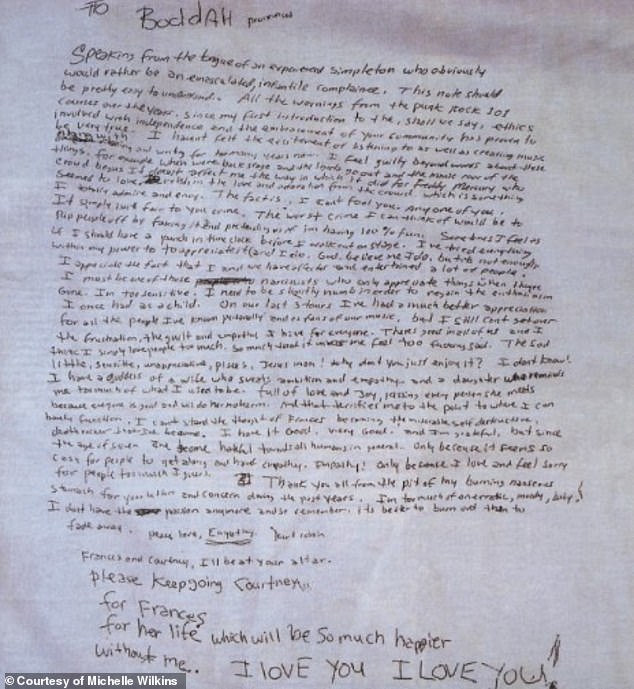
The paper, which the team says was peer reviewed through the International Journal of Forensic Science, stops short of naming a suspect. Instead, the authors frame their work as a call for transparency and a full, official reexamination of the evidence.
The Legacy That Never Settled
For Wilkins, the stakes are not confined to one rock star. She says she has spoken with families whose loved ones took their own lives, and who cited Cobain’s death as a grim inspiration. “In 2022, a kid took his life because he believed Cobain did. The copycat suicides have never stopped,” she told the Mail, arguing that clarifying what truly happened matters far beyond Seattle history.
The researchers say they have asked multiple authorities to reopen the case and review their findings. According to Wilkins, those efforts have been rejected. “They both came back with, No,” she said of the responses. “Like, we’re not even looking at your evidence.” She maintains that the group’s request is limited. “We weren’t saying, arrest people tomorrow,” she added. “We were saying, you have these, the extra evidence that we don’t have.”
Her bottom line is less an accusation than a challenge. “If we’re wrong, just prove it to us. That’s all we asked them to do,” she said. For now, the official record remains untouched. Cobain’s death is still categorized as a suicide, and law enforcement agencies have not signaled any intention to change that.
Against that backdrop, Courtney’s recent photograph feels like a personal act unfolding in a very public arena. For nearly three decades, she has been cast in almost every role the public imagination can assign: grieving widow, punk heroine, villain, survivor. Through it all, she has worked to protect Cobain’s image, manage his catalog, and raise their daughter under the weight of a mythologized ghost.
For Gen X and older millennials, Cobain’s story is woven into formative years, a soundtrack to coming of age and losing innocence. Each new report, documentary, or theory can reopen that collective wound. The idea that a private forensic paper might rewrite part of that story touches not only on criminal procedure, but on how an entire generation understands its own past.
In that sense, a simple image of Courtney Love reading “The Guide To Becoming Alive” carries its own quiet symbolism. While others argue over the science of how Cobain died, she appears on a couch with a book about how to keep living. Between the lines of that photo lies the unresolved tension that has followed them both for decades: the world will not stop revisiting his death, even as the woman who loved him most tries, in her own way, to stay alive in the aftermath.
Join the Discussion
When new reports revisit a long-closed case like Kurt Cobain’s, how do you balance respect for the people closest to him with curiosity about unanswered questions?