Get The Latest Celebrity Gossip to your email daily. Sign Up Free For InsideFame.
Elon Musk And Pete Hegseth Turn ‘Star Trek’ Into War Talk
Jan 13, 2026
0
Share:
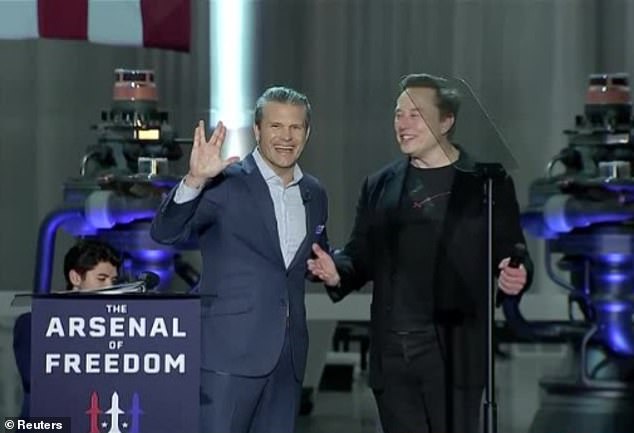
The electric guitar riff of “Seven Nation Army” blared, a Vulcan salute flashed to the cameras, and a United States defense secretary grinned beside Elon Musk under a sign that read “Arsenal of Freedom.” For a moment, it looked less like a Pentagon event and more like a Comic Con fever dream.
Then Pete Hegseth pointed to the crowd, hand still raised in the salute every “Star Trek” fan knows, and declared, “Star Trek real.” Next to him, Musk laughed.
This was not a sci fi convention. It was the Defense Department using a space billionaire, a rock anthem, and a beloved franchise to sell something very real. An aggressive push for “non woke” artificial intelligence and a new era of war tech built with Silicon Valley speed.
‘Star Trek’ Joke, Very Real Stakes
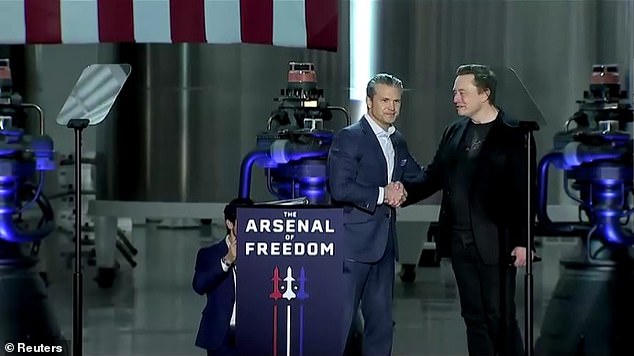
The backdrop for Hegseth’s quip was SpaceX’s Starbase facility in Texas, where the Pentagon chief joined Musk for a high profile stop on an “Arsenal of Freedom” tour focused on military AI and weapons innovation.
As he walked onstage to that pounding White Stripes anthem, Hegseth flashed the Vulcan greeting that has lived in pop culture for generations. “How about this,” he said, saluting beside Musk. “Star Trek real.”
On the lectern in front of them, the words “Arsenal of Freedom” were printed in bold. For longtime fans, the reference was impossible to miss. “Arsenal of Freedom” is the name of a “Star Trek” episode built around a chilling idea. A civilization wiped out by its own automated weapons.
Hegseth leaned into the theatrics, but his message turned sharp quickly. He framed his appearance as a response to global arms races, stagnant government processes, and what he cast as years of Pentagon red tape.
The ‘Arsenal of Freedom’ Gets Rebooted
In carefully scripted remarks, Hegseth sold his audience on an AI future built for war, not for campus debates.
“Department of War AI will not be woke,” he said. “We are building war-ready weapons and systems, not chatbots for an Ivy League faculty lounge.”
The “Arsenal of Freedom” campaign, as the Defense Department describes it, is meant to overhaul how the military designs weapons, adopts AI, and partners with private industry. In other words, it is an attempt to pull the Pentagon closer to the culture and pace of companies like SpaceX.
Hegseth told the crowd that his month-long tour is about reconnecting with the defense industrial base and speeding up innovation. “You are the foundation of our defense industrial base, the foundation of great American manufacturers, who we trust to usher in that new golden age of peace through strength under President Trump,” he said.
For Hegseth, this is not a minor tune-up. It is a reset. He blamed what he called “endless projects with no accountable owners” and “high churn with little progress and few outputs” for leaving the United States vulnerable.
“Until President Trump took office, the Department of War’s process for fielding new capabilities had not kept up with the times,” he argued. He contrasted that bureaucracy with SpaceX, calling the difference “a dangerous game with potentially fatal consequences.”
Musk’s Sci-Fi Dreams Meet Real Rockets
If Hegseth was there to pitch a new Pentagon playbook, Musk was there to make the moment feel like a preview of another universe entirely.
The SpaceX chief did not limit his remarks to defense contracts. He talked about rockets, planets, and a future that feels ripped from the same franchise Hegseth had just joked about.
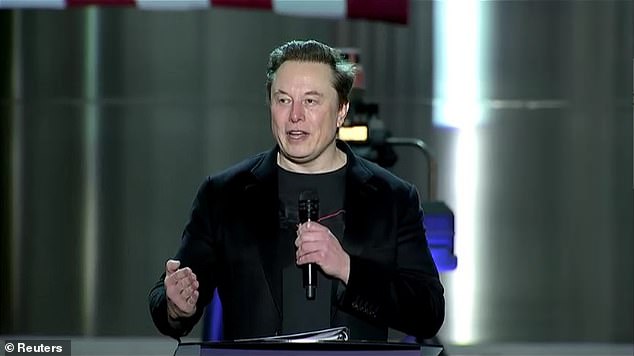
“We want to make Star Trek real,” Musk told the crowd, describing ambitions that stretch far beyond Earth. He spoke of interplanetary travel and even voyages beyond the solar system as he welcomed Hegseth to Starbase, the sprawling rocket manufacturing and launch hub that serves as the visual centerpiece of his space aspirations.
🇺🇸⚡🇺🇸Elon Musk welcomed Secretary of War Pete Hegseth to SpaceX’s Starbase in Texas yesterday, calling it an “honor” to host the Pentagon leader.
The pair discussed unleashing tech innovation, integrating Grok AI into defense networks, and aiming to “make Star Trek real.”… pic.twitter.com/IVA32PIkm2
That single line, “We want to make Star Trek real,” captured the cultural collision happening on that stage. Musk cast himself as the man who will turn science fiction into operational reality. Hegseth cast himself as the official who will ensure that reality is shaped by hard power, not what he called “woke” constraints.
From TV Warning To Warfighting Code
Beneath the swagger and sound bites, Hegseth laid out a stark vision for what military AI should be allowed to do.
He called for the United States to be “deadly serious” about dominating space, and he demanded “a larger, more modern and more capable constellation of American satellites launched by American rockets from American soil, built by American engineers.” For him, that constellation is part of an “AI-first” future in which software and sensors sit at the center of military power.
Hegseth said the Pentagon must break with its traditional contractors and slower processes. “We can no longer afford to wait a decade for our legacy prime contractors to deliver a perfect system,” he warned. “Winning requires a new playbook.”
Central to that playbook, he insisted, is artificial intelligence that is not bound by what he sees as ideological limits. He described his goal as building systems that operate “without ideological constraints that limit lawful military applications,” before repeating that the Pentagon’s “AI will not be woke.”
He also took direct aim at what he labeled “woke” AI, signaling that previous efforts to constrain military AI use through ethical or political frameworks would not define his tenure. In his telling, AI is a tool that should be sharpened for conflict, not softened for comfort.
The cultural twist is hard to miss. On “Star Trek,” the “Arsenal of Freedom” story was a warning about what happens when automated weapons evolve beyond human control. At Starbase, that title became the brand for a campaign to build faster, more capable, war-ready AI systems.
Pop Culture, Politics And Your Feed
If you grew up watching “Star Trek” as an optimistic escape, the idea of a defense secretary and a tech mogul using its language to sell an arms race can feel jarring. Yet that is exactly where modern power lives. In the shared images, jokes, and references that light up your social feeds.
In one appearance, Hegseth managed to hit nearly every culture war pressure point. SpaceX hero worship, “woke” versus “non woke” tech, AI anxiety, and a nostalgic sci-fi nod that plays perfectly in clips and memes. Musk, ever aware of his role as both CEO and celebrity, leaned into the legend-building with his promise to make “Star Trek” a reality.
For the Defense Department, this is more than a catchy backdrop. It is a way to wrap serious shifts in policy and spending inside something familiar. A universe where Vulcan salutes feel harmless and the words “Arsenal of Freedom” sound like adventure, not caution.
The irony is that the original “Star Trek” stories did not cheer on unchecked weapons. They questioned them. They asked what happens when technology outruns wisdom, and when power becomes automated in ways that humans can no longer fully control.
On that Starbase stage, the line between warning and wish list blurred. The Pentagon chief promised AI that is faster and less constrained. The space billionaire promised to turn a TV dream into a planetary project.
Somewhere between the rock anthem, the Vulcan salute, and the phrase “Star Trek real,” a different question hangs in the air. If we really are making “Star Trek” real, which version are we choosing. The one about exploration and restraint, or the one where the arsenal finally learns to think for itself.