

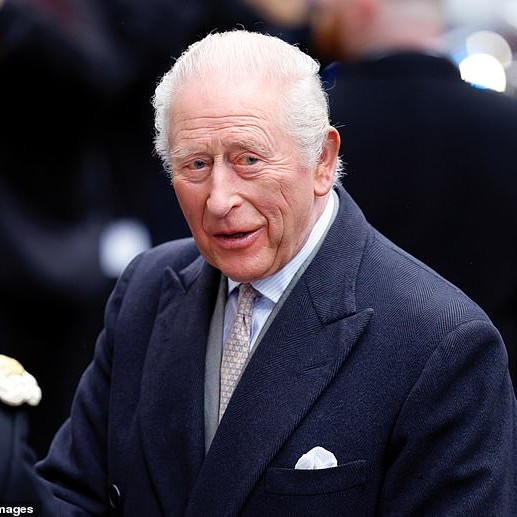
The monarchy’s carefully rebuilt image is facing fresh strain after claims that King Charles was formally warned years ago that Prince Andrew’s business dealings were “abusing” the Royal Family’s name. At the center of the storm is a whistleblower email, a controversial financier, and a brother who has already dragged the House of Windsor through one era-defining scandal.
TLDR
A whistleblower email sent via royal lawyers in 2019 allegedly warned then-Prince Charles that Prince Andrew’s ties to financier David Rowland were misusing the Royal Family’s name, adding new pressure on the palace amid renewed scrutiny of Andrew.
A Warning Landed in 2019
According to the Mail on Sunday, a whistleblower with detailed knowledge of Prince Andrew’s business arrangements contacted the then-Prince of Wales in 2019. The message, sent through the royal law firm Farrer & Co, alleged that the Royal Family’s name was being abused through Andrew’s relationship with financier David Rowland.
The email, reported by the outlet, warned of “David Rowland’s abuse of the Royal Family” and painted a troubling picture of the disgraced former Duke of York’s priorities. The whistleblower is said to have written that “HRH the Duke of York’s actions suggest that his Royal Highness considers his relationship with David Rowland more important than that of his family.”
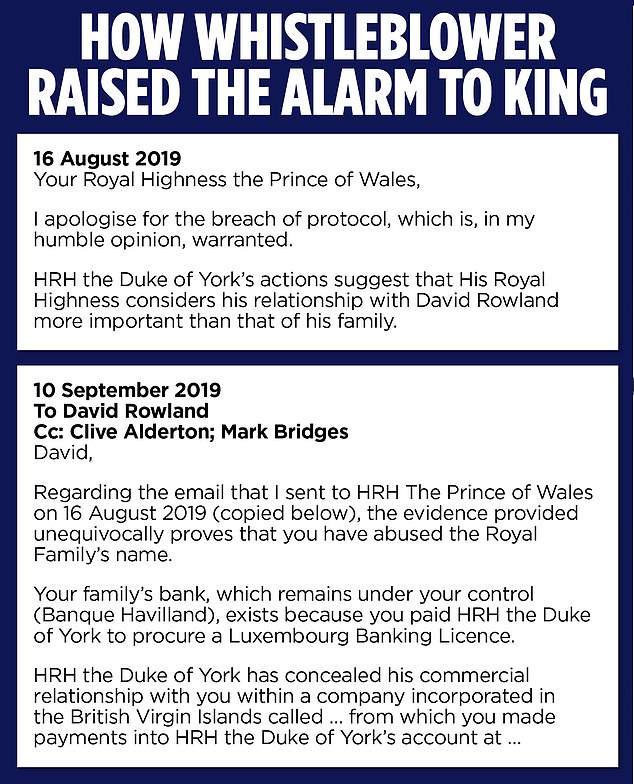
It did not stop there. A second email was reportedly sent directly to Rowland, copying in two of the most powerful figures in the royal machinery at the time. On the circulation list, the Mail on Sunday reports, were Sir Clive Alderton, Charles’s influential private secretary, and Mark Bridges, the late Queen’s solicitor at Farrer & Co.
In that message, the whistleblower allegedly told Rowland that “the evidence provided unequivocally proves that you have abused the Royal Family’s name.” The correspondence, now at the heart of a political and public relations crisis, is said to have included what were claimed to be Andrew’s bank account details.
One central allegation is especially incendiary. The whistleblower claimed Rowland “paid HRH The Duke of York to procure a Luxembourg Banking Licence” for his private bank, Banque Havilland. The Mail on Sunday notes that Banque Havilland later had its license withdrawn by the European Central Bank in 2024, a decision the bank is appealing.
Andrew, Rowland, and the Money
The reported emails add new layers to a relationship that has long raised eyebrows in diplomatic and financial circles. David Rowland, a millionaire financier, has been described in the past as one of Andrew’s closest business allies. The Mail on Sunday recalls that Andrew once referred to him as his “trusted money man” in exchanges with Jeffrey Epstein.
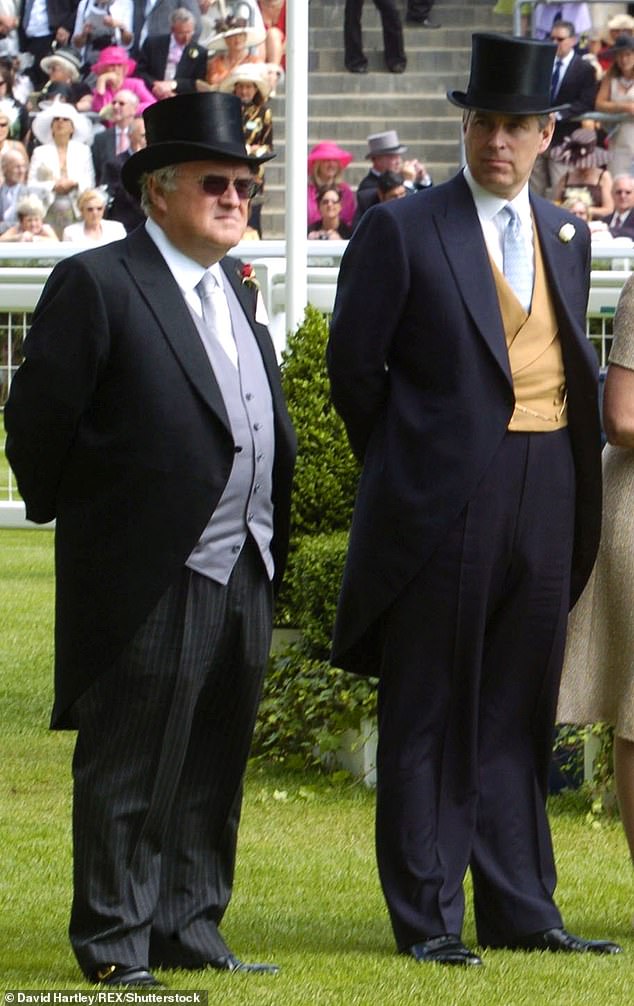
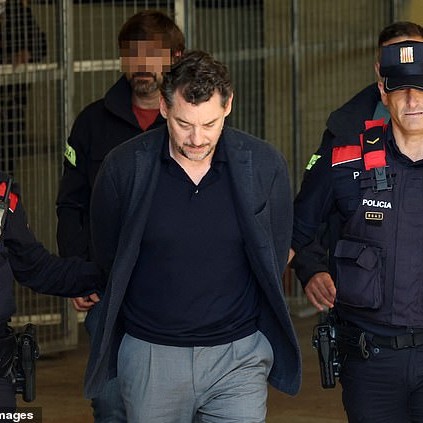
Rowland and his son Jonathan were more than occasional acquaintances. According to the outlet, they frequently joined Andrew on official trips while he served as a taxpayer-funded trade envoy between 2001 and 2011. The trio traveled to commercial hotspots, including China and former Soviet states, where the former Duke was tasked with promoting British interests.
Emails cited by the Mail on Sunday suggest Andrew repeatedly flagged business opportunities from his official duties to Rowland and his circle. In effect, the lines between royal duty and private deal-making were being blurred in real time.
There was also personal financial support. The paper reports that Rowland once provided Andrew’s ex-wife, Sarah Ferguson, with 40,000 to help with debts. In 2017, Rowland allegedly stepped in again, paying off a 1.5 million loan for Andrew. For critics, the payments underscored just how financially entangled a senior royal had become with a private banker seeking licenses and access in sensitive markets.
The Mail on Sunday’s cache of correspondence also includes claims that Andrew used his trade envoy role to help broker a multi-million-pound oil deal to China for his associates, with the hope of making “tons of money” alongside Epstein. Separately, a British ambassador is said to have warned the government more than two decades ago that Andrew’s behavior in the role was damaging both Britain and the Royal Family.
Diplomats feature heavily in the reported emails. Andrew is said to have invited Jonathan Rowland to a Buckingham Palace meeting attended by the United Kingdom’s ambassador to Montenegro, where the Rowlands’ business ambitions were discussed. Government staff were reportedly put at the Rowlands’ disposal, while Andrew allegedly provided David Rowland with his schedule for a trade envoy trip to Montenegro.
In another instance described by the Mail on Sunday, a British diplomat in Moscow wrote to the Rowlands after a palace event, calling it “a great success” and connecting them with the British embassy in Belgrade, which then covered Montenegro. The diplomat added that the embassy’s commercial team stood ready to help if needed.
Pressure Builds Around the Palace
These detailed allegations arrive at a fraught moment. The Mail on Sunday reports that Andrew has been arrested on suspicion of misconduct in public office, in connection with long-running questions over his use of status and access. The offense carries a maximum sentence of life imprisonment, although Andrew has not been charged.
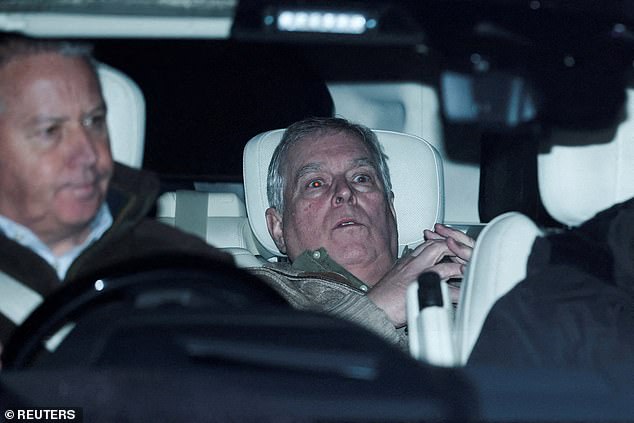
The specter of Jeffrey Epstein again looms over the narrative. Andrew’s association with the convicted sex offender has already cost him his royal patronages, military titles, and public role. The infamous photograph with then-teenager Virginia Giuffre, and the subsequent civil case she brought in the United States, forced the Royal Family into one of its darkest modern chapters.
Now the whistleblower emails risk drawing King Charles more directly into the fallout. While there is no suggestion that Charles himself was involved in any of Andrew’s business dealings, the reported 2019 warning raises a pointed question about what the palace knew, when it knew it, and how it responded.
The revelation lands at a delicate time for a monarch intent on projecting stability and restraint. Charles has already acted decisively once, effectively exiling his younger brother from public life and shutting down Andrew’s hopes of a comeback to frontline royal duties. The existence of a warning sent through official legal channels could be seized upon by critics who argue the institution moved too slowly for too long.
According to the Mail on Sunday, Andrew has claimed to have “no recollection” of an email relating to his conversations with political leaders. Messages reported by the outlet suggest that he told Jonathan Rowland he had “a very supportive chat” with then-Prime Minister David Cameron and Labour leader Ed Miliband, apparently at Prince William’s wedding, at a time when his trade envoy role was already under scrutiny.
Political Stakes and Public Image
As often happens with royal crises, the political class has moved quickly into the space between public anger and palace discretion. Senior figures across the spectrum are now on record pressing for a robust response.
Shadow Home Secretary Chris Philp did not mince words when reacting to the Mail on Sunday’s reporting. He said, “These explosive new MoS findings are shocking, but not surprising. The police should investigate them at once.” His statement landed squarely in the zone where criminal law, public trust, and royal privilege intersect.
Shadow Foreign Secretary Priti Patel echoed the urgency. “Each day, new revelations appear, and they are all horrific. Police investigations into these MoS revelations are urgently needed,” she said.
From Reform UK, Treasury spokesman Robert Jenrick was equally scathing, arguing that Andrew’s actions had harmed Britain’s standing abroad. “The police must investigate the latest revelation urgently. No stone must be left unturned to establish the truth. Andrew has done his best to wreck Britain’s reputation on the world stage through his association with Epstein,” he said.
Together, the statements signal that Prince Andrew’s troubles are no longer just a private agony for the Windsor family. They are now a live issue in British public life, entwining questions about diplomatic integrity, law enforcement, and the monarchy’s moral authority.
What It Means for Charles
For King Charles, the reported whistleblower emails pose less of a legal risk than a reputational one. The allegation that a detailed written warning crossed the desks of his closest advisers in 2019 puts the palace’s internal decision-making under the microscope.
On one hand, Charles has already taken firm steps to distance the institution from Andrew, stripping him of titles and keeping him largely out of public view. Those moves aligned with public opinion and helped protect the crown’s image at a crucial moment of transition.
On the other hand, the suggestion that concerns were raised years ago, in such explicit terms, invites scrutiny of how quickly and thoroughly the Household acted. Did the warning accelerate Andrew’s removal from public life, or was it one more alarm in a pattern of red flags that took years to translate into decisive action?
There are no easy answers for a monarch who came to the throne with a mandate to modernize but also to steady the ship after the turbulence of recent years. The emails now reported by the Mail on Sunday place him at the intersection of family loyalty, institutional duty, and national expectation.
What is clear is that the Prince Andrew saga is no longer an isolated scandal from the past. With allegations of secret business dealings, a disputed banking license, questions over diplomatic conduct, and renewed political calls for police investigations, it has become an evolving test of how the modern monarchy confronts misconduct within its own ranks.
Join the Discussion
Do the reported whistleblower emails change how you view the way the palace has handled Prince Andrew’s affairs, or do they simply confirm what you already believed about this royal crisis?
References
- Daily Mail US: Email proves Charles was warned about his brother’s ‘secret deals’: Whistleblower told Palace that Royal Family’s name was being ‘abused’ by Andrew
- Daily Mail US: Email proves Charles was warned about his brother’s ‘secret deals’: Whistleblower told Palace that Royal Family’s name was being ‘abused’ by Andrew