

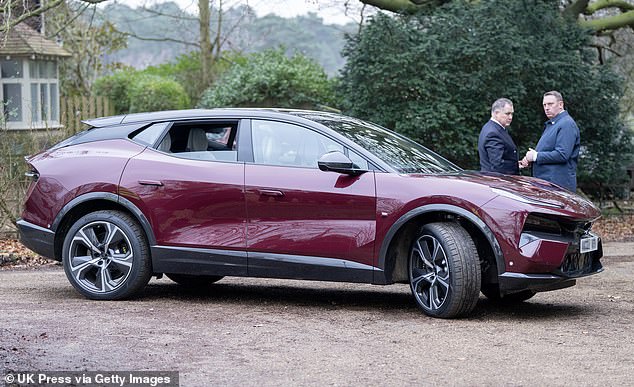
It slipped up to the church in near silence. Then King Charles rolled down the window and served a line that instantly rewrote royal car lore.
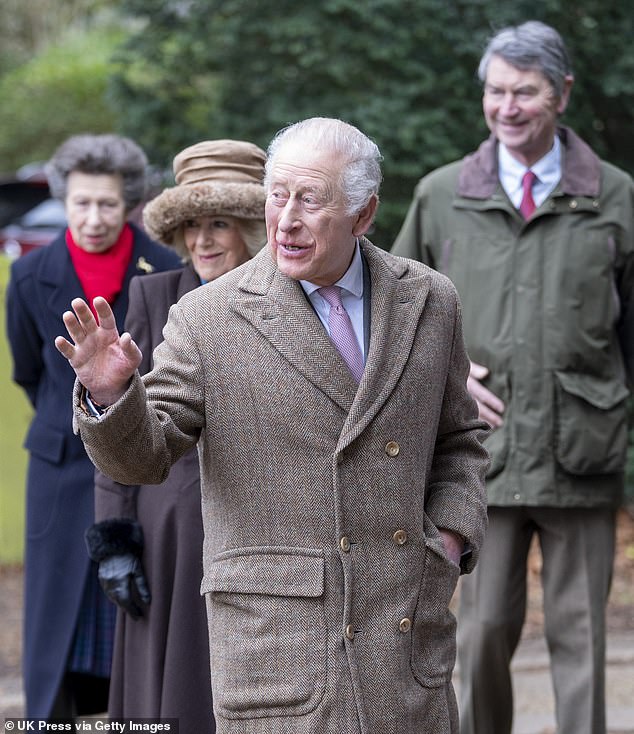
Gesturing toward his gleaming new Lotus Eletre, the monarch reportedly smiled at well-wishers and joked that the all-electric super-SUV was “silent but deadly.” A royal dad joke. A very expensive punchline.
King Charles lll and Queen Camilla seen for the first time in their new electric £160,000 Lotus Eletre sportscar as they attend Mattins at St Peter’s church near Sandringham, as he jokes new car is ‘silent but deadly’. #royal #royals #king #camilla #queen #sandringham #lotus pic.twitter.com/1DHYh9unOS
— Mark Cuthbert (@markacuthbert) January 25, 2026
In that one moment, centuries of royal pageantry met the future of luxury driving. The message was clear. The royal garage is going electric, and Charles is leading the charge from the front seat.
The Eco Supercar Turning Heads at Sandringham
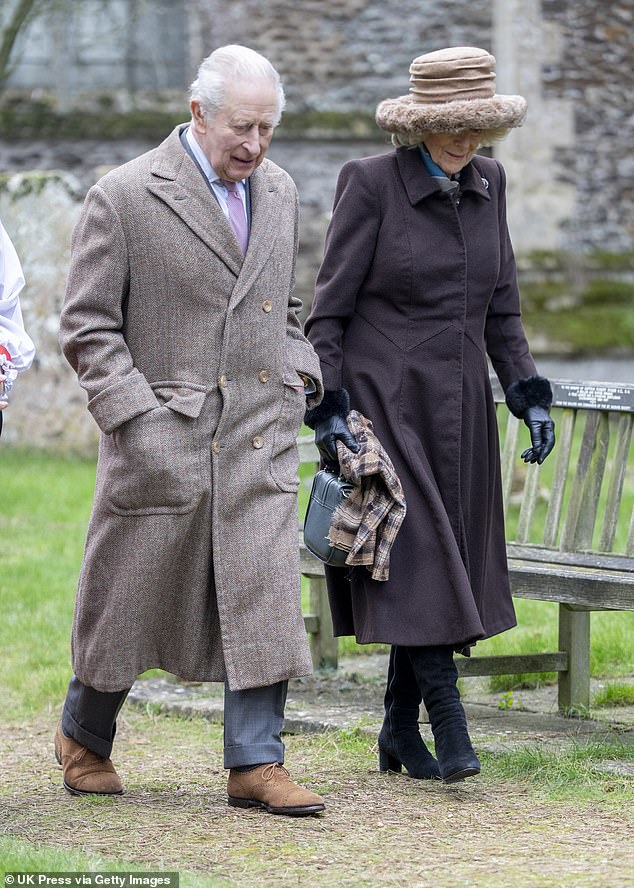
King Charles and Queen Camilla were photographed arriving for a Sunday church service at Sandringham in their new royal toy, a Royal Claret Lotus Eletre worth around 160,000.
It is not just any SUV. The Eletre is marketed as an all-electric “hyper-SUV” that aims to combine supercar performance with green credentials. It can reportedly sprint from 0 to 62 miles per hour in just 2.95 seconds and offers a range of about 280 miles on a single charge.
The King is understood to be using the 164 mile per hour capable Lotus as a runaround on his Sandringham estate. It is a far cry from the rumbling state limousines that once defined royal journeys, yet it still carries the classic Royal Claret finish that signals unmistakable status.
Before buying the car, the royal household had a Lotus on loan. That trial run clearly worked. Now the badge is officially part of the royal story.
From Roaring V8s to Whisper-Quiet Power
The Eletre is only the latest chapter in a lifelong royal love affair with cars. The King has long been known for his taste in classic British engineering, particularly when it comes to Aston Martin and Rolls-Royce.
Among his most famous past possessions was a 1987 Aston Martin V8 Vantage Volante, a muscular, open-top statement of eighties glamour that was gifted to him by the Emir of Bahrain. He later auctioned the car for charity in 1995, turning personal passion into philanthropy.
One Aston Martin, however, never left his heart or his fleet. Still part of the royal garage is a cherished Aston Martin DB6 MkII Volante, a 21st birthday present from his mother, the late Queen Elizabeth II. It is sentimental, glamorous, and very clearly his favorite automotive heirloom.
In a move that signaled his environmental priorities long before he became King, that DB6 was converted in 2008 to run on bioethanol. Charles once quipped that it ran on “wine and cheese.” In reality, the fuel is made from fermented plant waste, but the image of a royal Aston powered by leftovers is unmistakably Charles in tone. Playful, pointed, and deeply committed to greener solutions.
Jaguar, BMW, and a Quiet Electric Revolution
Long before the Lotus arrived, Charles was already pressing the accelerator on an electric future for the monarchy.
The royal family’s first fully electric car was an EV400 HSE Jaguar I-Pace, which entered the fleet in 2018. The King used the I-Pace as a symbol of his modern, climate-conscious approach, quietly normalizing the image of a royal stepping out of a battery-powered car instead of a roaring limousine. That Jaguar has since been auctioned off, but its role in the royal green transition remains significant.
More recently, the King expanded his eco-garage further by purchasing two new electric BMWs. At the same time, he arranged for electric charging points to be installed at his royal residences, including his beloved country estates.
Environmental advocates noticed. When news of the Lotus Eletre purchase emerged, green campaigners hailed the decision as a powerful symbol of royal endorsement for electric vehicles, particularly at a time when the British car industry is grappling with strict government mandates to go electric or face heavy penalties.
Old World Glamour, New World Fuel
Do not be fooled into thinking the King’s switch to silent power means the end of old school royal glamour. Deep in the royal mews, the grand machines of previous eras still wait for their moment to glide into view.
Charles is known to have a soft spot for Rolls-Royce Phantoms, the grand V8-powered giants that defined mid-century British luxury. At least three Phantoms are reportedly kept in the royal collection, all finished in that signature Royal Claret.
Among them is a 1961 Phantom V limousine that once served as a state car and a 1962 landaulet model inherited from the Queen Mother. The landaulet comes with a retractable rear roof, designed so the public can get a better view of the sovereign on ceremonial occasions. It is a rolling balcony, a theatre on wheels.
There is a line in the royal world between personal passion and official duty, and it shows up vividly in the number plates. Vehicles used for state business traditionally do not carry plates, emphasizing their role as institutional rather than personal machines. By contrast, the King’s growing fleet of privately owned eco cars, including the Lotus and the electric BMWs, bears standard DVLA registrations.
The Courtiers Planning a Greener Motorcade
While Charles experiments with electric super-SUVs on his private time, officials behind the scenes are plotting a broader shift for the royal motor pool.
In the summer of 2024, the Keeper of the Privy Purse, Sir Michael Stevens, revealed that even the state Bentleys are set for a green upgrade. According to his comments, the plan is for those cars to be adapted to run on biofuels, with discussions also underway about a possible all-electric future for the core royal fleet.
That means the next time you see a royal procession sweep past, the cars at its heart may be cleaner, quieter, and far more technologically advanced than the stately shapes suggest.
In that context, the King’s Lotus Eletre is more than a flashy new ride. It is a test case, a very glamorous experiment in how renewable tech can fit into a world built on tradition and symbolism.
The Lotus Story Behind the Royal Seal of Approval
Lotus is a historic British marque rooted in performance and racing prestige, which makes its presence in the royal garage feel perfectly aligned with Charles’s long-standing love of high-quality engineering.
The company itself has changed in recent years. Lotus is now 51 per cent owned by Chinese automotive giant Geely, which also controls Volvo and the manufacturer of London’s iconic black cabs. The King’s choice of the Eletre gives this new international chapter of Lotus an undeniable stamp of British heritage.
For a brand that is reinventing itself as an electric performance leader, being photographed with the King and Queen in a Royal Claret Eletre is the kind of subtle yet unmistakable advertising money cannot buy.
What ‘Silent but Deadly’ Really Signals
On the surface, it was just a throwaway joke. A monarch poking fun at his own high-tech, high-priced toy by calling it “silent but deadly.” But the moment landed because it captured something deeper about Charles.
Here is a King who still treasures a birthday Aston from his mother and keeps Rolls-Royce Phantoms in his orbit, yet insists on converting classics to bioethanol and replacing gas guzzlers with electric power where he can. His choices are steeped in nostalgia and status, but tightly woven with his lifelong environmental ethos.
The Lotus Eletre gliding through Sandringham is not the end of the royal romance with growling V8s. It is the next act. The same Royal Claret, the same sense of ceremony, now carried on a near-silent surge of electric torque instead of petrol fumes.
For royal watchers, it offers a tantalizing preview of what the future coronation motorcades and balcony moments might look and sound like. Less roar, more whisper. Still gloriously over the top, just a little closer to the planet Charles has spent his life trying to protect.