

TLDR
Rumer Willis shared a video nursing her nearly three-year-old daughter and ignited a firestorm, but the deeper story is about judgment, not breastfeeding.
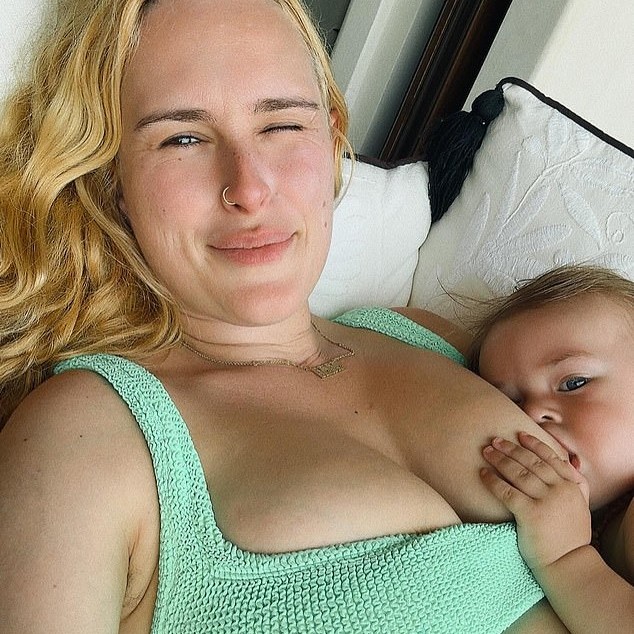
Rumer Willis tapped upload, settled in with her nearly three-year-old daughter, Louetta, and watched the internet explode. The short clip showed Bruce Willis and Demi Moore’s eldest calmly breastfeeding her toddler. The comments arrived less calmly.
There were accusations, lectures, and strangers declaring what a Hollywood mother should and should not do with her own child. It was the familiar cycle of outrage that greets almost any famous woman who dares to parent in public.
Willis did not retreat. She added a caption that said it all: “When someone starts judging my parenting”, then let the video speak for itself. No apology, no manifesto. Just a snapshot of her life as a first-time mother, fully aware that her last name amplifies every intimate moment.
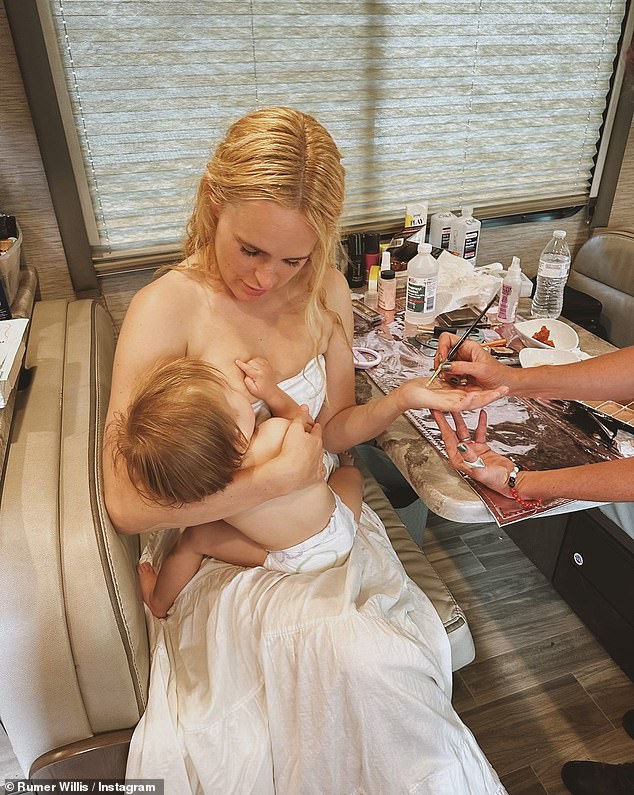
In a Daily Mail column, writer and mother of six Bethany Mandel used Willis’s post as a lens on what modern parents are up against. Mandel has breastfed each of her children for one to three years. For her, Willis’s video was not a scandal. It was routine.
She points out that extended breastfeeding is not a fringe Hollywood experiment. It is firmly in line with mainstream medical advice. The American Academy of Pediatrics notes, “For the best health outcomes, the AAP recommends exclusive breastfeeding for approximately 6 months followed by continued breastfeeding with complementary foods for at least 2 years and beyond as mutually desired.”
That phrase “at least 2 years and beyond” is where the internet seems to lose its footing. Many mothers continue nursing into the toddler years. Most simply do it quietly, without cameras, filters, or a global audience waiting to weigh in.
Mandel recalls nursing on park benches, airplanes, and in waiting rooms for a decade. The only time a stranger confronted her was not over breastfeeding. It was when she gave a baby a bottle of formula. The message was clear. “Damned if you do, damned if you do not” has become a parenting mantra.
She describes an incident in which a couple was reportedly removed from a delayed flight after their crying baby became a flashpoint. A fussy infant on a tense plane is one of the most predictable scenes in the world, yet it turned into a public spectacle. Parenting has become a performance, and the audience is restless.
For celebrity parents, that audience never goes away. Willis grew up as the child of two of the 1990s’ most-watched stars. Demi Moore posing pregnant on a magazine cover once felt like a cultural earthquake. Now it is her daughter, quietly feeding her own child, who is at the center of a familiar anxiety about what mothers are allowed to show.
Mandel argues that what counts as “normal” parenting and what is considered publicly acceptable have split apart. Ordinary behavior, from nursing a toddler to soothing a baby on a flight, is recast as a provocation the moment it appears on a screen.
In that light, Willis’s refusal to defend herself reads as its own kind of statement. She did not try to educate her critics or win them over. She posted the moment, named the judgment, and moved on with her day.
Whether you would breastfeed a toddler or not is almost beside the point. Rumer Willis did not turn a private choice into a controversy. The crowd did. And her decision to keep parenting, rather than keep explaining, may be the clearest glimpse yet of how famous mothers are learning to survive life lived under constant review.
Would you have shared the same moment with the world or kept it off-camera? How do you navigate parenting choices when everyone is watching?