


TLDR
TMZ framed Karol G’s evolving beauty as a “Good Genes or Good Docs?!” poll, but the superstar’s real transformation is about power, success, and self-image.
The split-screen felt familiar. On one side, a younger Karol G, the Colombian singer-songwriter who is still on the brink of a global takeover. On the other hand, a recent festival look from Coachella, all sculpted glam and arena-ready confidence. TMZ turned it into a clickable question: “Good Genes or Good Docs?!”
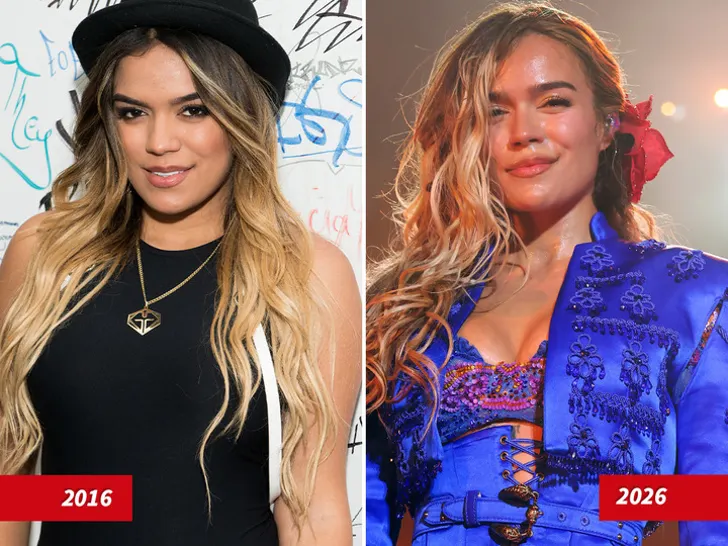
For a woman who has spent the last decade rewriting what Latin pop stardom can look like, it reduced a long, complicated journey to a beauty referendum. The poll itself was classic tabloid fare. Fans were invited to vote on whether Karol’s glow-up came from nature or a surgeon’s office, while the photos circulated across social media.
Karol G, born Carolina Giraldo Navarro, did not wake up one day as a headliner. She worked club stages, cut early singles, and kept pushing into a male-dominated urbano space until hits like “Tusa” and “Bichota” made her playlists and festival lineups a given. By the time she took the Coachella stage, she was not just a performer. She was a symbol of Latin pop’s global reach, and later a Grammy winner for “Manana Sera Bonito.”
That is why a simple side-by-side carries more weight than it seems. It arrives in the middle of a carefully built brand, one rooted in heartbreak anthems, vulnerable lyrics, and a visible evolution from blue-haired rebel to polished headliner. Her look has changed, just as her music, budgets, and glam squads have. Highlighting only the surface invites speculation that quickly turns into judgment.
Online, many of Karol’s fans pushed back. They praised the star for working hard, surviving public breakups, and carrying a stadium tour, and questioned why the conversation returned to what might or might not have happened in a doctor’s office. There has been no public confirmation of any cosmetic procedures, and the artist has often framed her image in terms of authenticity rather than perfection.
When a heavily retouched magazine cover of Karol G ran in GQ Mexico, she spoke out. Sharing the images on Instagram, she wrote that she did not recognize herself and that the editing erased the body she had learned to love. As reported at the time, she told fans, “My face does not look like this,” and said the portrayal felt disrespectful to women who follow her for honesty.
That moment made clear where she wanted the line drawn. Karol was not rejecting beauty or glamour. She was rejecting a version of herself that felt manufactured by someone else. The TMZ poll lands in the same sensitive territory because it invites strangers to speculate on what is “real,” while her career narrative leans on transparency and survival.
There is tension there. On one side is a superstar whose albums unpack insecurity, loss, and rebuilding. On the other is a media and fan ecosystem that still turns those same women into before-and-after slideshows. The question is not only whether Karol G’s face has changed. It is what stories the industry chooses to tell about that change.
As she moves deeper into her headlining era, the bigger story is not a vote about genes or doctors. It is how a once-underdog artist leveraged talent, heartbreak, and relentless work into global power, all while insisting that the woman under the contour remains hers to define.
Do side-by-side polls like this feel harmless to you, or do they undercut the message of confidence artists like Karol G work so hard to protect?