

A Widow Who Refuses To Grieve in Silence
The courtroom where her husband’s accused killer will stand trial could have been another locked, echoing box that shut the public out. Erika Kirk is not letting that happen.
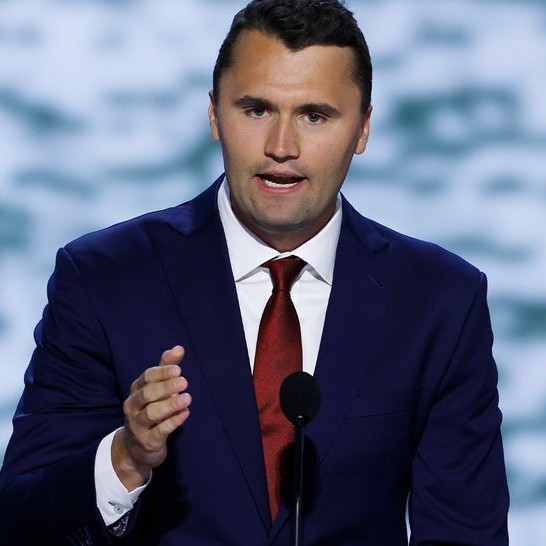
The widow of conservative commentator and activist Charlie Kirk is stepping directly into the legal spotlight, pushing for his alleged murderer to be tried in full view of the world. In newly filed court documents, she is asking a Utah judge to keep the doors open and the cameras on.
For Erika, justice for Charlie is not quiet, private, or hidden. It is transparent, televised, and accountable.
Why Erika Is Fighting for Cameras and Crowds
According to legal filings cited by TMZ, Erika is urging the court to deny any attempt to close proceedings in the upcoming trial of Tyler Robinson, the man charged with killing Charlie. She wants the public to see the evidence as it is introduced, not filtered through secondhand summaries or whispered courthouse gossip.
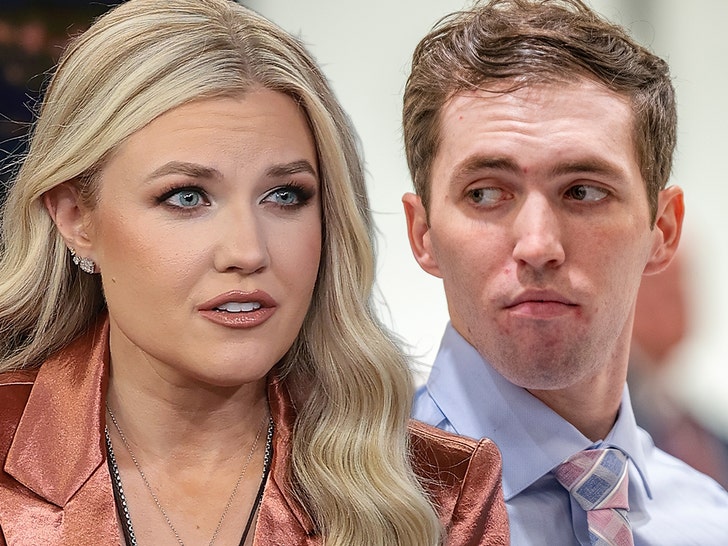
In plain terms, she is asking the judge to reject requests that would seal testimony, block media access, or otherwise push key pieces of the case behind closed doors. Her position is clear. If a man is accused of taking Charlie Kirk’s life, she believes the process that decides his fate should unfold in the open.
At the same time, Erika’s filing acknowledges a crucial balance. She is not asking the court to turn the trial into chaos. Any media and public access, she notes, should remain consistent with Robinson’s constitutional right to a fair trial.
It is a rare kind of plea, fueled by grief but framed in the language of transparency and due process. Erika is stepping into the emotionally loaded space where a victim’s family, the justice system, and the court of public opinion all collide.
The Deadly Night That Shattered a Campus
Charlie Kirk was shot and killed on the Utah Valley University campus in Orem, Utah, in September 2025. The attack stunned students and staff, and it sent a wave of shock across the country, where Charlie’s political presence had made him a constant, controversial figure in public life.
In the days that followed, authorities launched an intensive manhunt for a suspect. According to prosecutors, Tyler Robinson eventually turned himself in to law enforcement after that search.
Utah prosecutors have charged Robinson with aggravated murder, felony discharge of a firearm causing serious bodily injury and obstruction of justice. The aggravated murder charge is the most serious and, under Utah law, could expose Robinson to the death penalty if he is convicted.
That is the high-stakes backdrop for Erika’s push. She is not only a widow looking at the man accused of killing her husband. She is also a potential witness to a death penalty trial that could end with the state taking a life in response to a life lost.
A High Profile Case in a High-Pressure Era
The names alone make this trial impossible to ignore. Charlie Kirk was not just another political commentator. He was the founder of Turning Point USA, a figure beloved and loathed in equal measure, a man whose public persona thrived on campus debates, viral clips, and cultural clashes.
Now his story intersects with a different kind of American spectacle, a capital murder trial in a state known for its conservative politics and its devotion to law and order. It is the kind of case that ignites arguments about everything from gun violence to political rhetoric to campus security.
In that environment, Erika’s call for transparency lands with extra weight. When a case is this charged, quiet proceedings can breed suspicion. Rumors travel faster than facts, and social media can turn half-truths into headlines before a judge has even ruled on an objection.
By insisting on open proceedings, she is effectively saying to the country, if you are going to talk about this case, you should see it for yourself.
Open Courts, Public Grief
For generations, American courts have leaned toward openness. Trials are typically public, with only narrow exceptions to protect minors, shield sensitive national security information, or prevent clear, documented harm to the fairness of a proceeding.
But in reality, practical decisions often limit that openness. Judges can bar cameras, restrict seating, close parts of testimony, or seal documents that could prejudice a jury. Those choices are legal and sometimes necessary, yet they can also leave families feeling that the most important moments of their lives are unfolding in a sterile, hidden space.
Erika is pushing back against that feeling. Her filing is a demand to merge public grief with public accountability, to make sure that when evidence about Charlie’s final moments is laid out, it is not confined to a transcript that only lawyers and law clerks will ever read.
For people who watched Charlie build a career by broadcasting his ideas to millions, there is a piercing symmetry in that request. The man who lived on camera may now receive justice under the glare of the same kind of lenses.
Balancing Fairness With Exposure
Erika’s legal stance is not as simple as throwing the courthouse doors open and inviting a crowd. Even as she pushes for maximum transparency, she underlines that Robinson is entitled to a fair, impartial trial.
That tension, between openness and fairness, is at the heart of nearly every high-profile prosecution in modern America. Too much secrecy and the public starts to wonder what is being hidden. Too much exposure, and defense attorneys can argue that jurors were tainted long before they ever took an oath.
By explicitly acknowledging Robinson’s rights while calling for media and public access, Erika is trying to thread a narrow needle. She is asking for a process that is visible but not poisoned, comprehensive but not reckless.
A judge will ultimately decide where that balance lands. Yet the fact that Charlie’s widow is on record demanding that balance, instead of quietly watching from the gallery, tells you everything about how personal and political this trial has already become.
Turning Loss Into a Public Stand
There is a particular kind of courage in choosing not to look away from the thing that broke your life. For Erika, that courage is now written into a court filing that will help shape how the world witnesses the case against Tyler Robinson.
She cannot change what happened on that Utah campus. She cannot bring back the husband whose career turned him into a lightning rod and a symbol. What she can do is fight to make sure that the search for truth about his death does not unfold in the shadows.
Whether you agreed with Charlie Kirk in life or not, it is hard to ignore the raw clarity of his widow’s demand. If a jury will decide how his story ends, Erika wants the rest of us in the room to see it too.
In a culture obsessed with spectacle, there is something unexpectedly sober in that wish. Not a plea for theater, but a plea for light.