

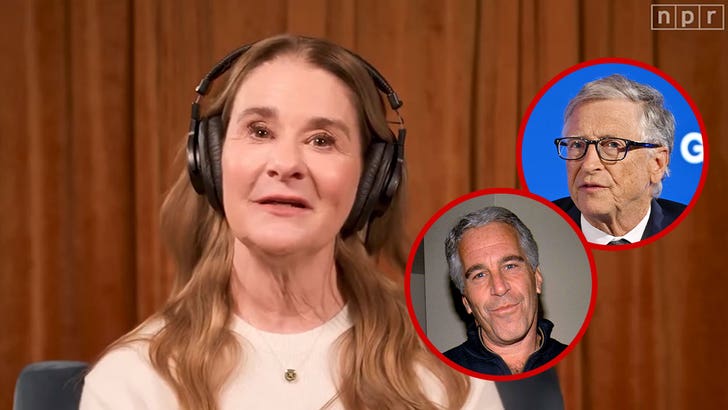
Melinda French Gates is finished being the buffer between Bill Gates and Jeffrey Epstein. As new court documents revive one of the most troubling chapters of the couple’s story, Melinda is making it clear that any remaining questions belong to her ex-husband, not to her.
In a new conversation tied to NPR’s “Wild Card” podcast, the billionaire philanthropist speaks about reading the recently unsealed Department of Justice documents connected to Epstein. The filings, sometimes called the Epstein files, reference Bill Gates several times, and Melinda admits they reopen painful memories from a marriage that was once sold to the world as a unified philanthropic empire.
According to TMZ, Melinda says the documents made her feel “unbelievably sad” for Epstein’s alleged victims and reminded her of harrowing moments in her personal life. They also pushed her to publicly draw a line about who should be answering for what.
Inside the Epstein Files and the Gates Marriage
Jeffrey Epstein, a convicted sex offender, built his public reputation on access to extreme wealth and power. The newly released court materials outline just how aggressively he pursued that access, including to Bill Gates. For many readers, the recurrence of Gates’ name in those files is jarring. For Melinda, it appears to be something more personal.
Years before the divorce, questions about Bill Gates and Jeffrey Epstein had already surfaced. In October 2019, the New York Times reported that Gates met with Epstein multiple times after Epstein’s sex-crimes conviction, sometimes at Epstein’s Manhattan townhouse, as Epstein pitched himself as a connector for philanthropic efforts focused on global health and education. The reporting noted that those meetings raised concerns for people in Gates’ orbit, including Melinda.
TMZ notes that Melinda and Bill announced their divorce in 2021, although she had reportedly been speaking with divorce lawyers about two years earlier, after rumors about Bill’s association with Epstein reached her. The couple did not publicly name a single reason for the split. Still, the timeline helped fuel long-running speculation that Epstein’s shadow was one of several stress points behind the Gates’ carefully curated image.
Melinda has previously said she told Bill she did not like his relationship with Epstein or the idea of doing work with him. That discomfort now reads differently in light of the unsealed documents, which pull their private disagreements into a public, permanent record.
What Melinda Is Saying Now
In the new comments highlighted by TMZ, Melinda sounds both deeply affected and very done. She describes reading the Epstein files and being brought back to the strain that era put on her marriage, even as she tries to distance herself from the scandal.
“Whatever questions remain there, I can’t even begin to know all of it, those questions are for those people and for even my ex-husband, they need to answer to those things. Not me.”
It is a rare, pointed sentence from someone who usually favors diplomatic language. Melinda is not attempting to interpret the documents, defend Bill, or expand on what she knew. Instead, she is redirecting all curiosity away from herself.
She also acknowledges how personally destabilizing that chapter was, and how deliberately she has tried to move past it.
Melinda says the details in the documents brought back “memories of some very, very painful times in my marriage. But I have moved on from that. I purposely pushed it away, and I moved on.”
Melinda adds that she is now in a “very beautiful” place in her life, focusing on her own philanthropy, her children, and her independence. She makes it clear that she no longer feels any obligation to publicly relive one of the darkest intersections between her family and global scandal. In her view, that responsibility belongs to the men whose names appear repeatedly in the files.
The emotional tension is unmistakable. Melinda expresses empathy for Epstein’s alleged victims, acknowledges her own pain, and then firmly steps aside. It is a controlled exit from a story that has followed her for years, and it shifts the spotlight onto Bill Gates and others whose interactions with Epstein have been documented.
Bill Gates’ Camp Rejects the Implications
Bill Gates has long insisted that his contact with Epstein was a mistake and that there was no meaningful relationship between them. In response to Melinda’s latest comments and the new wave of attention around the Epstein files, his representatives are pushing back again.
In a statement to TMZ, a spokesperson for Bill Gates strongly denied any suggestion that the documents reveal something sinister about Gates’ conduct.
“These claims are absolutely absurd and completely false. The only thing these documents demonstrate is Epstein’s frustration that he did not have an ongoing relationship with Gates and the lengths he would go to entrap and defame.”
That framing places Gates as a target, not a collaborator, and portrays Epstein as a manipulator who exaggerated his connection to powerful men. It is a narrative that attempts to separate Gates’ legacy in technology and philanthropy from Epstein’s criminal universe, even as their names remain linked in legal files and public memory.
The contrast with Melinda’s stance is striking. She is not accusing Bill of criminal behavior, and she is not affirming his innocence. She is simply refusing to serve as his character witness. The space between her careful neutrality and his team’s forceful denial is where much of the public curiosity now lives.
2 Public Images, 1 Lingering Story
For decades, Bill and Melinda Gates were presented as a unified front, a partnership that blended software wealth, global health strategy, and a particular brand of thoughtful, responsible power. Their separation did not just end a marriage. It fractured a narrative about what modern billionaire philanthropy is supposed to look like.
Since the split, Melinda has been steadily redefining herself as an independent force, especially on issues involving women and girls, economic empowerment, and reproductive rights. Her language about the Epstein files fits into that shift. She is centering victims, acknowledging her own experience, and declining to carry her ex-husband’s reputational burden.
Bill Gates, meanwhile, remains one of the most recognizable names in business and philanthropy, and his camp’s insistence that Epstein overstated their ties mirrors how other high-profile figures have tried to handle their own Epstein-era baggage. According to the New York Times reporting, the meetings between Gates and Epstein were framed at the time as strategic and philanthropic. In retrospect, with Epstein’s full history laid bare and new documents circulating, every one of those encounters carries a different weight.
There is also the question of legacy. The Gates Foundation, and now Melinda’s own initiatives, work with governments, multilateral organizations, and activists around the world. Trust is currency in that space. Any mention of Epstein, even in the context of regret or distance, can complicate how partners and the public see the people at the top.
By telling the world to direct questions to Bill, Melinda is not only setting a personal boundary. She is also, intentionally or not, inviting a reexamination of how much responsibility powerful spouses carry for one another’s choices. She appears to be saying that her ex-husband is accountable for his own interactions, his own explanations, his own version of the truth.
For now, the Epstein files sit in the public record, Bill Gates’ name appears in them, and Melinda French Gates has chosen not to be the one translating what that means. The marriage is over. The questions, she reminds everyone, are not.