

For a decade, Andrew Mountbatten-Windsor was sold to the world as Britain’s tireless dealmaker, the royal who would charm boardrooms and open doors for UK business. Behind the photo calls, insiders now describe a very different envoy who arrived late, focused on young women, and left diplomats questioning whose interests he was really serving.
TLDR
Former ministers and diplomats now depict Andrew Mountbatten-Windsor’s time as a UK trade envoy as diplomatically clumsy, blurred by troubling associations, and so politically sensitive that the government eventually moved to end the role.
A Trade Role That Soured
Andrew was appointed the UK’s special representative for international trade and investment in the early 2000s, a creation of the New Labour era that paired royal glamour with hard-nosed commerce. The idea was simple. A senior royal could cut through protocol, impress foreign investors, and lend soft power to British companies hoping to win contracts overseas.
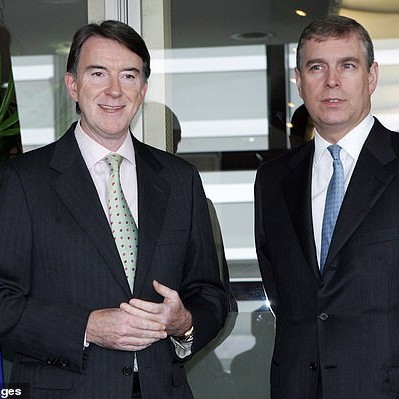
According to reporting in the Daily Mail, Andrew was recommended for the role by Labour strategist Peter Mandelson. At the time, the match seemed convenient. Andrew had military credentials, a public image shaped by his “Air Miles” reputation, and plenty of experience on the global circuit.
But by the time the Conservative-Liberal Democrat coalition arrived in Downing Street, that glossy narrative had worn thin. Former business secretary Vince Cable told The Observer, in comments later reported by the Daily Mail, that Andrew was widely regarded inside government as an unhelpful presence.
“He was thought to be a bit of a freeloader who wasn’t very useful, and we’d rather not have any dealings with him,” Cable said. Yet the formal line remained that the royal envoy was doing, in Cable’s words, “a wonderful job.” The gap between the public script and private frustration became part of the story.
Diplomats Sound the Alarm
The most stinging assessments did not come from political opponents. They came from Britain’s own diplomatic corps. Senior ambassadors, according to the Daily Mail’s reporting, complained about receptions painstakingly staged for Andrew abroad, only to watch him turn up late, focus his attention on young women, and leave early.
A former Whitehall grandee told the paper that where other royals tended to leave guests “feeling delighted,” Andrew’s presence often did the opposite. The official said his personality “often left bruises behind,” a damning verdict for someone entrusted with nurturing long-term relationships.
Leaked diplomatic papers from 2001, cited by the Daily Mail, show how early the alarm bells rang. Patrick Nixon, then Britain’s ambassador to the United Arab Emirates, wrote a confidential account of Andrew’s visit to the region. Nixon said he was “particularly alarmed” by what he described as “crass and offensive” remarks the prince made about Saudi Arabia and its oil in front of senior Emirati figures.
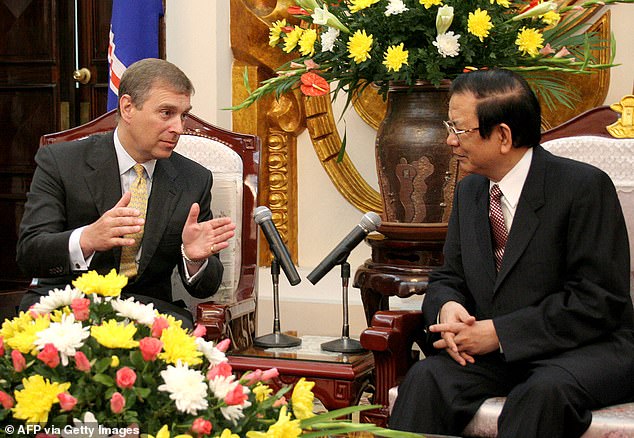
Nixon’s assessment was blunt. Andrew, he warned, had “damaged rather than enhanced our standing and that of the Royal Family.” His report reached the head of the diplomatic service in London. Yet Andrew’s high-profile envoy role continued for nearly a decade more.
Epstein, China, and Quiet Deals
If diplomats were worried about Andrew’s social style, others inside government were increasingly uneasy about the company he kept. One senior coalition figure, quoted by the Daily Mail, said officials had raised alarms over Andrew’s “dubious friends” during his time as trade envoy.
Those concerns sharpened around his long-standing relationship with American financier Jeffrey Epstein. According to Reuters, Andrew ultimately quit his unpaid role as UK trade envoy in 2011 after weeks of scrutiny over Epstein, who had been convicted in a sex case. The move followed a growing sense in Whitehall that the association was incompatible with his official responsibilities.
By then, a photograph of Andrew with his arm around Virginia Giuffre, who has alleged she was sexually exploited when she was a teenager, had already entered the public record. That image, widely reproduced, collided with his official status as an envoy supposedly working to promote Britain’s reputation overseas.
The picture was not the only problem. Emails later released by the US Department of Justice, described in the Daily Mail, show that Andrew brought David Stern, a close associate of Epstein, on an envoy trip to China in 2010. The visit was intended to promote British business and attract investment through taxpayer-funded travel. Traditionally, such trips would be tightly organised through official channels.
Instead, the emails suggest that Stern was asked to “help” plan the China visit, a move that appeared to blur the line between public duties and private networks. Vince Cable told reporters he was angered to discover that Andrew had visited China shortly before a key government mission and seemed to have been pursuing his “own negotiations” without ministers being properly informed.
How the Palace Responded
Inside government, Andrew’s envoy role had become a live problem. On one side stood ambassadors and ministers who believed his conduct was undermining Britain’s interests. On the other was the constitutional delicacy of publicly disciplining a senior royal whose status flowed from Buckingham Palace, not the ballot box.
According to the Daily Mail, some in the coalition regarded Andrew as a political liability but hesitated to act for fear of sparking a confrontation with the palace. Complaints from posts abroad piled up. Reports suggest that feedback from ambassadors and consuls increasingly casts his presence not as an asset but as a drag on official efforts.
In the end, according to multiple accounts, the decision for Andrew to step aside as trade envoy came only after a private conversation between then Prime Minister David Cameron and Queen Elizabeth II. Reuters reported that in 2011, after months of headlines about Epstein and growing public discomfort, Andrew agreed to give up the role he had held since 2001.
Formally, it was framed as a mutual decision. Informally, the move was widely understood as a way to defuse a brewing conflict between the requirements of modern accountability and the deference traditionally afforded to royalty.
The Royal Brand Fallout
The newly surfaced recollections from former ministers and diplomats do more than revisit personal grievances. They rewrite the prelude to Andrew’s later downfall as a working royal, suggesting that the trouble was visible years before his infamous television interview about Epstein or his eventual withdrawal from public duties.
In this retelling, the trade envoy years become a case study in what can happen when royal status collides with the discipline of government service. Complaints about tardiness and social focus sit alongside deeper questions about judgment, vetting, and the blurred boundaries between public duty and private friendship.
For Buckingham Palace, the story lands in an era of repositioning. The monarchy has tried to project stability under King Charles III, even as it absorbs the long shadow of Andrew’s associations and the scrutiny they brought. Each new anecdote from the envoy years adds to the record that future historians and the public will weigh.
For the officials who watched it unfold, the frustration seemed to have been not only with Andrew’s behavior but with the pace of the response. As one senior figure told the Daily Mail, the tale of the trade envoy who “damaged rather than enhanced” Britain’s standing now reads like a missed warning that went unheeded for too long.
Join the Discussion
Do these new accounts of Andrew’s years as a trade envoy change how you see the balance between royal prestige and public accountability?