


Robert F. Kennedy Jr. has told stories about addiction before. His latest, a matter-of-fact admission that he once snorted cocaine off toilet seats, arrived in the middle of a casual podcast conversation about germs and fear.
TLDR
Robert F. Kennedy Jr. used a graphic story about snorting cocaine off toilet seats on comedian Theo Von’s podcast to illustrate his long history with addiction and how his recovery still shapes his public life.
The Podcast Confession
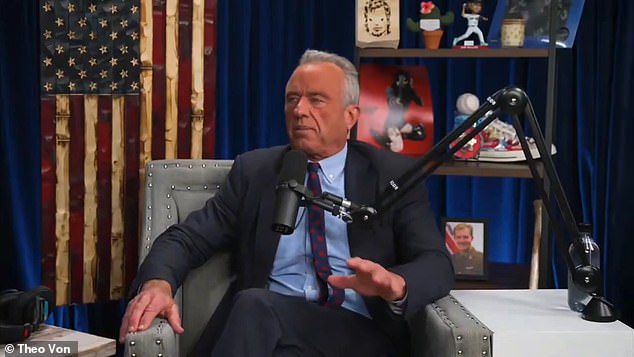
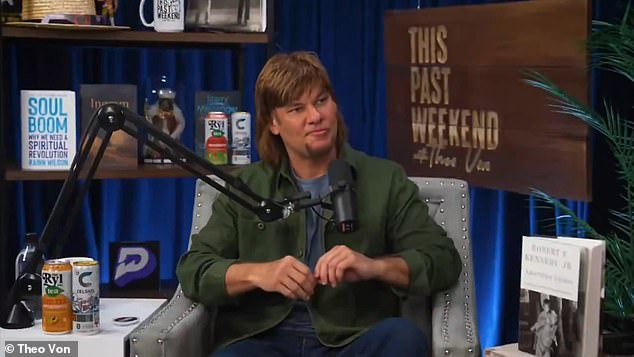
Kennedy was speaking with comedian Theo Von on the long-form podcast “This Past Weekend” when the conversation drifted to germs. In that offhand, confessional space that podcasts specialize in, he reached for one of the darkest anecdotes from his past.
“I am not scared of a germ,” he told Von. “I used to snort cocaine off of toilet seats.” It was the kind of line that ricochets across social media. The delivery, though, was almost clinically calm, framed as proof that he has already survived far worse than a dirty surface.
The two men share more than a microphone. According to DailyMailUS, Kennedy and Von first crossed paths in early morning recovery meetings in Los Angeles, a routine that became a daily ritual for Kennedy as he fought to hold onto sobriety.
When the COVID-19 pandemic disrupted those gatherings, Kennedy said he joined a small band of what he called “pirate” recoverees who kept meeting in person even while restrictions were in place. For him, the risk of isolation felt more dangerous than the virus.
Recovery and Daily Work
Kennedy has been open for years about the severity of his addiction and the discipline required to keep it in remission. According to DailyMailUS, he told Von that meetings remain an essential part of his life, not a symbolic gesture.
“I know this disease will kill me, right,” he has said of addiction. “If I do not treat it, which means for me going to meetings every day, it is just bad for my life. For me, it was survival.”
In a separate interview on “The Shawn Ryan Show,” Kennedy reflected on the emotional wreckage addiction can leave behind. He described how substance abuse empties out everything that once felt solid.
“Substance abuse hollows out your whole life,” he said, explaining that career, relationships, and purpose all erode when the next high becomes the only focus.
He has also tied his recovery to an ethic of personal responsibility. Speaking at an addiction summit, Kennedy said, “I know that the only way I stay sober is through taking responsibility for my daily actions. I can have control over my behavior, my daily conduct, but not the world around me.”
That message, grounded in small daily choices rather than grand declarations, underpins the way he frames stories like the toilet seat confession. The graphic detail becomes less a stunt and more a mile marker in a long, unfinished process.
A Family Tragedy Echoes
For Kennedy, the story of his addiction does not begin in a nightclub or backstage hallway. It begins in a national trauma. He has said that his slide into substance abuse followed the assassination of his father, Robert F. Kennedy, in 1968, when he was a teenager.
According to DailyMailUS and prior interviews Kennedy has given, he experimented with LSD at a party that summer. Friends then steered him toward other drugs, including opioids. He recalled being urged to try a new substance that someone had laid out in a line.
He has described taking what turned out to be crystal meth and feeling as if his grief and anxiety instantly disappeared. The relief was so intense that it became a trap. Kennedy has said that by the end of that summer, he was injecting heroin, a drug that would dominate the next 14 years of his life.
His addiction ended in handcuffs. In the early 1980s, Kennedy was arrested and charged with heroin possession. According to DailyMailUS, he pleaded guilty to a felony drug possession charge and was sentenced to probation and community service.
Looking back, he has called that moment “the best thing that could have happened,” because the public fall forced him into a deeper kind of accountability. It was the beginning of a sobriety stretch that he has said now spans more than four decades.
A Controversial Public Image
Kennedy’s addiction history plays out against the backdrop of one of America’s most mythologized political families. As a Kennedy, he grew up in the glare of cameras and the shadow of both triumph and tragedy.
In recent years, his public image has been defined less by environmental law and more by his challenges to mainstream vaccine policy. According to The New York Times, in “A Kennedy’s Crusade Against Vaccines,” he has spent years clashing with public health officials over immunization campaigns and medical authority.
That history makes his new comments on germs and cocaine resonate in a particular way. To supporters, the unvarnished confession reinforces the portrait of a man who has stared down addiction and is unafraid to talk about the uglier corners of his life. To critics, the anecdote lands inside an already complicated narrative about risk, science, and responsibility.
Kennedy, meanwhile, continues to return to the same themes. He frames addiction as a disease that demands relentless honesty, humble routines, and a willingness to own past behavior in public. Whether he is sitting in a fluorescent-lit church basement or in front of a podcast microphone, the core story does not change.
So when he tells a comedian that he once snorted cocaine off toilet seats, it is not simply a punchline. It is evidence that the man now known for lectures on policy and health has also lived at the edge of self-destruction, and that his current convictions are built on the memory of how close he came to losing everything.
Join the Discussion
When public figures share graphic stories about past addiction in such a casual setting, does it change how you see their judgment, their credibility, or their efforts to talk about health and recovery?